For UN, a Widening Gap Between Rhetoric and Reality

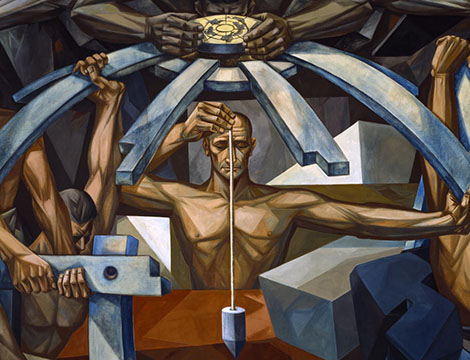
A photograph of José Vela Zanetti's mural "Mankind's Struggle for Lasting Peace" at the UN Conference Building
A photograph of José Vela Zanetti’s mural “Mankind’s Struggle for Lasting Peace” at the UN Conference Building , coutesy United Nations Photo/flickr

This article was originally published by the IPI Global Observatory on 17 June 2016.

Earlier this week, a damning report from advocacy group The Syria Campaign accused the United Nations of breaching its humanitarian principles by prioritizing cooperation with the Assad government “at all costs.” This is not the first time that such charges have been leveled. An internal inquiry into the UN’s response to the final days of the decades-long Sri Lankan civil war found that officials privileged maintaining good relations with the Colombo regime over their responsibilities to protect human rights.

What is more, the UN has recently been at the receiving end of an avalanche of revelations that it has succumbed to pressure from it member states over its reporting and language:

  • Australia lobbied hard to ensure that UNESCO removed the Great Barrier Reef from a list of endangered world heritage sites, despite near universal consensus among scientists studying the reef that it is, indeed, deeply at risk as a result of climate change and runoffs from coastal farms and industrial plants.
  • Saudi Arabia threatened to defund UN programs, and to encourage other Islamic countries to do the same, if the UN did not remove a report’s references to patterns of violations against children in Yemen committed by the Saudi-led coalition.
  • Morocco threatened to withdraw support for UN operations in retaliation for Secretary-General Ban Ki-moon referring to Western Sahara as “occupied,” despite the fact that this is precisely the legal situation in that part of the world until a referendum on its future can be held.
  • Myanmar insisted that UN officials refrain from using the term “Rohingya” to refer to an ethnic minority in that country and has threatened to withdraw cooperation with any that do. Some, such as the Secretary-General’s Special Envoy Satish Nambiar, have complied with the regime’s demand, overlooking the right of groups to self-identify. Others, such as Special Rapporteur on Human Rights Yanghee Lee continue to use the label and have faced vilification because of it.
Categories
Humanitarian Issues

Disaster Diplomacy for Asia and the Middle East

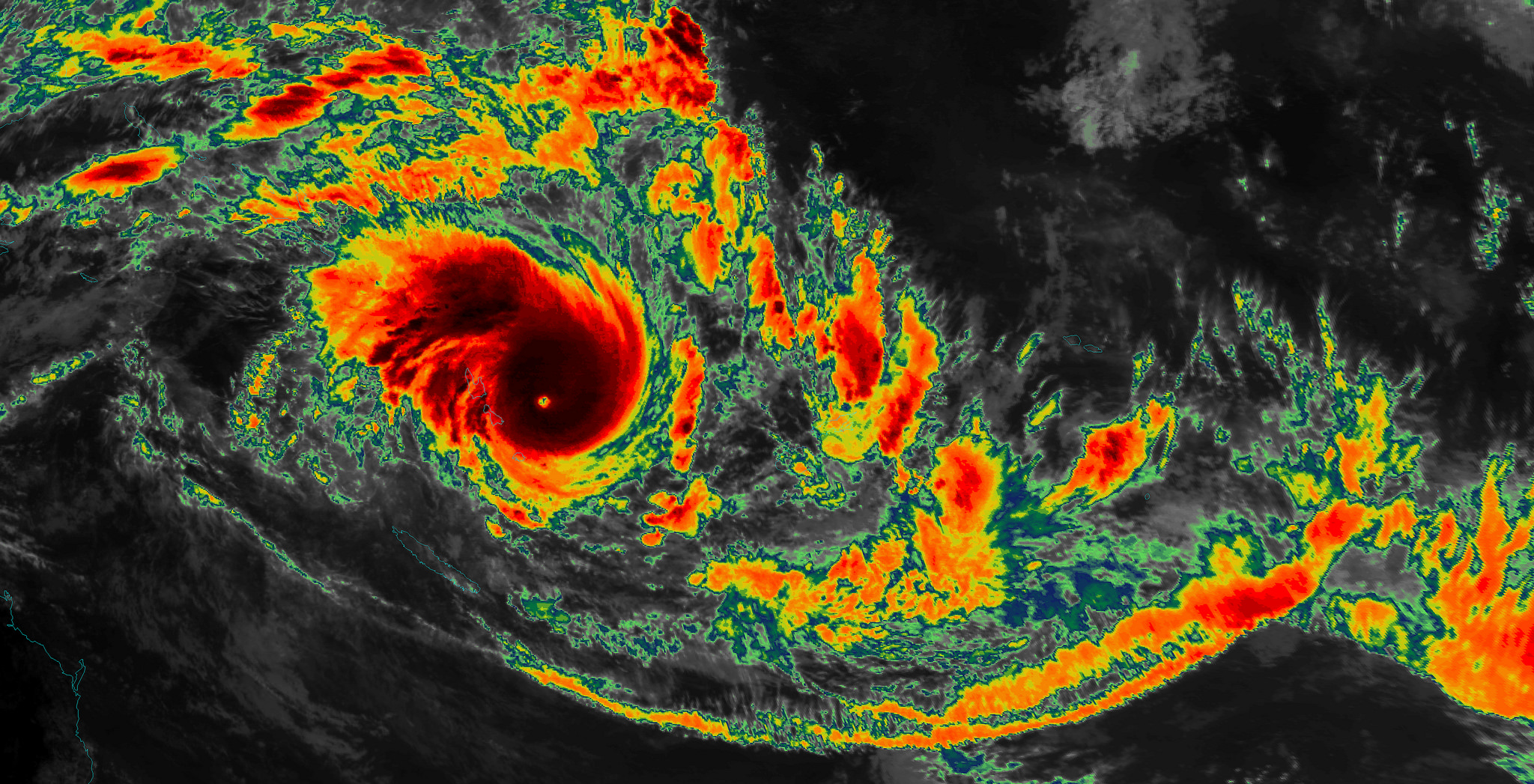
Cyclone Pam nears Vanuatu
Courtesy Harrison Tran/flickr

This article was originally published by the Middle East Institute (MEI) on 16 June 2016.

What is Disaster Diplomacy?

Disaster diplomacy investigates how and why disaster-related activities (pre-disaster and post-disaster) influence conflict and cooperation. [1]

Planning, preparation, and damage reduction are part of pre-disaster activities, which are termed ‘disaster risk reduction,’ focusing on addressing the root causes of disasters. Those root causes are, fundamentally, power and politics (particularly as related to resource allocation), societal sectors gaining from others’ vulnerability, and preference for short-term profit over long-term safety. Post-disaster activities refer to response, reconstruction, and recovery.

There have been numerous case studies of disaster diplomacy, covering various countries, regions and time periods, as well as a wide array of hazards—from environmental phenomena, such as earthquakes and floods, to technology-related incidences, such as train crashes and poisonings. The case studies have investigated many types of diplomacy: bilateralism, multilateralism, intergovernmental and international organizations, nongovernmental entities, and international relations conducted by non-sovereign jurisdictions such as provinces or cities (often called para-diplomacy, proto-diplomacy, and micro-diplomacy). The case studies also encompass many forms of conflict, ranging from interstate war and internal insurrections to the absence of diplomatic relations, frosty interactions, and political disagreements.

Across all case studies, no examples have been found where disaster-related activities have created new diplomatic initiatives. To be sure, disaster-related activities can serve as a catalyst for pre-existing diplomatic endeavors. In such instances, cultural links, informal or secret diplomatic negotiations, interactions in multilateral organizations, trade connections, or business and economic development can provide the conditions conducive to spurring disaster diplomacy.

The Invention of Russia: The Journey from Gorbachev’s Freedom to Putin’s War

Depiction of the Kremlin, Courtesey of the Center for Eastern Studies

This article was originally published by the Carnegie Council for Ethincs in International Affairs on 9 June 2016.

In this transcript, journalist Arkady Ostrovsky discusses his recent book, The Invention of Russia: From Gorbachev’s Freedom to Putin’s War, which recently won the 2016 Orwell Prize for political writing.

As has been said, in December of 1991—you may remember that day, the Christmas Day of December 1991—Mikhail Gorbachev addressed the Soviet people on television, 5:00 to 7:00 in the evening, and said the following:

Destiny so determined that when I found myself at the helm of this state, it was already clear that something was wrong in this country. We had a lot of everything—land, oil and gas, other natural resources, and intellect and talent in abundance—but we were living much worse off than people in other industrialized countries, suffocating in the shackles of the bureaucratic command system. All the half-hearted reforms fell through, one after another. This country was going nowhere and we couldn’t possibly go on living the way we did. We had to change everything, radically.

When Downsizing is a Good Thing for a State

Courtesy Paul B/Flickr

This article was originally published by World Affairs on 13 June 2016.

The following is and interview with Ian Lustick, a Professor of Political Science at the University of Pennsylvania.

MOTYL: Professor Lustick, let’s begin the conversation with your provocative theory of “right-sizing” states. What’s the gist?

LUSTICK: The basic point is pretty obvious. If a person is too thin, gaining weight is a good thing, but not if the weight gain is all in the stomach. To take a more extreme example: If a person is overweight, losing pounds is a good thing, but not if it is achieved by decapitation or sawing off one’s right arm. “Right-sizing” a state is the idea that—although it is dangerous and usually wrong to change a country’s borders when those borders have been settled and have taken on a sense of stability and naturalness—there are circumstances when it can be entirely appropriate to alter the size and shape of a state for the state’s own good and for the welfare of the nation, people, or population that identifies with it.

MOTYL: If the theory makes so much sense—and I agree that it does—why isn’t it practiced more often? What are the main obstacles to right-sizing?

LUSTICK: States commonly seek to get bigger, but more often than not they “wrong-size” themselves by doing so. Except for perhaps a temporary boost to the popularity of the leadership that promises that expansion will yield a bigger pie to divide among their followers, the costs of maintaining rule over far-flung territories and exploited and unhappy indigenous peoples usually vastly outweighs the benefits that can be sustained over a long period of time. That means, however, that many states are bigger than they “should be,” raising the question you have asked: why don’t more states shrink strategically? The reason is that getting smaller is almost always perceived as shrinking the size of the available pie and diminishing the prestige of those who identify with the state. So it is always more difficult to contract rather than expand, even if, strategically, it is likely to be very advantageous to do so. As you can imagine, it is far easier to label a leader who favors withdrawing from a territory a coward or a traitor to the national (or imperial) cause, than it is to challenge the patriotism of a leader embarking on a “glorious” campaign of expansion—one that would typically be characterized as being demanded by the historical (or divine) rights of the nation or its security requirements.

Categories
Humanitarian Issues CSS Blog

Mediation Perspectives: Learning from Freedom Nyamubaya

Freedom Nyamubaya
Mediation Perspectives is a periodic blog entry provided by the CSS’ Mediation Support Team and occasional guest authors. Each entry is designed to highlight the utility of mediation approaches in dealing with violent political conflicts.

“In the absence of vision
The earth starts to vomit skeletons long buried,
Once swallowed by time,
As politics become a means to amass wealth,
You can buy a vote at thirty pieces of silver …”

Excerpt from “In the Absence of Vision.”[1]

                                                   – Freedom Nyamubaya

Daniel Bowling and David Hoffman argue that mediators go through three stages in their training. They first learn skills and techniques, then they learn to
intellectually understand how mediation processes work, and finally they take the most challenging step – i.e., they develop “self-awareness, presence, authenticity, congruence, and integration,” which are qualities that “can be learned but . . . cannot be taught.” [2]

One way of learning such qualities is letting oneself be inspired by other people – mediators and non-mediators alike – who have such presence. The late Freedom Nyamubaya (1957–2015) was such a person, as I would now like to discuss in this partial commemoration and partial reflection on how to mediate well.

Freedom Nyamubaya was a freedom-fighter in Zimbabwe’s war of liberation. She joined the struggle at age fifteen and later advanced to the rank of Female Field Operation Commander. After the war she was active as a farmer, development worker and poet. In recent years she also became involved in peace and security issues as a Trustee for the Zimbabwe Peace and Security Programme. While she would not have called herself a mediator, she did work tirelessly to build bridges across conflict divides and was a powerful source of inspiration to many people within and outside of Zimbabwe.