Categories
Terrorism Regional Stability

ISIS’s Campaign in Turkey

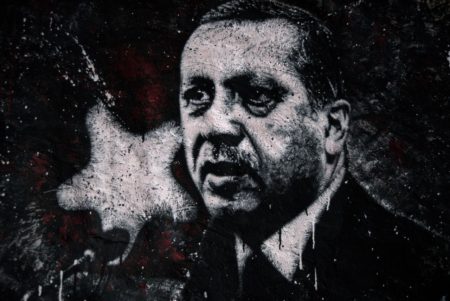
Recep Tayyip Erdoğan, painted portrait
Courtesy by thierry ehrmann/flickr

This article was originally published by the Institute for the Study of War (ISW) on 30 June 2016.

ISIS is refocusing its strategy in Turkey towards destabilizing the Turkish state and isolating it from the West. ISIS has two main lines of effort in Turkey. The first is to incite an ethnic war between the Kurds and the Turkish state in order to weaken its opponents in northern Syria and regain freedom of action in southern Turkey. The second is to undermine the Turkish state and punish it for being part of the anti-ISIS coalition through attacks against western targets in Turkey. ISIS has more actively pursued this second line of effort by targeting Westerners in Istanbul beginning in early 2016 while continuing its campaign along the Syrian border. The triple suicide bombing at the Istanbul Ataturk Airport on June 28, 2016 supports ISIS’s stated strategic objectives of seizing Constantinople and undermining the Turkish state by harming the vital tourism industry, targeting infrastructure that connects Turkey to the West, and raising requirements for domestic security services. ISIS has not claimed any spectacular attacks against the state in Turkey in order to avoid a major domestic crackdown that would threaten its freedom of action as well as its cross-border mobility into Syria. Moreover, ISIS already accomplishes its objectives in Turkey through spectacular attacks without risking a claim.

ISIS’s evolved strategy in Turkey mirrors a corresponding shift in the policies pursued by Turkey towards the group. Turkey joined the international anti-ISIS coalition in September 2014 but initially avoided overt confrontation with ISIS. Turkey instead tolerated ISIS as a vector to apply indirect pressure on Syrian President Bashar al-Assad and hasten the overthrow of his regime by opposition groups supported by Turkey. ISIS also provided Turkey with a means to contain the Syrian Kurdish YPG, which Turkey views as an existential threat due its affiliation with secessionist agenda of the outlawed Kurdistan Workers’ Party (PKK). Turkey’s reluctance to restrict cross-border flow of foreign fighters and supplies provided ISIS with an incentive to avoid conducting terrorist attacks inside the country and jeopardizing its freedom of movement through Turkey to Syria. Turkey altered its calculus after the U.S.-led anti-ISIS coalition deepened its cooperation with the Syrian Kurds throughout early 2015, enabling the YPG to secure major gains along the Syrian-Turkish Border. The prospect of further motion towards a contiguous autonomous zone in Northern Syria controlled by the Syrian Kurds prompted Turkey to deepen its own engagement with the coalition. The coalition also acted to encourage this decision through the use of alternating incentives and disincentives meant to influence decision-making in Ankara. The U.S. in particular modulated its provision of aircraft, missile defense systems, rocket artillery, and other high-end capabilities in order to generate a policy convergence on Syria.

Somalia’s Al-Shabaab Down but Far from Out

You....Stop. Enough, we need these people
“You….Stop. Enough, we need these people” erected in-front of the Somali parliament building. Courtesy AMISOM Public Information/Flickr

This article was originally published by the International Crisis Group on 27 June 2016.

Somalia’s militant group, Al-Shabaab, has often defied its adversaries’ claims that it is in decline. In recent months, however, the movement has suffered setbacks, including territorial losses, high-ranking commanders killed and defections. The Somali Federal Government (SFG) and its internal, regional and international allies need to be clear-sighted about the reasons for these, and what they can do to stop another Al-Shabaab recovery.

Al-Shabaab’s set-backs – and fewer attacks by the movement during the Ramadan holy Muslim month of fasting than in previous years – are the result of three distinct and unrelated factors. First, an enhanced and largely externally directed and funded campaign including drone strikes has eliminated high-profile leaders and diminished its military capacity. Second, some of Somalia’s new federal units are demonstrating greater military effectiveness, even if they and the government still rely primarily on clan-based militias. Third, the Islamic State (IS) has challenged Al-Shabaab’s greatest internal vulnerability – its ideological cohesion.

Whether the Somali government and its allies can advance their cause will largely depend on greater agreement on priorities and coordination of action – no easy task, given the wide and diverse range of external and internal actors.

Offshore Balancing, US Retreat and Strategic Disorder

Waiting to board
The sun sets behind a C-17 Globemaster III as Soldiers wait to board the aircraft. Courtesy the US Army/Flickr

This article was originally published by the Australian Strategic Policy Institute’s The Strategist on 28 June 2016.

John Mearsheimer’s and Stephen Walt’s recent Foreign Affairs article advocating a return to offshore balancing is certainly generating a debate amongst the doyens of US foreign policy. Tom Switzer, for example, clearly likes their arguments. Dan Drezner doesn’t. So perhaps I ought to begin by outlining my own position. I accept the starting point for the Mearsheimer/Walt argument: the strategic mainstream is starting to fracture as America reprioritises its domestic agenda. But I don’t accept that offshore balancing—a strategy under which the US stays ‘offshore’ from Eurasia for as long as possible and, even when it comes onshore, makes its allies carry as much of the weight as possible—would lead to favourable outcomes for either the world or America.

Despite the Mearsheimer/Walt argument that ‘by husbanding US strength, an offshore-balancing strategy would preserve US primacy well into the future’, I don’t see how international observers would perceive offshore balancing as anything other than US retreat. And those perceptions would, in turn, fundamentally weaken the credibility of US security assurances to allies and partners. Critics would paint it as the waning of the Pax Americana, and not entirely without reason.

Talking Policy: Parag Khanna on Connectography

Facebook Connections
Facebook Connections, courtesy of Michael Coghlan/flickr

This interview transcript was originally published by the World Policy Institute on 13 May 2016.

The world is becoming more connected by the day. Whether through the Internet and social media or through increased international trade, the world today does not look the same as it did 100 years ago. According to Parag Khanna, leading global strategist and award-winning author of numerous books including his latest, Connectography, these links are only going to increase in the future. World Policy Journal spoke with Khanna to discuss the concept of connectography and what the connected future holds for politics, people, and the environment.

WORLD POLICY JOURNAL: In your new book Connectography, you suggest that the current global order is changing. How exactly is this happening, and what does the world of the future look like in your opinion?

PARAG KHANNA: Right, so, the premise is that the forces of connectivity—transportation, energy, innovations, but also capital market, cultural integration, trade, and so forth—are reshaping the meaning of geography and the extent to which political geography based at the boundaries dictate our fate versus the connective forces that make connectivity more our destiny than the geography has been for now, or up until now. And that’s the pattern that you need to take a step back and take a 5,000-year view to appreciate. So we’ve reached the sort of tipping point where that connectivity does in fact matter more than divisions. And we have so much connectivity across political borders, and yet we have so few wars along those borders. So we no longer really fight over a border. Instead we are now fighting over connectivity. But we’re also benefiting from connectivity greatly at the same time. So that’s where you get a picture of the world that’s really far more complex than what we’ve had here before.

Long Nuclear Shadow Could Revive Calls for Abolition

Graffiti displaying nuclear symbol.
Radioactive Graffiti, courtesy Tristan Schmurr / flickr

This article was originally published by the YaleGlobal Online on 21 June 2016.

Led by Russia and the United States, the world reduced the nuclear stockpile from 60,000 weapons to about 16,000 held by nine nations. The total still poses a grave global threat. Any nuclear attack or accident would kill many, devastating an entire region, which in turn would revive demands for abolition, explains Bennett Ramberg, author and a former policy analyst in the US Bureau of Politico-Military Affairs during the George H.W. administration. No country has used the bomb since World War II, he explains, and “A presumption emerged that a nuclear-use taboo overwhelms any inclination toward nuclear use.” The potential for nuclear catastrophe runs high in an era of terrorism and chaos emerging out of failed states, but prevention is possible, too. Global agreement is required, notes Ramberg, and he points to the 1946 Baruch Plan as a foundation. The plan calls for an international authority to manage atomic energy and an end to manufacturing nuclear weapons.

Seventy years ago this month the United States placed on the global agenda a proposal that would have eliminated nuclear weapons for all time. Drawing on the US State Department’s Acheson-Lilienthal scientific advisory study, the Truman administration turned to the long-time confidant of presidents, Bernard Baruch, to craft a proposal for global action.

In June 1946, Baruch appeared before the newly constituted UN Atomic Energy Commission to present the nuclear abolition plan that would come to bear his name. He called for establishment of an International Atomic Development Authority that would retain “managerial control or ownership of all atomic energy potentially dangerous to world security,” eliminate weapons manufacturing and dispose of all existing bombs while asserting “power to control, inspect, license all other atomic activities” coupled with assured enforcement. Had Cold War politics not intervened – Stalin pressed his scientists to build a competitive Soviet bomb as rapidly as possible – the nuclear Damocles Sword that’s hung over the world ever since might have been avoided.