Investigating the use of Chemical Weapons in Syria

Gassed
John Singer Sargent’s 1918 painting of gassed British soldiers

This article was originally published by the Stimson Center on 28 June 2016.

Investigating the use of chemical weapons

The first inquiry into the use of chemical weapons (CW) in Syria was the United Nations Secretary-General’s Mechanism (SGM) for Investigation of Alleged use of Chemical and Biological Weapons. Adopted by the UN General Assembly in 1987, and endorsed by the Security Council (Resolution 620) a year later, the SGM enables the Secretary-General to carry out investigations in response to any UN Member State reporting possible violations of the 1925 Protocol or other relevant rules of customary international law.

The SGM was trigged in March 2013 after Syria (a State Party to the Geneva Protocol) reported allegations of CW use in the Khan al-Asal area of the Aleppo Governorate, for which Syria’s government and opposition blamed each other. A team from the Organisation for the Prohibition of Chemical Weapons (OPCW) and the World Health Organization (WHO) was assembled and remained on standby in Cyprus until the terms of reference between the UN and Syria were agreed on. The holdup was a difference of opinion on the scope of the investigation: the UN argued that all credible claims of CW use reported by other Member States should also be investigated while Syria argued that only the March 19 Khan al-Asal attacks should be examined. In the end, the SGM team was dispatched to Syria in August 2013 to investigate Khal al-Asal and two other incidents at Sheik Maqsood and Saraqueb.[1] Three days after their arrival, allegations of CW use in the Ghouta area of Damascus led the team to prioritise the most recent allegations.

The Right to Decide: Exit and Basque Self-Determination

Basque Country Needs You
Basque Country Needs You. Credit: Iker Merodio via Flickr
This article was originally published by the Peace Research Institute Oslo (PRIO) on 28 June 2016.

Five years ago, the Basque militant group ETA (Basque Homeland and Freedom) announced a unilateral and permanent cessation of operations. Since then, the disappearance of political violence has given rise to a new debate on Basque nationhood: more inclusive, more open, more civic, and at the same time stronger in its affirmation of the legitimacy of popular sovereignty and the democratic demand to exercise ‘the right to decide’, as against the earlier radicalism of immediate independence.

A new book edited by Pedro Ibarra Güell and Åshild Kolås, Basque Nationhood Towards a Democratic Scenario, takes stock of the contemporary re-imagining of Basque nationhood in both Spain and France. Taking a fresh look at the history of Basque nationalist movements, it explores new debates that have emerged since the demise of non-state militancy. Alongside analysis of local transformations, the book also describes the impacts of a pan-European (if not global) rethinking of self-determination, or ‘the right to decide’.

Categories
Humanitarian Issues

Colombia’s Landmark Agreement: The End of 50 Years of War?

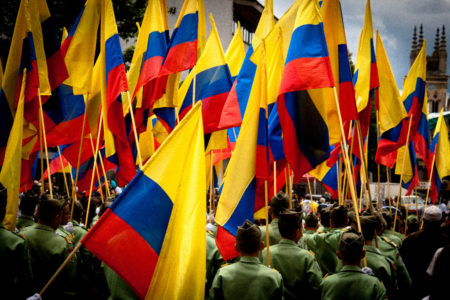
People march with Columbian flags
Ahí va Colombia…Courtesy Lucho Molina/flickr

This article was originally published by IPI Global Observatory on 27 June 2016.

While a final peace accord is likely still a few weeks away, Colombia’s government and FARC guerrillas reached a momentous agreement on June 23. The consensus on the last of five substantive items in negotiations taking place in Havana, Cuba, since 2012 delineates conditions for a permanent ceasefire and the demobilization of the guerrilla movement, which had been by far the thorniest issue on the agenda. Though the parties have decided that “nothing is agreed until everything is agreed,” the accompanying Havana ceremony had the feel of the end of a 50-year war that has killed over 200,000 people and displaced six million.

Attending the ceremony was Colombian President Juan Manuel Santos; FARC Commander Timoleón Jiménez; Cuban President Raúl Castro and Norwegian Foreign Minister Borge Brende (representing the two guarantor countries); United Nations Secretary-General Ban Ki-moon and other senior UN officials; Presidents Nicholas Maduro of Venezuela and Michelle Bachelet of Chile; and many other world leaders and envoys. The impressive lineup sent a clear political message: no one should harbor doubts about the possibility of a peace agreement being signed, and the international community will put its weight behind it to ensure its success.

Is it Time to Scrap the Minsk Agreement?

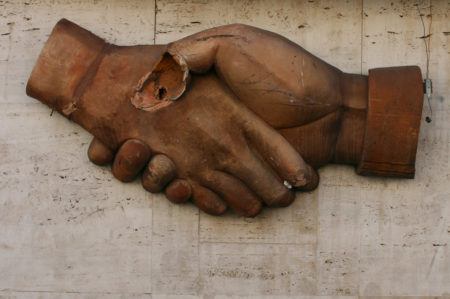
Hand-shakeOn June 22, Ambassador John Herbst and David Kramer debated whether we should bury the Minsk agreement, the troubled ceasefire agreement in Ukraine, at an Atlantic Council event in Washington, DC. Their remarks have been adapted from the debate.

It’s Time to Scrap the Minsk Agreement

By David J. Kramer

The Minsk ceasefire agreement, signed February 15, 2015, by the leaders of Russia, Ukraine, Germany, and France, along with representatives from the OSCE and from Russian-occupied areas of Donetsk and Luhansk (DNR and LNR, respectively), is simply not working. It is time to scrap it and make clear to Russia, through a declaration from Western nations, that sanctions will remain in place—and will be increased over time—unless Russia meets several key conditions. These include withdrawal of its forces and weapons from Ukraine (including Crimea), respect of Ukraine’s sovereignty and territorial integrity, control of the border restored to Ukrainian authorities, and the return to Ukraine of those citizens it kidnapped from Ukrainian territory. Further negotiations with Moscow are pointless given that Russian officials won’t even acknowledge the presence of their forces on Ukrainian soil.

There have not been any new sanctions imposed on Russia despite its failure to live up to a single condition under the Minsk accord. Instead, a number of European leaders, led by German Foreign Minister Frank-Walter Steinmeier and Vice Chancellor Sigmar Gabriel, along with the French parliament and others, have irresponsibly called for an easing if not outright lifting of sanctions. Without German Chancellor Angela Merkel, renewal of EU sanctions would be in jeopardy.

Defenders of Minsk argue it has reduced the fighting. In fact, more than four thousand Ukrainians have been killed since the second Minsk deal was signed last year, almost half the number of total casualties since Russia invaded Ukraine in late February 2014. A serious uptick in fighting in the past two months further belies the claim that Minsk has preserved the peace.

Categories
Regional Stability

The Eurasian Union: Rising or Shooting Star?

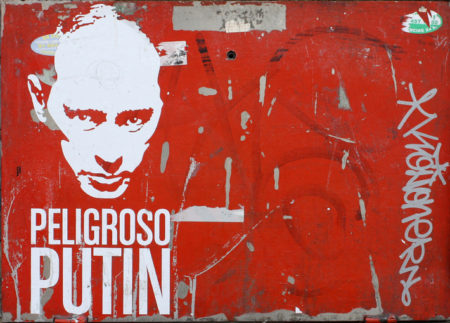
Peligroso Putin
Peligroso Putin, Madrid 2008, Courtesy David/flickr

This article was originally published by the European Union Institute for Security Studies (EUISS) in June 2016.

Russia’s recession and its geopolitical standoff with the West are taking their toll on the Eurasian Economic Union (EAEU). During a summit of the EAEU’s leaders in Astana on 31 May, several participants voiced concerns over the union’s poor economic performance. And Moscow’s reaction to the recent flare-up of the Nagorno-Karabakh conflict cast doubts for Armenia on the security benefits of EAEU membership.

Against this backdrop, 18 months after the launch of the EAEU, its member states are demonstrating increasing resistance to Moscow’s vision of Eurasian integration. As a result, its success will largely depend on Russia’s leverage – positive and negative – over its smaller partners.

Looming stick, dwindling carrot

The launch of the EAEU was overshadowed by two developments. First, Russian pressure on Armenia, Moldova and Ukraine in the context of the finalisation of Association Agreements with the EU and accession to the Deep and Comprehensive Free Trade Area (DCFTA), culminating with the annexation of Crimea and a Moscow-backed insurgency in the Donbas; and, second, the global slump of commodity prices and the enforcement of Western economic sanctions over the Ukraine crisis, leading to a slowdown of the Russian economy (the ultimate guarantor of the union’s economic success). In this context, EAEU accession was perceived by its signatories as a bitter pill that could not be refused.