Categories
Humanitarian Issues

Venezuela’s Toxic Combination: Too Many Guns, Too Little Food

Blog
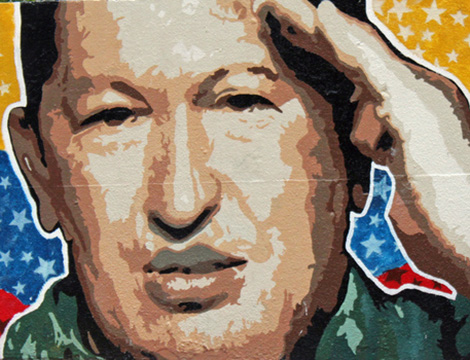
Chavez, courtesy of mwausk/flickr (CC BY 2.0)

This article was originally published by The International Crisis Group on 6 June 2016.

Venezuela is a country of almost 900,000 square kilometres with over 30 million inhabitants. But a few, run-down city blocks in the west of the capital, Caracas, carry a significance far beyond their size and population. Known as “el centro”, this part of Libertador municipality holds the presidential Miraflores palace, many ministry buildings, the Supreme Court (Tribunal Supremo de Justicia, or TSJ) and the headquarters of the electoral authority (Consejo Nacional Electoral, or CNE). In the past few days “el centro” has been the scene of a variety of events that speak volumes about the depth of the combined political, economic, social and humanitarian conflict that seems finally to have caught the attention of the wider world. And about the difficulty of resolving it through dialogue.

Crisis Group has for years warned that authoritarian governance, economic mismanagement, violent crime and lawlessness in Venezuela would eventually prove a toxic combination. The crisis spiralled out of control following the untimely death from cancer of the country’s charismatic leader Hugo Chávez in 2013 and the near simultaneous plunge in the price of oil, on which the economy is almost wholly dependent. Acute shortages of food, triple-digit inflation, one of the world’s highest homicide rates and the collapse of public services, including health care, are signs of deeper dysfunction. This is a country on the verge of implosion.
Categories
Regional Stability

The Multipolar Asian Century

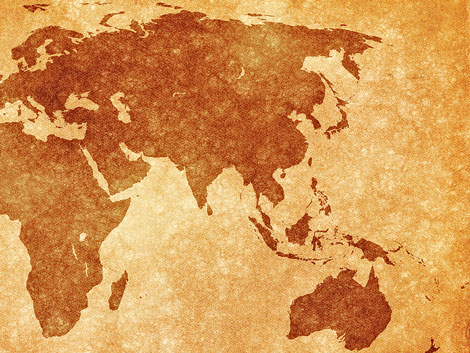
Sepia Map centered on Asia
Grunge textured world map on vintage paper, courtesy of Nicholas Raymond/flickr

This article was originally published by the Lowy Institute for International Policy’s The Interpreter on 1 June 2016.

Since the collapse of the Soviet Union, the global political and economic architecture has been undergirded largely by one superpower, which set the stage for an unprecedented period of globalisation managed through multilateral institutions and actors. Now that unipolar moment is giving way to an era of diffused powers, with countries like the US, China and Russia each bearing considerable disruptive capacities, and each struggling to stitch together new norms and rules for these rapidly changing times.

This phase, the beginning of which was marked by the Global Financial Crisis of 2008 and characterised by America’s two bruising wars in Iraq and Afghanistan, has seen a vacuum emerge. Many are seeking to fill it, most determinedly China, but with a push back from countries such as Japan and India. Separately, ISIS and radical energies in the Middle East also seek to grab new space. Russia has chosen this very moment to signal its ability to muddy the Eurasian fields and intervene in the Middle East. The fact is, there is not enough room to accommodate all of these ambitions.

A median will have to be arrived at, but who will sacrifice what?

Categories
Humanitarian Issues

Against the Merger of Humanitarianism with Development and Security

This article was originally published by the Peace Research Institute Oslo (PRIO) on 8 June 2016. 

In the recent World Humanitarian Summit in Istanbul 23-24 May, the interconnections between humanitarianism, development and security were highlighted. Recognising that humanitarian assistance alone cannot address ‘the needs of over 130 million of the world’s most vulnerable people’, the conference chair’s summary report states: ‘A new and coherent approach is required based on addressing root causes, increasing political diplomacy for prevention and conflict resolution, and bringing humanitarian, development and peace-building efforts together’ (page 2). Similarly, the background report of the UN Secretary General – One Humanity: shared responsibility – prescribes the merger of humanitarian policies with peace and development agendas. These agendas include the prevention and management of conflict and disaster, the building of institutions conducive to ‘the protection of civilians’, the fight against terrorism, and the building of ‘resilient societies’.

Yet, while coordination across these policy domains is certainly needed, the current challenge for humanitarianism is rather to establish a clearer division of labour between them, where humanitarian relief retains its political neutrality, development aid its concern with justice, and where policies of peace and security maintain focused on the mitigation of international and civil war rather than a broader humanitarian agenda of ‘human security’.

Do We Want Powerful Leaders?

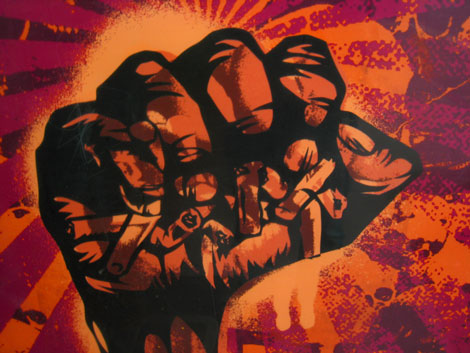
Fist
courtesy of Dustin Jensen/flickr

This article was originally published by the Australian Strategic Policy Institute’s (ASPI) The Strategist on 7 June 2016.

A trend toward greater authoritarianism seems to be spreading worldwide. Vladimir Putin has successfully used nationalism to tighten his control over Russia and seems to enjoy great popularity. Xi Jinping is regarded as China’s most powerful leader since Mao Zedong, presiding over a growing number of crucial decision-making committees. Turkey’s president, Recep Tayyip Erdoğan, recently replaced his prime minister with one more compliant with his drive to concentrate executive power. And some commentators fear that if Donald Trump wins the US presidency in November, he could turn out to be an “American Mussolini”.

Abuse of power is as old as human history. The Bible reminds us that after David defeated Goliath and later became king, he seduced Bathsheba and deliberately sent her husband to certain death in battle. Leadership involves the use of power, and, as Lord Acton famously warned, power corrupts. And yet leaders without power—the ability to cause others to do what we want—cannot lead.

The Harvard psychologist David C. McClelland once distinguished three groups of people by their motivations. Those who care most about doing something better have a ‘need for achievement.’ Those who think most about friendly relations with others have a ‘need for affiliation.’ And those who care most about having an impact on others show a ‘need for power.’

A Greater Military Role for Germany?

Reichstag building Berlin view from west before sunset
Reichstag building Berlin view from west before sunset, Courtesey of Wikimedia Commons, Jürgen Matern

This article was originally published by Carnegie Europe on 7 June 2016.

The German government will soon publish a new defense white paper, a strategy document setting out guidelines for German defense policy, the first since 2006.

This paper has already received some attention abroad, mainly in the UK in the context of the country’s referendum on EU membership on June 23, due to extensive press coverage of Germany’s alleged ambition to build an “EU army.” However, the improbable rhetorical aim of a European defense union obscures the more interesting aspects of Germany’s evolving defense policy and its growing significance for European defense.

Germany has long had difficult debates about its military role in European and global security, going back to the Social Democratic–Green government’s support for the NATO intervention in Kosovo in 1999. Germany’s military contributions since then have fluctuated from strong support for the International Security Assistance Force (ISAF) mission in Afghanistan during the 2000s to its abstention from the UN Security Council resolution preceding NATO’s military intervention in Libya in 2011.