Get Real! Five Spiritual Responses to Political Reality

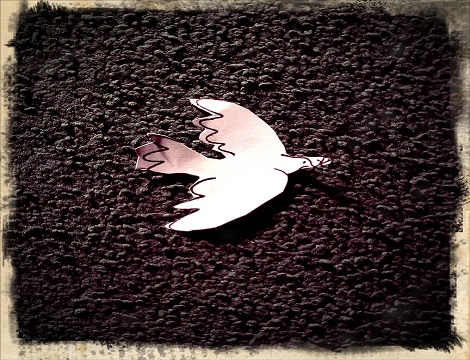
Peace dove
Peace dove, courtesy Dan Slee/Flickr

This article was originally published by OpenDemocracy on 1 June 2016.

“Get real!” they say, in a thousand different ways, but mostly as a call for conformity, not awakening.

At its best, spiritual life is fundamentally about a deeper engagement with reality, a turn towards the confounding fullness of life, not an attempt to escape it. The idea that a renewal of progressive politics might require a spiritual turn is therefore about courage, about squaring up to those neglected features of reality that have untapped political potential.

One way to get real is to consider Neal Lawson’s excellent analysis on the existential threats to social democracy. Many believe in a beneficent state that arose from an alignment of class, governance and the cold war, when politics was national and industrial. But this state is clearly failing to adapt to a global and post-industrial world.

Part of the solution, Lawson suggests, is that we need a more visceral appreciation for values and activities that are not materialistic. We can still love our homes and our gadgets, but we need to dethrone consumption as our lodestar and touchstone. That means fostering passion for the time rich, relationship rich, experience rich and purpose rich lives we want to live.

Eurocentrism and the Global Strategy: How Do Others Perceive the EU’s Role in the World?

Euro Blog
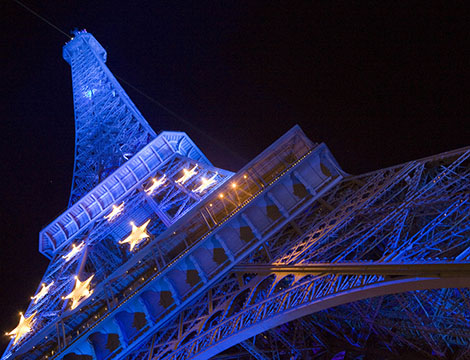
The Eifel tower lit up with the EU flag, courtesy looking4poetry/flickr

This article was originally published by European Geostrategy on 3 June 2016.

The idea of eurocentrism has been both debated and somewhat discredited in recent years. Philosophically, a realisation that European Enlightenment thought was perhaps more hegemonic than universal has led to a wider appreciation of alternative knowledge systems from further afield. Politically, a similar shift in the centre of gravity has displaced ‘the West’ as the paradigm of progress and development, helped by the economic rise of ‘the rest’. And on a more profane level, the navel-gazing of European policy-makers has also been challenged as too inward-focused in an increasingly competitive world.

As the European Union (EU) prepares to launch the new Global Strategy, it is worth examining how much it really has moved on; has it managed to come to terms with an increasingly non-eurocentric order? Can it craft a strategy which is assertively European yet realistically conscious of its external partners? A key consideration in gauging this is examining how these partners view Europe – what they think of its global role and how they see it developing. Such perceptions, although not fundamental drivers of policy formulation, nevertheless shape the reality within which decisions are taken, and are arguably often overlooked in the study of international relations.

Back to the Future of Global Health Security

Abstract picture of a computer virus
Abstract Picture of a computer virus / courtesy of Yuri Samoilov/flickr

This article was originally published by the Council on Foreign Relations (CFR) on 31 May 2016.

Growing populations, rising global temperatures, urbanization, and easier trade and travel are all changing the world in ways conducive to the spread of infectious disease. The recent Ebola and Zika outbreaks have dominated news headlines and their toll has been terrible, but a more lethal infectious disease could do far worse harm.

“For infectious diseases, you cannot trust the past when planning for the future,” warned Margaret Chan, the head of the World Health Organization (WHO), at the World Health Assembly last week in Geneva. “What we are seeing,” she said, is “a dramatic resurgence of the threat from emerging and reemerging infectious diseases. The world is not prepared to cope.”

US forces – Between Europe and Asia

Aircraft carrier USS George Washington near Guam.
Aircraft carrier at sunset, courtesy of Official U.S. Navy Imagery/Flickr

This article was originally published by the European Union Institute for Security Studies (EUISS) on 26 May 2016.

On 3 May 2016, with traditional pomp and circumstance, General Curtis M. Scaparrotti replaced General Philip Breedlove as commander of US forces in Europe (EUCOM), and at the same time became NATO Supreme Allied Commander Europe (SACEUR).

General Scaparrotti assumes command in a very different environment from when his predecessor arrived in Europe three years earlier. Since the US ‘pivot’ to the Asia-Pacific region was announced in 2011/2012, EUCOM has steadily lost resources and forces. During the peak of the Cold War, there were over half a million US personnel assigned to the European theatre of which 200,000 belonged to the US army alone. Today, around 65,000 US military personnel remain permanently stationed in Europe of which some 33,000 are US army soldiers.

However, recent developments to the east and south of Europe have pushed European defence back onto the agenda in Washington. A sign of this was the announcement by US Secretary of Defense Ash Carter in February 2016 to change military spending priorities with more support for NATO allies and more spending on advanced weapons. This reflects a new strategic environment marked by five big evolving geo-strategic challenges: Russian assertiveness; global terrorism and in particular the rise of the so-called Islamic State of Iraq and the Levant (ISIL); China; North Korea; and Iran.

Cacophony of the Minsk Process

Painted battle tanks at the World War II Memorial, Kiev, Ukraine
Painted battle tanks at the World War II Memorial, Kiev, Ukraine, Courtesey of Wikimedia Commons, Loranchet

This article was originally published by the Stockholm International Peace Research Institute (SIPRI) on 17 May 2016.

Western political leaders, the Ukrainian political authorities and Ukrainian society have very different perspectives on how to proceed. For European leaders, and for the United States, simulating a process appears preferable to seeking a new, more sustainable agreement based on an honest assessment of the role of Russia—perhaps the only party that finds the current agreement convenient.

Reports of pressure being put on the Ukrainian authorities to implement some elements of the Minsk II agreement that have little public support have perturbed parts of Ukrainian civil society. The process has also illustrated the challenge for Ukrainian politicians in a more open political culture if private diplomacy is needed to reach an agreement, but public diplomacy is needed to implement it.