
Categories
CSS Blog

Mediation Perspectives: The Political-Technical Interaction in Ceasefires

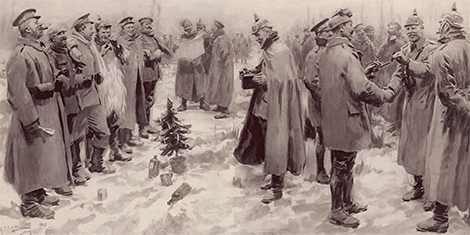
Christmas Truce 1914. Image courtesy of Wikipedia/A.C.Michael/Illustrated London News

Mediation Perspectives is a periodic blog entry that’s provided by the CSS’ Mediation Support Team and occasional guest authors. Each entry is designed to highlight the utility of mediation approaches in dealing with violent political conflicts. To keep up to date with the Mediation Support Team, you can sign up to their newsletter here.

If something is purely political, it becomes fuzzy as there is no clear, objective “right or wrong”. If something is purely technical, with many objective “rights and wrongs”, it becomes boring as there is nothing to debate or shape. Things become fascinating when the political and technical interact. Ceasefires that aim to stop violence are important because they can save human life, but they are also intellectually intriguing because of the way political and technical dimensions must interact if they are to be effective.
Categories
Cyber

A New Old Threat – Countering the Return of Chinese Industrial Cyber Espionage

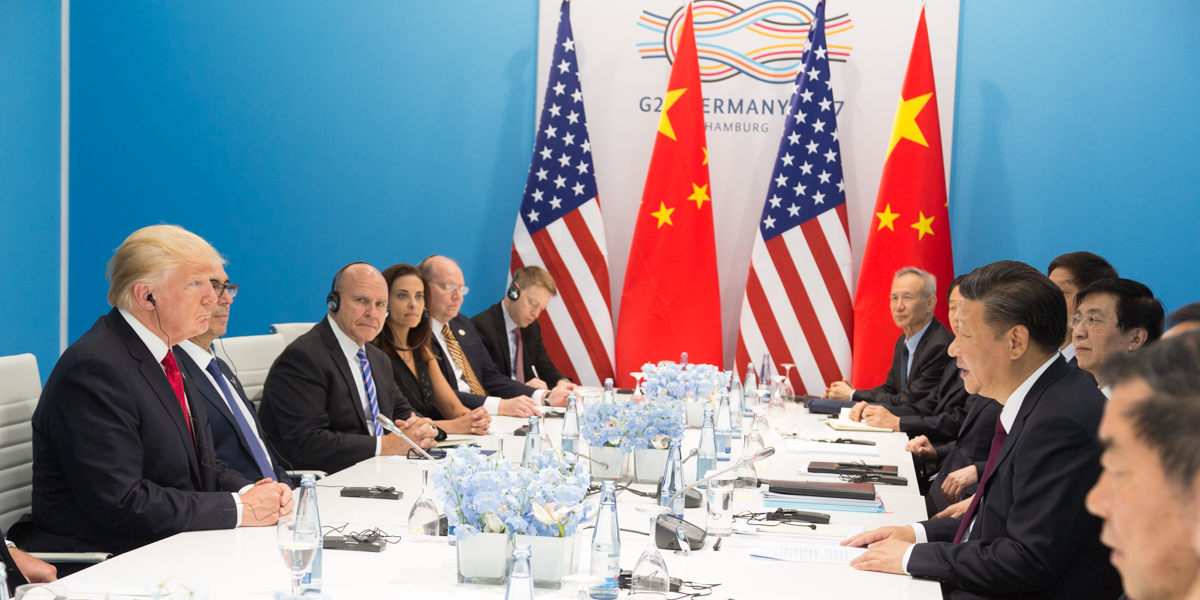
Image courtesy of The White House/Flickr

This article was originally published by the Council on Foreign Relations (CFR) on 6 December 2018.

China is once again conducting cyber-enabled theft of U.S. intellectual property to advance its technological capabilities. To combat the problem, the United States should build a multinational coalition, sanction Chinese companies, and strengthen cyber defenses.

Categories
CSS Blog

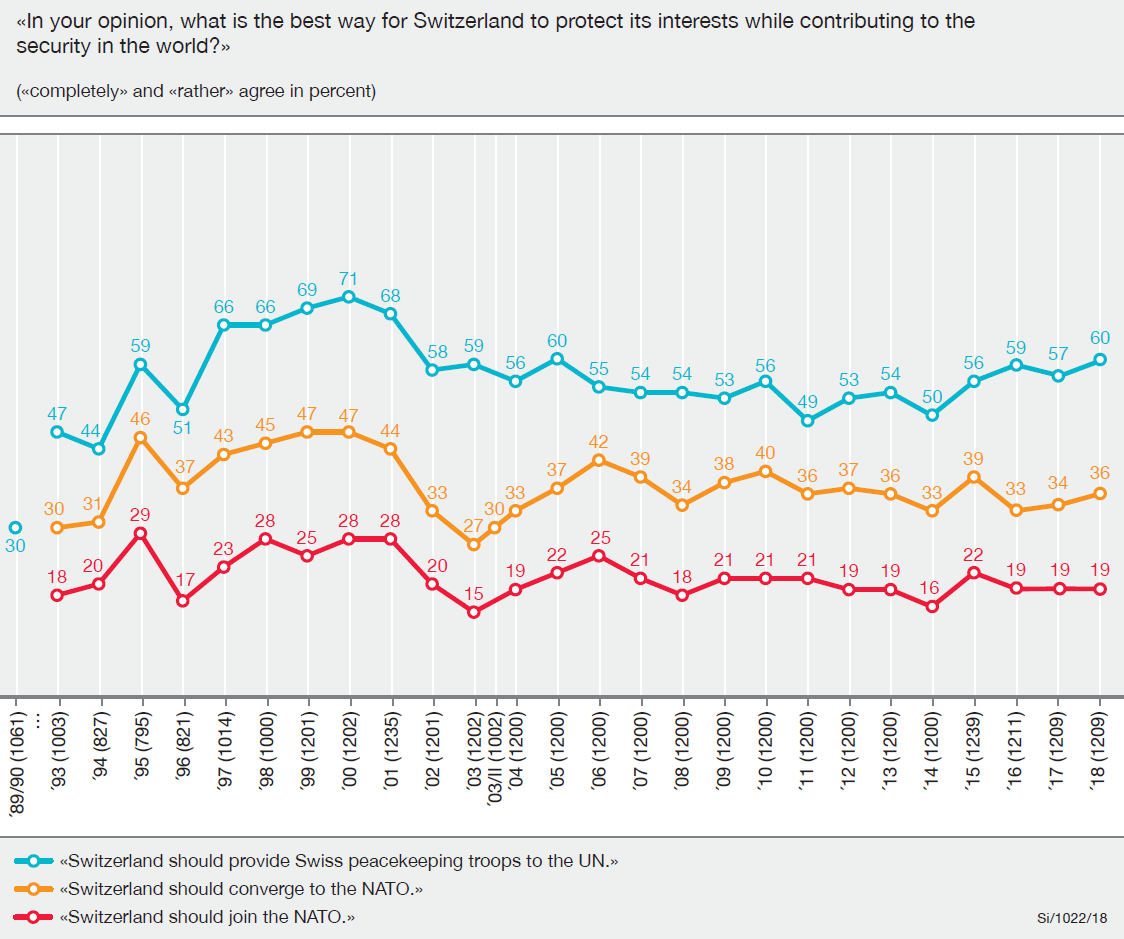
Swiss Attitudes toward Security Alliances

Click image to enlarge

EmailFacebookTwitter

This graphic of the week tracks how the Swiss public’s attitude toward security alliances has developed over the past 30 years. To find out more about long-term trends and tendencies in Swiss public opinion on foreign, security, and defense policy issues, see here (in German). For more CSS charts, maps and graphics on defense policy, click here.

Categories
CSS Blog

Mediation Perspectives: Challenges to the Multi-Track Approach – Insights from Syria

Image courtesy of ColdSmiling/Pixabay

Mediation Perspectives is a periodic blog entry that’s provided by the CSS’ Mediation Support Team and occasional guest authors. Each entry is designed to highlight the utility of mediation approaches in dealing with violent political conflicts. To keep up to date with the Mediation Support Team, you can sign up to their newsletter here.


This blog aims to shed light on some of the challenges facing the multi-track approach to mediation through the example of Syria. The multi-track approach refers to undertaking peacebuilding efforts at different levels and interlinking them where useful in order to reach sustainable peace. The concept has regained attention as numerous states suffering from conflict have failed to maintain long-lasting peace despite signing peace agreements at the national level. However, the implementation of the multi-track approach has rarely been tested through evidence-based research. This piece aims to raise some questions aimed at critically examining its application.

Russia’s Approach to the Development of Intermediate-Range Missiles

Image courtesy of Jacob Smith/DVIDS

This article was originally published by the Polish Institute of International Affairs (PISM) on 14 November 2018.

Russia will present the expected withdrawal of the United States from the Intermediate-Range Nuclear Forces Elimination Treaty (INF) as a step forcing a military response from Moscow. Even if the Russian Federation were to violate the INF by deploying new cruise missiles with a range greater than 500 km, the U.S. withdrawal from the treaty creates opportunity to blur responsibility. In the event of divided opinions within NATO, Russia’s position in arms control might be stronger vis-à-vis Europe and, indirectly, the United States. Moreover, Russia will continue expansion of its arsenal of ground-launched missiles.