In Search of the Real Indo-Pacific

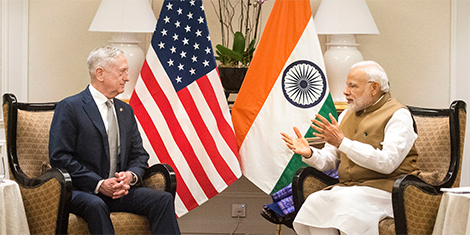
Image courtesy of US Department of Defense/Vernon Young Jr.

This article was originally published by YaleGlobal Online on 14 June 2018.

Global powers show renewed interest in the Indo-Pacific region, but should resist piling on with geopolitical intentions

The 2018 Shangri-La Dialogue in Singapore might as well have been renamed the “Indo-Pacific Dialogue.” In the plenaries and the panels, in the Q&As, corridors, and coffee breaks, not even the imminent Trump-Kim summit hosted by Singapore could compete with the “Indo-Pacific” among the attendees. Although the toponym itself is old, its sudden popularity is new, reflecting new geopolitical aspirations for the region.
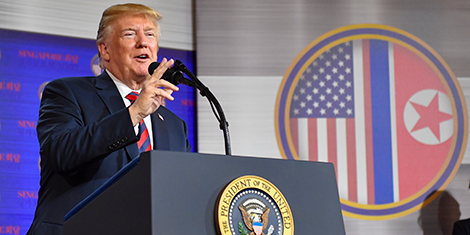
Four Fast Facts on Denuclearization

Image courtesy of U.S. Department of State/Flickr. Public Domain

This article was originally published by the IPI Global Observatory on 14 June 2018.

The Singapore Summit between the leader of the Democratic People’s Republic of Korea (DPRK), Kim Jong-un, and US President Donald Trump—preceded by an historic border crossing and sit-downs with South Korean President Moon Jae-in, and meetings with Chinese President Xi Jinping—is a tremendous moment by any measure. Almost exactly 55 years after the Korean Armistice Agreement, the prospect of a formal end to the Korean War and significantly thawed relations on the Korean Peninsula seems possible. Just a few months ago, North Korea and US were threatening each other with war.

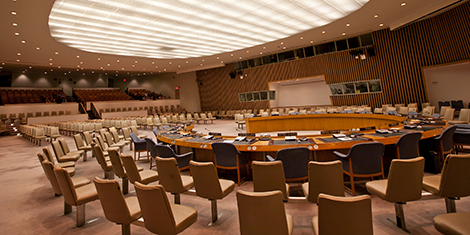
Is the UN Security Council Losing Legitimacy?

Image courtesy of JD Lasica/Flickr. (CC BY 2.0)

This article was originally published by Political Violence @ a Glance on 7 June 2018.

The UN Security Council (UNSC) is at a precipice. The Trump administration’s recent announcement that the US would no longer abide by the Joint Comprehensive Plan of Action (JCPOA) – the multilateral agreement to restrict Iran’s ability to acquire and develop nuclear weapons – breaks both a UNSC agreement and UNSC procedure. Breaking the JCPOA has the potential to undermine the UNSC’s legitimacy and the important functions it serves; the value the permanent five members of the UNSC (P5) place on the UNSC as a deliberative, policy-producing body in international politics is unlikely to persist amidst repeated, major violations of UNSC agreements and procedures by the P5, with downstream consequences for a broad swathe of international peace and security outcomes.

Categories
CSS Blog

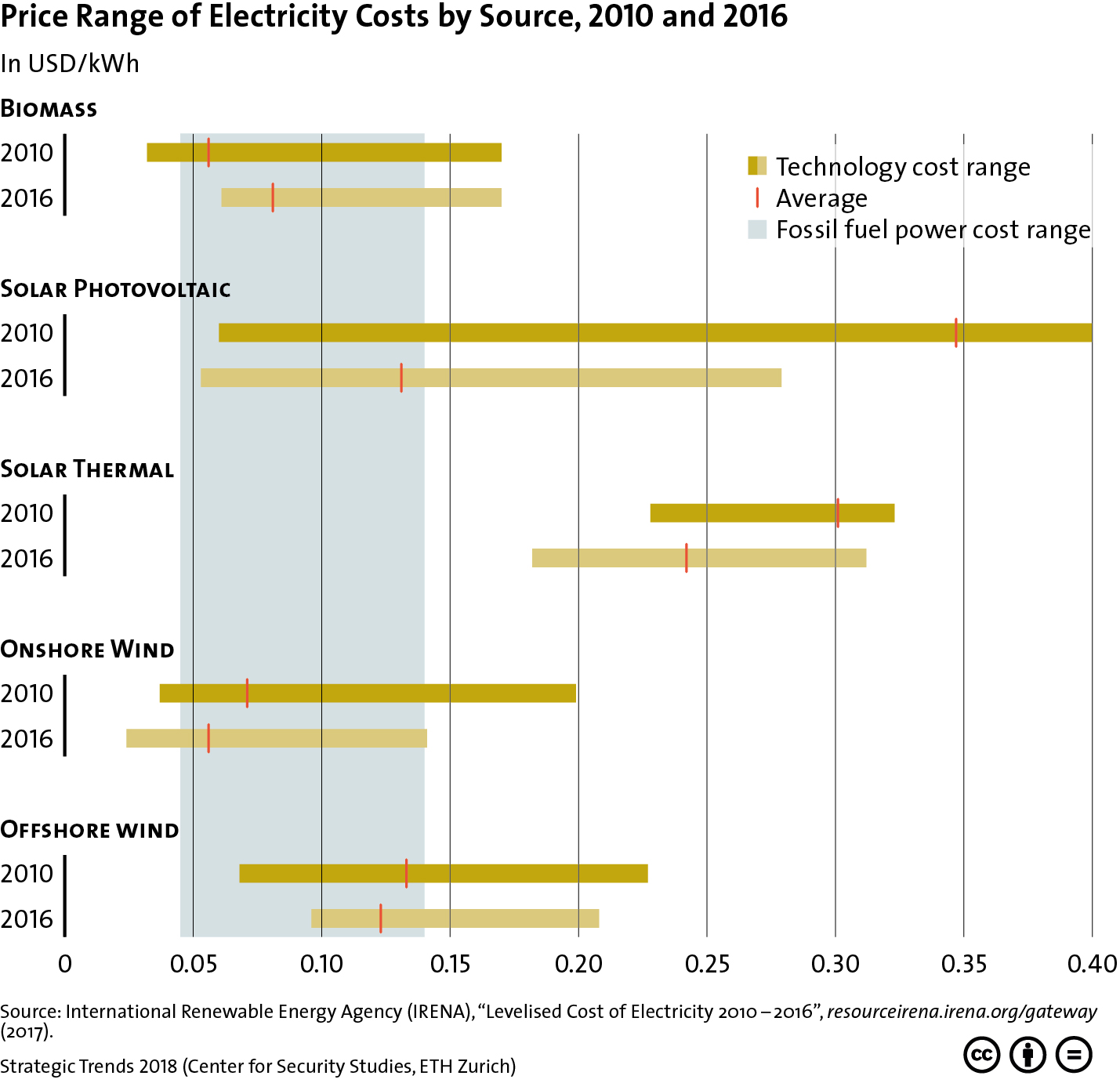
Price Range of Electricity Costs by Source, 2010 and 2016

EmailFacebookTwitter

This graphic contrasts the price range of electricity costs stemming from renewable sources with that of fossil fuels for the years 2010 and 2016. For more on the interplay between technological innovation and the geopolitics of energy, see Severin Fischer’s chapter for Strategic Trends 2018 here. For more CSS charts, maps and graphics on economics, click here.

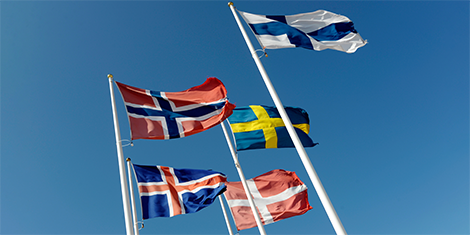
After Crimea: The Future of Nordic Defence Cooperation

Image courtesy of Johannes Jansson/Norden.org. CC BY-NC-SA 4.0

This article was originally published by the Norwegian Institute of International Affairs (NUPI) in 2018.

Nordic Defence Cooperation (NORDEFCO) was originally about cost-effectiveness. The Nordic states sought to work together when training and educating their soldiers, procuring new equipment, and logistically supporting their forces. Faced with a relevantly benign security situation at home, with Russia regarded in principle as a partner, operational military cooperation was primarily about expeditionary operations far from northern Europe. Even if NORDEFCO never became the beacon of Nordic cooperation that some political speeches sought to paint it as, it nonetheless provided the Nordics with a flexible and non-bureaucratic framework through which various forms of defence cooperation could be pursued.