Crisis and Conviction: US Grand Strategy in Trump’s Second Term

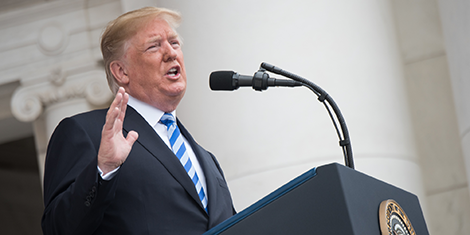
Image courtesy of US Department of Defense/James K McCann.

This article was originally published by War on the Rocks on 6 August 2018.

In the spring of 2014, before Donald Trump’s presidency was even a rumor, I began an article about the sources of U.S. grand strategy. By “grand strategy,” I mean a state’s way of orchestrating means and ends to achieve security over the long haul. I argued that the habitual ideas and pervasive influence of the U.S. foreign policy establishment make the fundamentals of American statecraft hard to change. What former advisor Ben Rhodes called the “Blob” and what former National Security Council official Michael Anton called the “priesthood” defines and dominates the ecosystem in which foreign policy is made. It exerts its influence through its expertise and its advantageous structural position as a “revolving door” between government, academia, think tanks, foundations, and corporations, reinforced by the feedback loop of allies’ demands for American patronage. In turn, the establishment successfully advances the view that the only prudent and legitimate grand strategy for the United States is “primacy,” the pursuit and sustainment of unrivalled dominance.

Categories
CSS Blog

Mediation Perspectives: Including Religious Women in Mediation Processes

Image courtesy of Vidar Nordli-Mathisen/Unsplash.

Mediation Perspectives is a periodic blog entry that’s provided by the CSS’ Mediation Support Team and occasional guest authors. Each entry is designed to highlight the utility of mediation approaches in dealing with violent political conflicts. To keep up to date with the Mediation Support Team, you can sign up to their newsletter here.

Religious women often face a double discrimination as regards inclusion into political mediation processes: They are not only discriminated against as women but also as religious actors. While there is an increasing consensus that effective, legitimate and sustainable agreements require the inclusion of both women and religious actors in the contexts where they play a role, the nexus between the two – i.e. religious women – is often neglected. Existing mediation guidelines rarely offer insights on how to better include this actor group in mediation processes. This blog argues that the role of religious women needs to be carefully considered and offers four key reflections for including religious women in mediation processes.

Categories
CSS Blog Terrorism

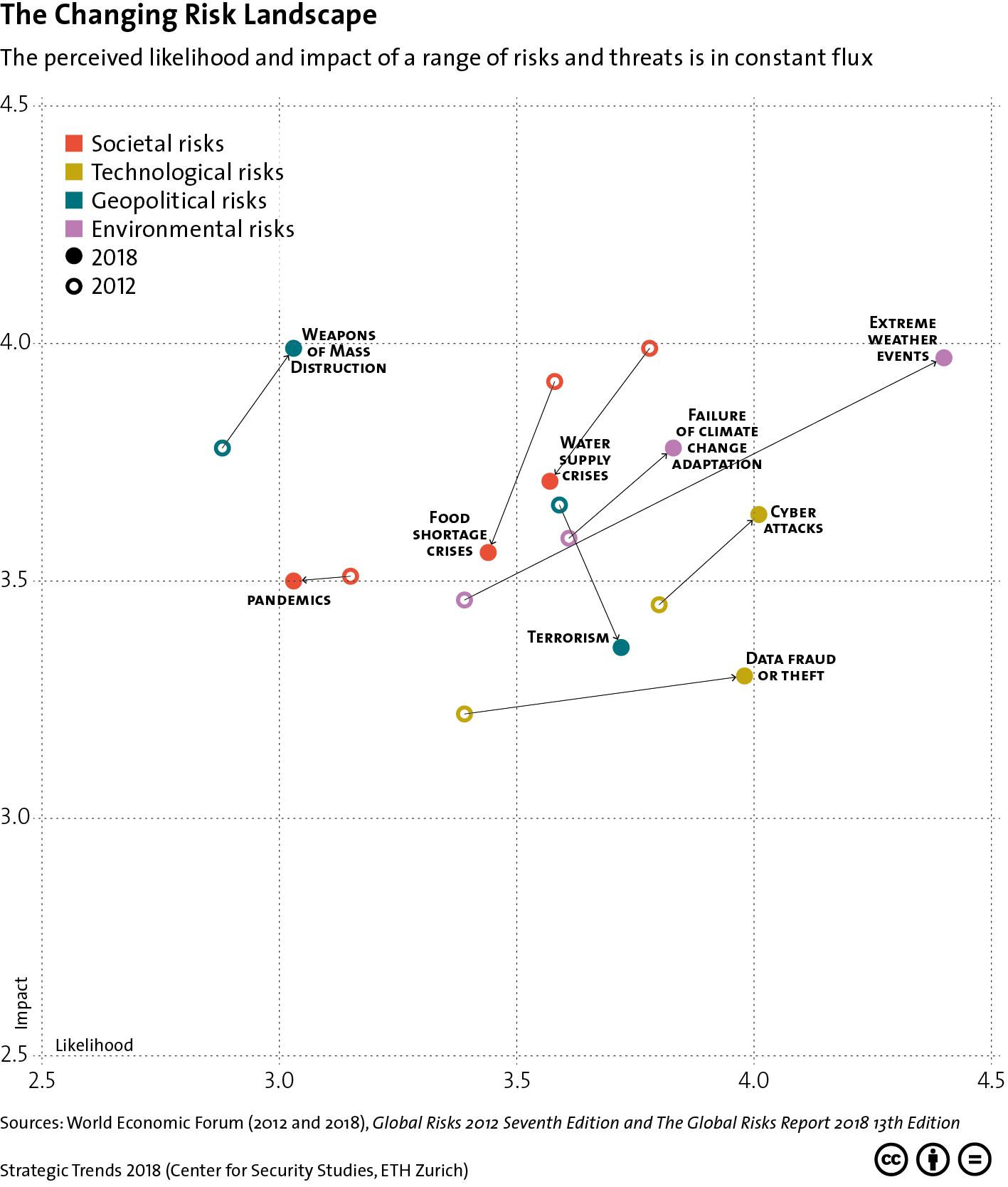
The Changing Risk Landscape

EmailFacebookTwitter

This graphic plots the change in the perceived likelihood and impact of various societal, technological, geopolitical and environmental risks between 2012 and 2018. For more on resilience and the evolution of deterrence, see Tim Prior’s chapter for Strategic Trends 2018 here. For more CSS charts, maps and graphics on risk and resilience, click here.

Categories
CSS Blog

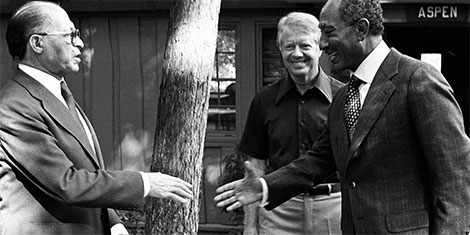
Mediation Perspectives: Empathy versus Realpolitik?

Image courtesy of the US government

Mediation Perspectives is a periodic blog entry that’s provided by the CSS’ Mediation Support Team and occasional guest authors. Each entry is designed to highlight the utility of mediation approaches in dealing with violent political conflicts. To keep up to date with the Mediation Support Team, you can sign up to their newsletter here.

Personal qualities and “micro skills” in peace mediation[1]

“So many people want to join mediation teams without having worked on the micro-techniques of mediation. These may seem far removed from bringing warring factions together. It relates more to the normal management of human interaction in conflict. These techniques have to do with the way you hold yourself; the way you listen; and the way you recognize where people have a common interest (…)” Nicolas ‘Fink’ Haysom,[2] South African mediator in Burundi and Sudan and former UN Special Representative for Afghanistan.

Categories
Business and Finance CSS Blog

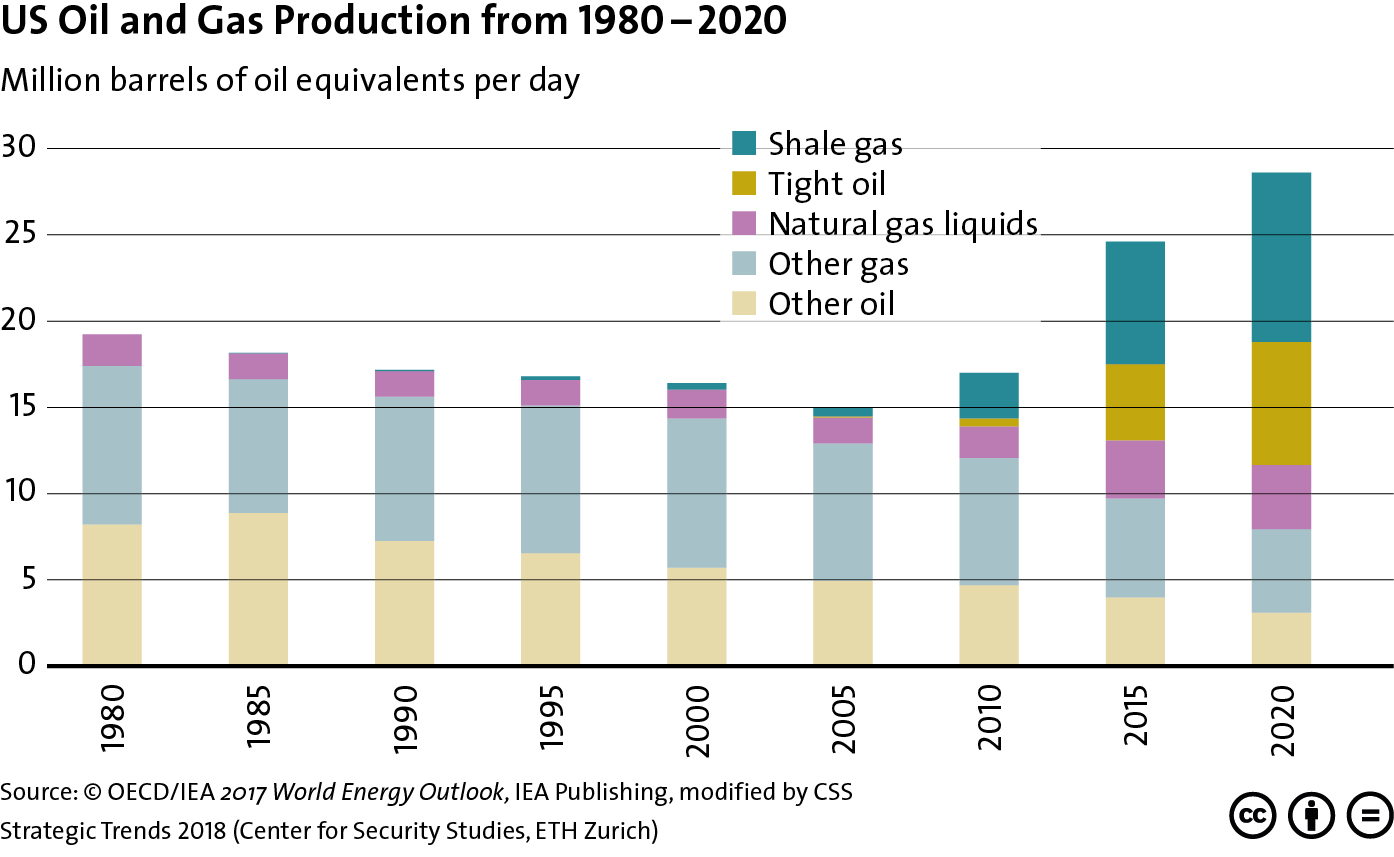
US Oil and Gas Production from 1980 – 2020

EmailFacebookTwitter

This graphic charts US oil and gas production from 1980 to 2015 and forecasts production up to 2020. For more on the interplay between technological innovation and the geopolitics of energy, see Severin Fischer ‘s chapter for Strategic Trends 2018 here. For more CSS charts, maps and graphics on natural resources, click here.