Categories
Humanitarian Issues

Team UN, World Police: Why We Need an Emergency Peace Service

South African blue helmet during training, 17th of July 2013. Image: MONUSCO Photos/Wikimedia

This article was originally published by The Conversation on 29 May, 2015.

It’s been more than 25 years since the Cold War ended, more than a dozen since we created an International Criminal Court, and a decade since the UN World Summit recognised the Responsibility to Protect civilians – and yet there’s been scant progress in preventing armed conflict and responding rapidly enough to protect civilians.

It’s not the fault of UN peacekeepers themselves, who won the Nobel Peace Prize in 1988 and have helped to manage and improve conditions in 69 armed conflicts worldwide, with 56 operations since 1988. Indeed, May 29 is recognised as the International Day of UN Peacekeepers.

EU-Latin American Cooperation: An Affair of One?

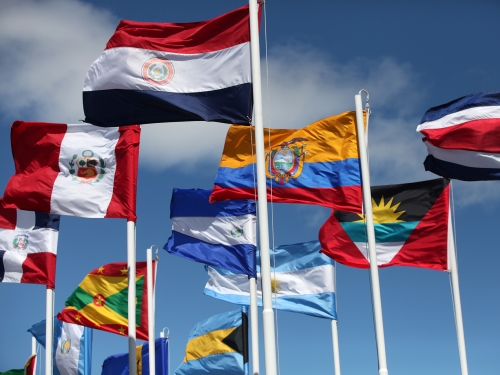
Latin American and Carribean Flags. Image: Cancillería del Ecuador By: Cancillería del Ecuador/Flickr

This article was originally published by Atlantic-Community.org on 29 May 2015.

The relationship between the EU and Latin America has always known large fluctuations of interest. Like other Spanish, Portuguese, and Italian EU leaders before her, High Representative Federica Mogherini seems to be a strong proponent of a deeper and more concrete dialogue with the region. She makes this clear by attending important events like the Summit of the Community of Latin American and Caribbean States (CELAC) in Costa Rica, and the EU-CELAC Civil Society Forum in Brussels.

‘Parrhesia’: the Radical Destruction of Impunity

French Philosopher Michel Foucault. Image: thierry ehrmann/Flickr

This article was originally published by OpenSecurity on 26 May 2015 as part of the “States of Impunity” series.

Impunity is not simply a juridical, technical problem, or some sort of loophole in the law that lawyers, politicians, bureaucrats, and activists can close with greater effort. Impunity lies at the heart of a dispositive that encompasses, neutralizes and even recuperates almost all attempts to redress it. We have come to this disturbing realization on the basis of both empirical and theoretical attempts to understand how contemporary legal, political or civil-society practices run the risk, despite their benevolence, of falling into the propagandistic rhetoric, social conformism and bureaucratic indifference that feed impunity.

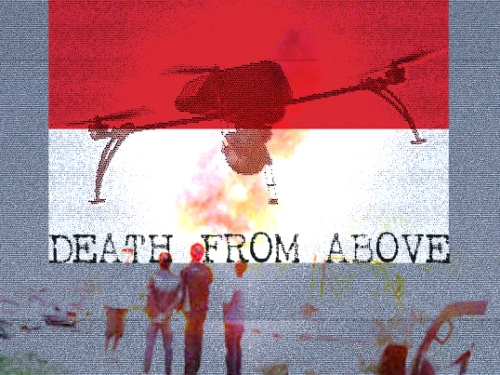
Death From Above

“Death from above” . Image: AK Rockefeller/Flickr

This book review was originally published by the Center for International Maritime Security (CIMSEC) on 28 May, 2015.

Andrew Cockburn. Kill Chain: The Rise of the High-Tech Assassins. Henry Holt Publishers. 307pp. $28.00.

It’s not often that a book review coincides with current events. Books, particularly nonfiction, are usually written and published months, if not years after an event has occurred. That’s because good nonfiction is written in retrospect: writers have spent some time absorbing their subject, researching and analyzing the facts; authors are hesitant to be rash in judgment or thought.

However, there are exceptions. Some pieces of nonfiction, particularly journalists’ works, are appropriate now — not later. Andrew Cockburn’s new book, Kill Chain: The Rise of the High-Tech Assassins, is one of them.  Cockburn’s book is timely.  In just the past few weeks there has been a flood of reporting from media outlets stating that a drone strike killed an American and an Italian hostage when targeting a group of Al-Qaeda members operating near the Afghanistan-Pakistan border.

Categories
Humanitarian Issues

Peacekeeping in Haiti: A Laboratory for Pacification in Rio de Janeiro?

A Brazilian soldier stands security during a walking tour of downtown Port Au Prince, Haiti. Image: Communication Specialist 1st Class Chad J. McNeeley/Wikimedia

This article was originally published by Strife on 28 May 2015.

With contingents of up to 3200 soldiers, over twice the number of the country’s current contribution to the UN Stabilisation Mission in Haiti (MINUSTAH), the Brazilian Armed Forces are at present occupying large parts of the favela agglomeration Complexo da Maré in Rio de Janeiro. After the mission in Alemão and Penha (Operação Arcanjo, November 2010 – June 2012), this is the second occasion on which the Armed Forces have significantly contributed to the Pacification programme.