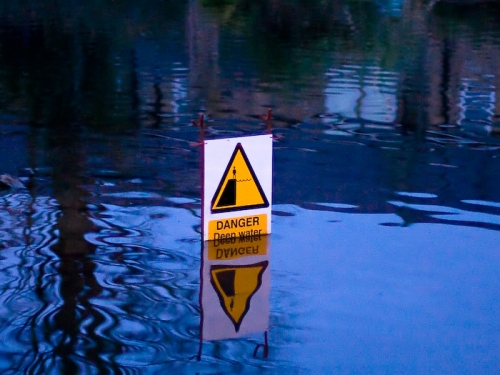
Whether a natural hazard turns into a disaster largely depends on the level of human preparedness. The recent, devastating earthquake in Nepal illustrates this point, where a lack of prevention and mitigation measures pre-disaster contributed to high disaster vulnerability, with terrible consequences for the local population. Communicating to the public about the risks of natural hazards represents a major function of disaster preparedness and resilience. Yet, many efforts to step up communication with the public about risks end in a “media black hole” because they are not properly tailored towards their target groups.
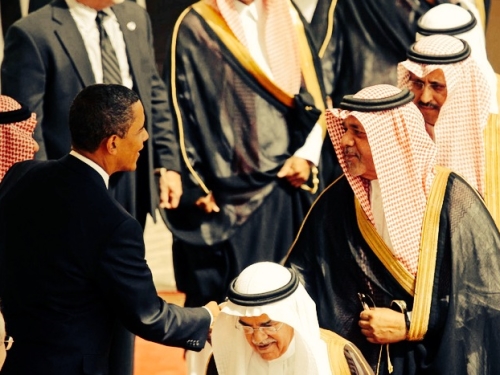
Saudi Arabia and other oil rich Gulf countries don’t want to live in the shadow of an Iranian nuclear bomb. Yet when the US embarks on an agreement to prevent this very possibility, they fear it might lead to a grand bargain that gives Iran carte blanche for expansionism in the Middle East.
Jamal Khashoggi, a journalist close to the Saudi ruling family, is already speaking of the “inter-Muslim struggle of the century” and Prince Turki al Faisal, former chief of Saudi intelligence and erstwhile ambassador of his country to Washington, is travelling the conference circuit warning that Saudi Arabia will strive to get a nuclear device should Iran do the same.
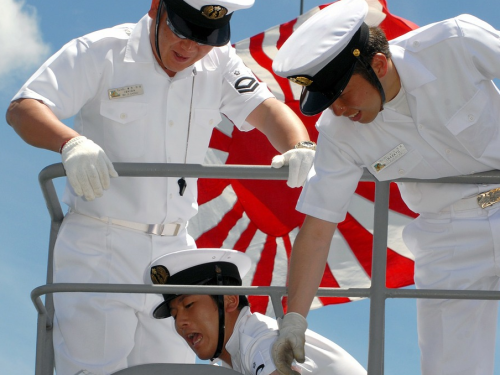
Halfway between Japan and Taiwan are the the Senkaku Islands. They are claimed by Beijing under the name Diaoyu and by Taipei with the label Diaoyutai. The islands are prime real estate from a strategic perspective. Despite rumblings to the contrary, Tokyo seems to be sticking to her policy not to deploy ground troops on these islands. This is usually portrayed as a goodwill gesture, an olive branch extended to China, showing how Japan is ready to negotiate in good faith and how she does not see a military solution as the only possible outcome of the territorial dispute over the islands between China and Taiwan. This is a view supported by the mainstream media and many observers.
But China is keeping the pressure on the islands, with constant incidents featuring coastguard (and other state) vessels and trawlers entering Japanese territorial waters around them. And there is not much evidence of any attempt by Beijing to negotiate in good faith. This is in contrast to the approach taken by Taipei, which has reached a fisheries agreement with Tokyo, a practical implementation of President Ma’s East China Sea Peace Initiative.
Violence is escalating again in El Salvador. March 2015 was the most violent month in over a decade, and the government is preparing army and police battalions to fight the gangs. These trends mark the definitive end of a process which started in 2012 with a truce between the two main gangs—MS-13 and Barrio 18—and evolved into a more complex and multidimensional approach to reducing violence, with a degree of international support.
The process was complicated, imperfect and subject to public controversy but it stands as one of the most significant examples worldwide of an effort to reduce violence through negotiation with criminal groups. With an annual homicide rate of 60 murders per 100,000 inhabitants, El Salvador is one of the most violent countries in the world. It is also a notable example of the trend towards non-conventional, hybrid and criminal violence.
An AV-8 Harrier “Jump Jet” sits on the deck of The Royal Thai Naval HTMS CHAKRI NARUEBET (CVH 911), a helicopter carrier, near the coast of Thailand. Image: Alex C. Witte/Wikimedia
With a coup d’état in May 2014 and the appointment of General Prayut Chan-o-cha as Prime Minister, 2014 proved to be a tumultuous year in Thai politics. Still faced with a deeply divided society, it is difficult for the Thai authorities to articulate foreign policy priorities or a grand strategy for the country. Even so, the Royal Thai Navy may soon have important tools available with which Thailand can make its presence felt internationally.
Although often overlooked by most reports in favor of the contributions made by the Chinese and the Russians in years since, Thailand was an important player in counter-piracy efforts in the Gulf of Aden. In response to an increase in Somali-based piracy, Combined Task Force (CTF) 151 was established in January 2009 to secure freedom of navigation along international shipping routes in the Gulf of Aden and Indian Ocean. Although comprised largely of vessels and crews from NATO member states, Thailand deployed a Pattani-class off-shore patrol vessel and a supply ship to join the force in 2010-2011.