On 28 May 2020, Dr Jack Thompson, former Head of the Global Security Team at the CSS and currently a Senior Strategic Analyst at The Hague Centre for Security Studies, presented his chapter on “China, the US, and World Order” from Strategic Trends 2020. This video is a recording of the event, which forms the fourth part of the CSS Brown Bag Webinar series.

Image courtesy of Team Tumult
Mediation Perspectives is a periodic blog entry that’s provided by the CSS’ Mediation Support Team and occasional guest authors.
In the context of COVID-19-related discussions about moving mediation training online, this blog reflects on key strategic and operational questions one should ask to make this decision. Takeaways include: 1) online training is not better or worse than in-person training, but they each have their own strengths and weaknesses; 2) developing quality online training requires intentional design rather than just the “shoveling” of existing resources onto the web; and 3) any decision to develop online training courses should be part of a long-term strategic decision rather than a short-term improvisation.
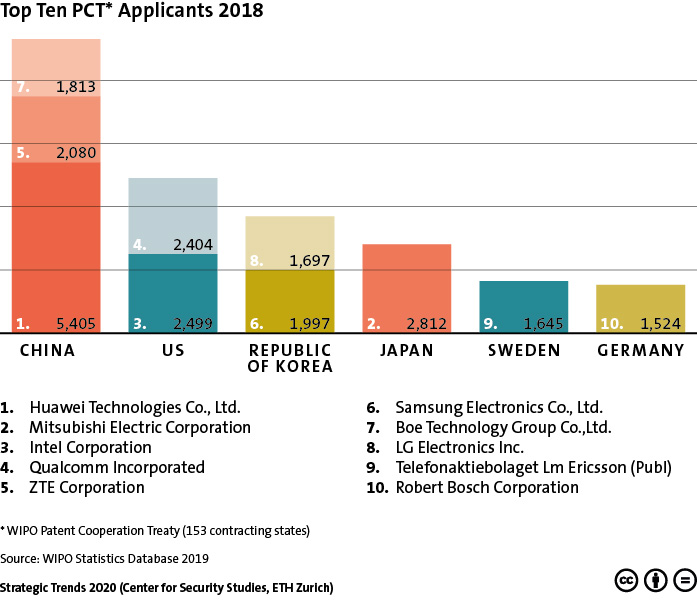
This graphic illustrates the main applicants to the Patent Cooperation Treaty (PCT) in 2018 by countries and companies, such as Huawei, Mitsubishi, and Intel, among others.
For an insight into the implications of China’s Belt and Road Initiative (BRI) and targeted influence attempts in Europe, read Linda Maduz and Henrik Larsen’s Strategic Trends 2020 chapter here.

Image courtesy of Free-Photos/Pixabay
This blog belongs to the CSS’ coronavirus blog series, which forms a part of the center’s analysis of the security policy implications of the coronavirus crisis. See the CSS special theme page on the coronavirus for more.
The COVID-19 pandemic has led to an explosion of digital tools for fighting communicable diseases. To cut through this complexity, this blog provides an overview of such tools for information exchange, contact tracing and monitoring compliance with physical distancing and quarantine measures. The large variety of applications can be explained by the (sub‑) national organization of crisis management, different socio-technological contexts, and the initial absence of sunk costs. To avoid an accelerated increase of surveillance that is incompatible with democratic standards, more transparency is needed regarding government contracts and consequential, algorithmic decision-making.