Bringing Big Data to War in Mega-Cities

DARPA Big Data

This article was originally published by War on the Rocks on 19 January 2016.

As the U.S. Army prepares for the future, it has become increasingly aware that operations are more and more likely to take place in large cities. The number and size of cities continues to grow, and they are quickly becoming the dominant form of human habitation. Belligerent actors, aware of the West’s growing anxieties about collateral damage, have good reason to place forces in or around cities. Further, advanced sensing and weapons systems employed by modern militaries make hiding in remote areas of the world less and less attractive to non-state enemies of advanced powers.

America’s enemies see the advantages of the seemingly impenetrable clutter that dominates the modern city. The Army’s current approach to learning about this environment is to seek the diamonds scattered amidst this clutter. What we are missing, though, is that the clutter itself is the jewel. Enormous amounts of readily available data can reveal more about a city, its population, and the nefarious actors residing there than we could have imagined before. To truly understand this environment the Army must fundamentally change its approach to understanding the environment: It must adopt a holistic approach enabled by big data analytics.

The Army, however, seems hesitant to embrace 21st-century data analysis, instead relying largely on the same micro-level methods it has used for decades.
This must change if the Army wishes to maintain the ability to “see first” and “understand first” in the modern urban arena.


Categories
Humanitarian Issues

For Lasting Peace, Exceptions Must Become Rule: Q&A with Séverine Autesserre

Peace dove/Mural azulejos día de la PAZ

This article was originally published by IPI Global Observatory on 12 January 2016.

Despite an increased spotlight on the disconnection between international peacebuilders and the communities in which they work, the situation does not appear to have improved dramatically in the past year, according to Séverine Autesserre, Associate Professor of Political Science at Columbia University’s Barnard College.

Dr. Autesserre, whose 2014 book Peaceland is credited with bringing the problem to wider attention, said there may have been a change in discourse, but not in practice.

A major issue is that many people and organizations think that they are the rare exceptions to the rule, she said in a conversation with International Peace Institute Policy Analyst Margaret Williams.

“People may agree with the analysis and the need for change, but they may feel it is only for other people,” she said. “That may be why we haven’t seen so many changes in the past year.”

She said policymakers, practitioners, peacebuilders, local authorities, local populations and others have at least shown a greater interest in the exceptions, and these could be highlighted as models for reform.

Categories
Regional Stability

What (else) to Expect in Africa in 2016?

“Africa” written in the evening sky in Malawi

This article was originally published by ISS Africa on 12 January 2016.

Africa starts the New Year with many burning issues that escalated in 2015 and need urgent action. The crisis in Burundi, where grave human rights violations are continuing, and the war in South Sudan are the two most pressing among these.

This year will also see a number of important elections taking place in Africa. Uganda’s presidential polls are being held next month, and those scheduled for the Democratic Republic of Congo later this year will also be top of mind for most Africa watchers.

It will also be a very challenging year for Nigeria’s President Muhammadu Buhari, who will now have to make good on his 2015 election promises.

This includes effectively dealing with terror group Boko Haram and bringing back the kidnapped Chibok girls. Africa’s most populous nation will also look to him to continue the fight against corruption and boost economic development, despite the slump in the oil price.

But what are we missing, beyond the big newsmakers?

In 2016, we should watch for surprises from unexpected quarters. One of these might be from Zimbabwe. President Robert Mugabe, who turns 92 next month, is not immortal – even if his supporters vow to push him onto the stage in a wheelchair to celebrate his victory at the next party elections in 2019.

Categories
Terrorism Regional Stability

In the Fight Against Violent Extremism, Why Is Prevention Elusive?

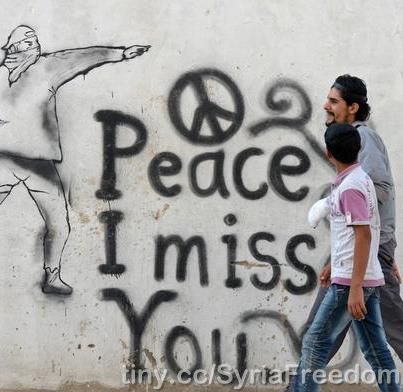
Graffiti in Syria, ‘Peace I Miss You’

This article was originally published by IPI Global Observatory on 11 January 2016.

Countering violent extremism has become a cottage industry in both the global North and South, as Daesh (also known as ISIS) and other transnational armed terrorist groups continue to threaten the very foundations on which national and international peace and stability have rested for decades. For the countries of the Sahel-Sahara and North Africa regions, brutally affected by the scourge of violence, countering violent extremism (CVE) has been embraced as the new overarching framework for a continued pursuit of the “war on terror.”

Current Approaches and Limitations

Under the CVE umbrella, these countries have multiplied initiatives and adopted various measures both at the national and regional levels to address the roots of radicalization, violent extremism, and terrorism. Efforts based on increasing education and cultural outreach—such as training imams to counter radical Islamic teachings—have become common. Some countries, with the active participation of civil society organizations, have devised national action plans that include the organization of inter-religious and inter-communal dialogue, as well as awareness-raising campaigns aimed at encouraging citizen engagement in the prevention and the fight against violent extremism. Still others have included in their national CVE strategy the creation of socioeconomic opportunities for youth and other marginalized groups to prevent their radicalization.

Categories
Terrorism Regional Stability

An Interview with Nadim Shehadi

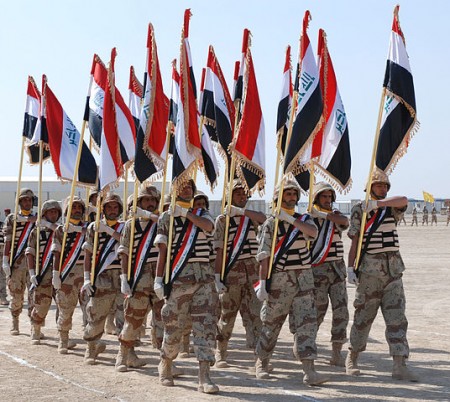
Iraqi soldiers graduating from basic training

This interview was originally published by E-International Relations on 6 January 2016.

Nadim Shehadi is an associate fellow of Chatham House where he directs a programme on the regional dimension of the Palestinian refugee issue in the Middle East Peace Process. He is also director of the Fares Center for Eastern Mediterranean Studies at The Fletcher School at Tufts University, as well as a senior member of St Antony’s College Oxford where he was director of the Centre for Lebanese Studies from 1986 to 2005.

Where do you see the most exciting research/debates happening in your field?

The most exciting and dynamic conversation is happening on social media, it is spontaneous, continuous and instant. It is quite sophisticated and with unwritten rules. I don’t think that ‘retweets are not endorsements’ really means it, people generally stick to a narrative and spread what is in line with their version of events or discredit what is not. Eventually they form closed circles and interact with like-minded people. There is a whole battle being fought there and it is fascinating to watch that live on your device, you can learn so much from it and you have access to people’s inner thoughts.