Categories
Terrorism

Artillery Returns to the Battlefield in the War against ISIL

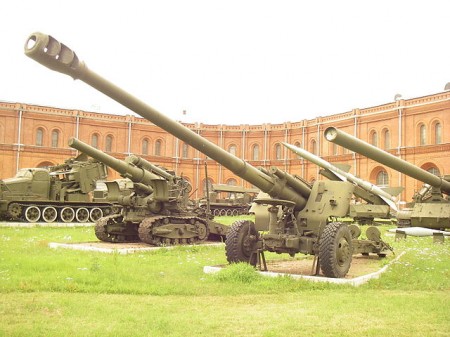
152-mm howitzer 2A65 «Msta-B» in Saint-Petersburg Artillery museum

This article was originally published by War on the Rocks on 11 January 2016.

Amid Russian air and cruise missile strikes, civilian casualties, proposed no-fly zones, air-to-air shoot-downs, and new surface-to-air missiles in Syria, relatively few news stories have discussed the introduction of Russian artillery into the theater. Though the introduction of artillery may seem less significant than aerial attacks, remember that Napoleon observed: “With artillery, war is made.” By reintroducing artillery to Syria to support combined arms operations, the Russians may have revealed something about the war they and the Syrians envision. Together with increased air attacks, the Syrians and their Russian advisors seek to revitalize combined arms forces, and artillery is critical to their vision of such forces. Artillery is particularly important for offensive operations, providing a continuous presence that current Russian air deployments cannot sustain. The Syrian ground forces are now taking and holding ground, fighting urban and village battles where they must, but posing a threat of encirclement and maneuver where they can.

The Syrian military was once a large, well-equipped, Soviet-model Arab army capable of executing combined arms operations. While not often victorious, it was usually competent. The Syrian Arab Army (SAA) was not then the principal internal guarantor of Bashar al-Assad’s regime — that was the responsibility of other military and security organizations. Primarily oriented against Israel, the conscript-based SAA drew on all sects and functioned as a key secular institution of a largely secular state.
The African Union’s Coercive Diplomacy in Burundi

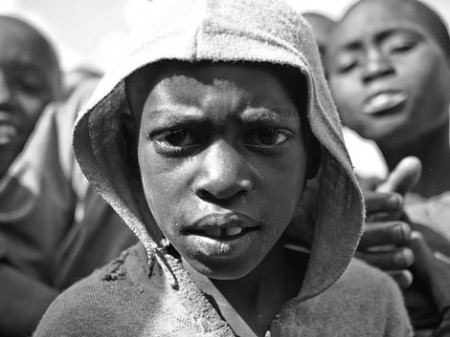
Burundi-Child

This article was originally published by the IPI Global Observatory on 18 December, 2015.

The African Union Peace and Security Council (PSC) broke new ground yesterday by adopting a communiqué that threatened to launch a 5,000 strong force to protect civilians in Burundi. The communiqué gave the Burundian government 96 hours to consent to the operation or face the scenario of the AU deploying the force anyway. Although Burundi was a member of the PSC—and was actually its designated chair for December 2015—the council utilized Article 8(9) of the Protocol Relating to the Establishment of the PSC (2002) to ask the Burundian delegation to remove themselves from the chamber during the substantive deliberations on this issue.

If the Burundian government consents to its deployment, the force, dubbed the African Prevention and Protection Mission in Burundi (MAPROBU), will still confront many practical challenges, not least how to stabilize the country and help facilitate a political settlement of the crisis there, which is thought to have killed hundreds of people, mainly civilians, in the past few months. However, if the Burundian government calls the AU’s bluff and refuses to invite MAPROBU onto its territory, this raises an even more fundamental set of challenges for the AU. Whatever happens, this communiqué is a novel form of coercive diplomacy exercised by the AU that raises many important questions for African governments, regional organizations, the United Nations, and other stakeholders in Burundi’s ongoing crisis, not least the country’s citizens. This report briefly discusses five of those questions.

Categories
Terrorism

The Changing Face of Deadly Conflict

Anti-Violence art

This article was originally published as part of the Crisis Group’s The Future of Conflict project on 21 December, 2015.

Policymakers trying to prevent and resolve deadly conflict — and those, like the International Crisis Group, seeking to influence them — are all too unhappily familiar with that corollary to Murphy’s Law which tells us: “If you’re feeling good, don’t worry: you’ll get over it”. The continuing decline in the reality and prospect of war between states gives us much to be pleased about, as does the reduction — more than most people think — in the number and intensity of wars and incidents of mass violence within states, at least those driven by the familiar forces of greed for territory or government power, or the fears or grievances of particular groups.

But we have all been deeply sobered by the re-emergence, within and across state boundaries, and on a scale not seen for centuries, of a new breed of conflict: extreme violence driven by non-state actors motivated by religious ideology. Starting with al-Qaeda and its offshoots and imitators in Africa and Asia, this has been now given most alarming expression with the emergence of the Islamic State (IS), or Da’esh — its leadership now focused on Syria and Iraq, but rapidly finding supporters elsewhere, like Boko Haram in West Africa and a number of jihadi groups in North Africa and South East Asia. The strategies and tools that have been working elsewhere to date have had little or no traction in this context, and all of us need to go back to the drawing board.

The Strategist: The Work of an Unconventional Political Scientist

Risk Board in the Middle East

This article was originally published by the Harvard International Review on 11 December, 2015.

In Sparrow’s narrative, the private and the public are intimately related, interconnected, and form a unity to explain relevant chapters of the American past.

Political scientist Bartholomew Sparrow has written what might be considered an unconventional work, The Strategist, a biography of Brent Scowcroft. His book is unconventional because biographies, even political biographies, are not typically written by political scientists – they are written by historians, journalists, or amateurs with a lot of energy and a fine pen. The political science community does not reward this work. We are scientists, not storytellers. We write about the science of politics, not about the lives of politicians. We are scientists who want, as professor Dietrich Rueschemeyer stated in Capitalist Development and Democracy to “go beyond conventional history’s preoccupation with historical particularity and aim for theoretical generalizations,” and consequently, the specific, the detail, and the particular are unnecessary and avoidable. Almost twenty years ago the eminent political scientist Margaret Levi argued in A Model, a Method, and a Map: Rational Choice in Comparative Historical Analysis that “the rationalists are almost willing to sacrifice nuance for generalizability, detail for logic, a forfeiture most other comparativists would decline.” In this view, Sparrow’s biography of Scowcroft is not only unconventional, but is also an anomaly in political science.

Interview – Ivan Krastev

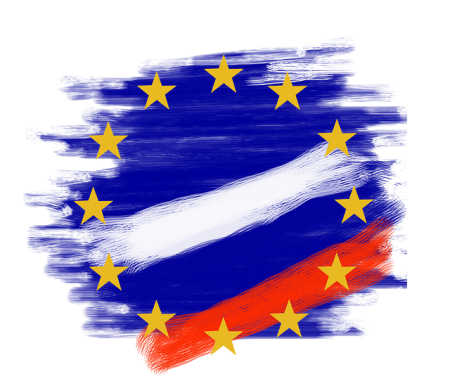
Merged Europe and Russia flag

This interview was originally published by E-International Relations on 16 December, 2015.

Ivan Krastev is chairman of the Centre for Liberal Strategies, Sofia, Bulgaria and Permanent Fellow at the Institute for Human Sciences in Vienna (IWM), Austria. A founding board member of the European Council on Foreign Relations, he is also a member of the global advisory board of Open Society Foundations, and of the advisory council of the Center for European Policy Analysis (CEPA) and the European Cultural Foundation (ECF). Mr. Krastev is also associate editor of Europe’s World and a member of the editorial board of the Journal of Democracy and Transit – Europäische Revue. He has written extensively on democracy, Eastern Europe, the politics of his native Bulgaria and relations between Russia and the West.