Russia’s New National Security Strategy: Familiar Themes, Gaudy Rhetoric

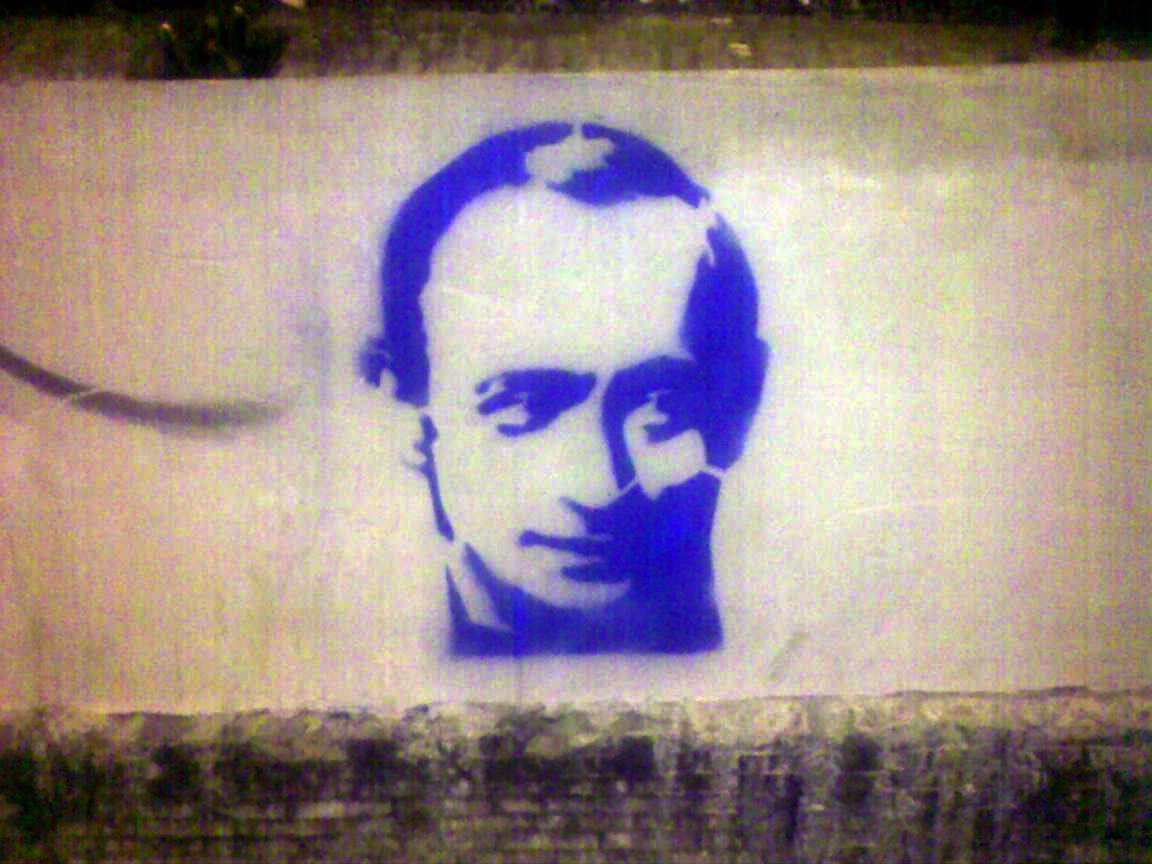
Putin stencils, courtesy by Jonathan Davis/flickr

This article was originally published by the War on the Rocks on 4 January, 2016.

On the last day of 2015, Vladimir Putin put his signature on the decree adopting Russia’s new National Security Strategy out to 2020. Inevitably it is something to pore over looking for clues about Putin’s future intentions and the Kremlin’s assessment of the risks and opportunities ahead. The document can be downloaded as a PDF from the Kremlin website, and there is a pretty decent overview of the main points from RT.

In comparison with the last strategy, adopted in 2009, it comes across at first blush as pretty extreme. The new document contains fiercer and more explicit criticism of the West. The key issue is what Moscow calls the West’s efforts to “levers of tension in the Eurasian region” in order to undermine Russian national interests. In particular, the strategy condemns “the support of the United States and the European Union of an unconstitutional government coup in Ukraine which has led to a deep schism in Ukrainian society and the outbreak of armed conflict.”


Interview – Charles King

Georgetown University Professor Charles King speaking on his book, Midnight at the Pera Palace: The Birth of Modern Istanbul (2014), at Politics and Prose book store, Washington, D.C., 21 September 2014. Image: Taylordw/Wikimedia

This interview was originally published by E-International Relations on 18 October, 2015.

Charles King is Professor of International Affairs and Government at Georgetown University, where he also serves as chair of the Department of Government. He previously served as chair of the faculty of Georgetown’s Edmund A. Walsh School of Foreign Service, the country’s premier school of global affairs.  King’s research has focused on nationalism, ethnic politics, transitions from authoritarianism, urban history, and the relationship between history and the social sciences. He is the author or editor of seven books, including Midnight at the Pera Palace: The Birth of Modern Istanbul (W. W. Norton, 2014); Odessa: Genius and Death in a City of Dreams (W. W. Norton, 2011), which received the National Jewish Book Award; and The Ghost of Freedom: A History of the Caucasus (Oxford University Press, 2008), which was named “History Book of the Year” by the Moscow Times.

Interview – Michael Hardt

Marxist scholar Michael Hardt. Image: Grupo de Estudo de Fotografia da UFES GEF/Flickr

This article was originally published by E-International Relations on 11 November, 2015.

Michael Hardt is a political philosopher and literary theorist based at Duke University and the European Graduate Institute. He is best known for his collaboration with Antonio Negri, with whom he wrote the Empire trilogy. His work has been linked with autonomist Marxism. His most recent book is Declaration, co-written with Antonio Negri, which refers to the Occupy and other social movements. He currently serves as the editor of the South Atlantic Quarterly.

How has the way you understand the world changed over time, and what (or who) prompted the most significant shifts in your thinking?

Maybe more significant for me is something that hasn’t changed. When Toni Negri and I were writing Empire, in the late 1990s, our first intuition was that the United States would soon no longer be able to dictate global affairs, that it could no longer “go it alone,” unilaterally. But we didn’t therefore think that some other nation-state, such as China, would occupy that position or even that a multilateral alliance among dominant nation-states would be able to control global affairs. Our hypothesis instead was that a network of powers was emerging – including the dominant nation-states together with supranational institutions, corporations, NGOs, and other non-state actors – to control global relations in a shifting and contingent way.

Proposal of a Dignity Scale for Sustainable Governance

Image: stokpic/Pixabay

This article was originally published by the Journal of Public Policy on 29 November, 2015.

In October 2005, two North African teenagers died of electrocution in one of the banlieues of Paris as they were running from the police through a dangerous power substation. An inquiry later established the teens were innocent, and the incident sparked some of the worst unrest seen in France over the past 40 years.  The riots brought about much debate over the tense relationship between immigrant youth and the state, the recurring problems of “fracture sociale,” and a perceived lack of social justice. Above all, the protests were an expression of acute feelings of alienation experienced by a large section of society. The banlieues have been a breeding ground for deep frustration, maintaining a distinctly poor and marginalized status for decades. Unemployment is common and 36% of the banlieu residents are estimated to live below the poverty line—three times the national average.

In Switzerland’s Shadow: Summing up Serbia’s 2015 OSCE Chairmanship

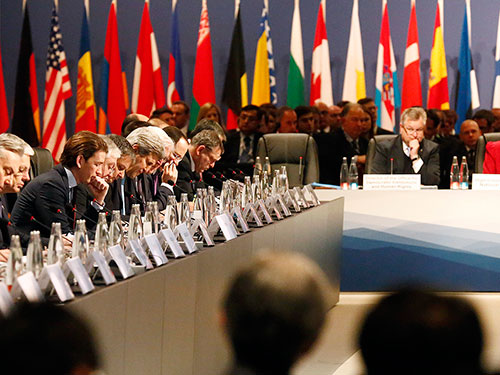
OSCE Minsterial Council in session, Basel 2014. Image: Bundesministerium für Europa, Integration und Äusseres/Flickr

This article was originally published by the Security and Human Rights Blog (The Hague) on 11 December, 2015.

The OSCE Ministerial Council meeting, held in Belgrade from 3 to 4 December 2015, was the final highlight of the Serbian OSCE Chairmanship of 2015. With the fading Serbian OSCE presidency, the direct co-responsibility of Swiss diplomacy for the OSCE ends as well. It needs to be recalled that in the fall of 2011, Switzerland and Serbia had teamed up and successfully campaigned for a “double chairmanship” of the OSCE for the years 2014 (Switzerland) and 2015 (Serbia).

Yet, at that time, more than four years ago, Switzerland and Serbia could not have imagined that under their tandem chairmanship, the OSCE would play a central role in the biggest geopolitical crisis in Europe since 1990. In the Ukraine Crisis, the OSCE suddenly played a leading role after having almost lapsed into irrelevance in the years before.