Categories
Regional Stability

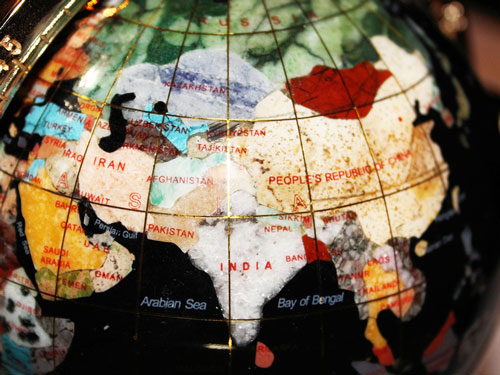
China-Pakistan Economic Corridor: Towards a New ‘Heartland’?

Colorful Globe focued on India, China, Pakistan
Colorful Globe. Image: Carol VanHook/flickr

This article was originally published by the LSE South Asia Centre on 16 November 2015.

The China-Pakistan Economic Corridor (CPEC), first announced during Xi Jinping’s state visit to Pakistan in April this year, is a crucial component of the Chinese President’s One Belt, One Road (OBOR) initiative, which has become an indispensable element of discussions about China’s foreign policy and one of the Chinese President’s most emblematic policy initiatives.

CPEC has been heralded as a game-changer for regional and global geopolitics, for reasons that go beyond the unprecedented scale of China’s largest overseas investment project to date. The project consists of extensive investment in Pakistan’s transport, telecommunications and energy infrastructure, with an estimated value of over $46 billion USD. It will eventually extend about 3,000 km, linking the southwestern Pakistani port of Gwadar to the city of Kashgar, in China’s northwestern Xinjiang province.

Climate Financing Must Impact Locally

Globe in water
Drowning Earth. Image: Andrea Della Adriano/flickr

This article was originally published by the Danish Institute for International Studies on 1 December, 2015.

In Vietnam, the rainy and dry seasons are increasingly unpredictable. Such climate changes have a greater impact in Vietnam than, for example, in Denmark. Many in Vietnam live off the production of rice and other crops, and their livelihoods are dependent on fixed seasons.

Local governments are actively trying to address such changes and resulting challenges with more accurate seasonal forecasts, different crop varieties and more effective water management. However, they are often limited by shortage of funds. This is just one of many examples illustrating both the need for securing adaptation in poorer countries and local governments’ key role in implementing adaptation.

Categories
Regional Stability

THINK AGAIN: Who Profits from Kenya’s War in Somalia?

Flag of the Kenya Defence Forces.
Flag of the Kenya Defence Forces. Image: Fry1989/Wikimedia

This article was originally published by ISS Africa on 7 December, 2015.

It has been more than four years since the Kenyan Defence Force (KDF) crossed the border into Somalia, and Kenyans are entitled to ask what exactly their troops are still doing there.

The official rationale is no longer entirely convincing. The original purpose of the military intervention was to insulate the country from the conflict in Somalia.

‘Kenya has been and remains an island of peace, and we shall not allow criminals from Somalia, which has been fighting for over two decades, to destabilise our peace,’ said George Saitoti, the internal security minister at the time.

It is debatable whether that aim has been achieved. Although Operation Linda Nchi (‘Protect the Nation’) curtailed the operations of al-Shabaab, the Islamist militant group has claimed responsibility for dozens of incidents on Kenyan soil in recent years. This includes the high-profile attacks on Westgate Mall and Garissa University.

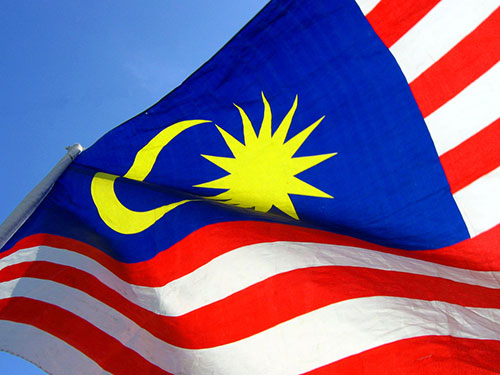
Evaluating Malaysia’s ASEAN Chairmanship

Flag of Malaysia
Flag of Malaysia. Image: Eric Teoh/flickr

This article was originally published by the East Asia Forum on 5 December, 2015.

Malaysia ended its chairmanship of ASEAN as the grouping announced the establishment of the ASEAN Economic Community (AEC) in November 2015. The AEC intends to create a single market across the ASEAN region by standardising economic regulations including those on trade, flows of financial capital and labour migration. Malaysia is one of a few ASEAN countries that have pushed most strongly for initiatives to enhance intraregional economic cooperation. But there may be cause for disappointment in what Malaysia has achieved as ASEAN’s chair.

While ASEAN has announced that it has achieved more than 90 per cent of AEC targets, this does not appear to have brought many tangible benefits for either the region’s business community or ordinary people. Businesses continue to complain about overlapping rules and regulations that raise their costs when trading and doing business across borders. Though 10 countries have signed onto a framework that intends to direct the movement of skilled labour in the region, actual movement remains subject to the policies of individual nations. Ordinary people are yet to acknowledge that ASEAN initiatives have resulted in higher income and more job opportunities.

Today’s Energy Security Risks: Complacency, Uncertainty, and Ideology

Burning Oil Well. Image: LCpl. Dick Kotecki/Wikimedia

This article was originally published by the Atlantic Council on 3 December, 2015.

At the 2015 Atlantic Council Energy and Economic Summit in Istanbul, twenty-one Ministers and senior officials from Europe, Asia, North America, and the Middle East met to assess the changing geopolitics of energy security. The assembly was a reminder that energy security — the ability of a nation to secure affordable, reliable, and sustainable supplies to maintain national power — is very different for each nation.

It was clear that advances in technology — in oil and gas, and renewables — have changed the geopolitics of energy dramatically, and mostly for the better, from the world of 2008 or even 2011. We have moved from an era of resource scarcity to abundance, from a concentration of resources to ubiquity of access, and from monopoly power in oil and gas to gas on gas competition in Europe. There is now a clear de-linkage of oil and gas pricing, more hub pricing and a growing spot market in LNG. Floating LNG and containerized shipping are enabling lower cost and quicker access of nations to gas, helping them move away from coal.  US shale, with huge resources, low extraction costs, and rapid drilling times may help put a ceiling on the price of oil.  Changes in wind, solar, and energy efficiency technology have driven down the cost of renewables in many countries, making them cost competitive with coal or gas in many cases.