Getting the Most out of Your Wargame: Practical Advice for Decision-Makers

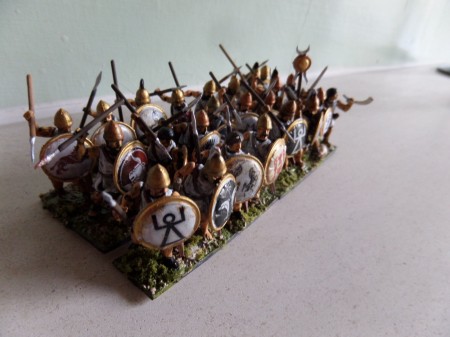
Wargames Factory 28mm Numidian Infantry with Victrix Shields and LBM Transfers

This article was originally published by War on the Rocks on 26 January 2016.

Wargaming is enjoying a renaissance within the Department of Defense, thanks to high-level interest in wargaming as a way to foster innovation. However, for this surge of wargaming to have a positive impact, these wargames must be designed well and used appropriately. For decision-makers with limited wargaming experience, this can be a daunting challenge. Wargames can be deceptively simple — many do not even use complicated computer models — so it is all too easy to assume that no specialized skills are needed for success. At the same time, wargames are hugely diverse: interagency decision-making seminars that involve conflict without fighting, crisis simulations adjudicated by subject matter experts, and operational warfare in which outcomes are determined by complex computer models. For sponsors who may have only seen one or two games, it can be hard to understand the full range of wargaming possibilities and the common approaches that underpin them all. How can a sponsor discern whether wargames and the resulting recommendations are actually worthwhile?

Writing aimed at the sponsors of wargames and the consumers of their results has been slow to appear and overly focused on specific historical wargames. For example, Micah Zenko, Gary Anderson, and Dave Dilegge wrote about the weaknesses of Millennium Challenge and offered some lessons to be learned from this famously failed wargame. In contrast, Deputy Secretary of Defense Robert Work and Vice Chairman of the Joint Chiefs General Paul Selva illustrated the potential of wargames by highlighting the famous Naval War College wargames played in the interwar years.
Dealing with Assertive China: Time for Engagement 2.0

map of China and its neighbors

This article was originally published by the Harvard International Review on 12 January 2016.

By all accounts, China’s rise as a great power has reached a new phase. In 2010, by nominal Gross Domestic Product (GDP), China overtook Japan as the world’s second largest economy, following stunning leaps over France, the United Kingdom, and Germany in the previous five years. Symbolically, this marked China’s arrival as the second largest global power. Concurrently, Chinese foreign policy has abandoned its earlier “lie-low, bide our time” strategy and turned assertive.

China’s rising challenge calls for a revamped American policy. To devise an effective response, we will need to be clear-eyed about the persistent drivers as well as the changing dynamics of Chinese foreign policy. We will also need to be clear on both the limitations and the adaptability of the past policy that has successfully facilitated China’s integration into the international system. Decades of China’s internationalization diminishes the prospect of war and tightens the place of China in the existing world order. But the two sides now seem stuck in a hapless state of strategic mistrust. America’s heightened concern over China is crystallized in the danger of what Professor Graham Allison calls the Thucydides Trap, the risk of war during a power transition typified by the Peloponnesian War between the rising Athens and the reigning Sparta. Chinese strategy analysts are acutely aware of the number two-power conundrum, as their country becomes the target of security fixation from the United States and its allies.

Categories
Terrorism

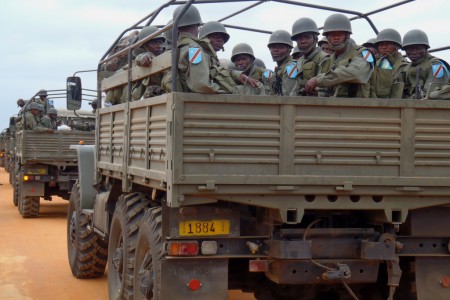
What Challenges Does 2016 Hold for Sub-Saharan Africa?

Soldiers during exercise Kwanza in Angola, 2010

This article was originally published by the Global Observatory on 20 January 2016.

Akin to its physical landscape, the political environment of Sub-Saharan Africa in 2015 varied greatly from country to country. On a positive note, elections in politically polarized countries such as Nigeria, Tanzania, Guinea, and Cote d’Ivoire concluded relatively peacefully, despite the shadow of political violence looming large. Burkina Faso, which entered the year in political limbo following the ousting of long-serving president Blaise Compaoré, also elected its first democratic government, thwarting a coup attempt by the deposed leader’s presidential guard in the process.

In another encouraging development, 2015 also marked the nadir of the West African Ebola outbreak, which killed more than 11,000 people since the virus was first reported in the region in early 2012. Just today, the World Health Organization declared Liberia—the last affected country—Ebola-free.

However, while last year saw Sub-Saharan Africa overcome a number of important challenges, it also saw the continuation and often the creation of social, political, and economic obstacles that will define the continent’s security outlook in 2016.

No Shortcuts to UNSC Reform

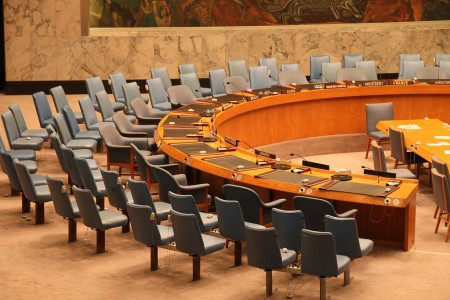
United Nations HQ – The Security Council Chamber

This article was originally published by the Institute for Security Studies (ISS) on 6 January 2016.

When the 70th session of the United Nations General Assembly (UNGA) opened on 15 September 2015, reforming the UN Security Council (UNSC) was again on the agenda. By the time that the annual general debate concluded on 3 October, no agreement had been reached on an issue that has remained unresolved for several decades.

The composition of the UNSC has only been changed once. This occurred in 1964, after a large expansion of UN membership and two years of intense debate that resulted in four additional non-permanent seats, increasing the Council to 15 members.

Discussions about UNSC reform assumed a different approach during the most recent round of negotiations that started early in 2015. The former UNGA president, Sam Kutesa from Uganda, worked closely with the chair of the intergovernmental negotiations – the Jamaican representative, Courtney Rattray – to advance the discussions. Each UN member state was asked to present its position, and these were then used to draft a single, integrated negotiation text.

The document produced was 118 pages long, consisting of 22 official pages plus 96 pages of specific ‘inputs’ provided by several members. This so-called Framework Document highlighted the same issue that has plagued discussions in the last two decades: member states are not willing to compromise.

Categories
Terrorism

Iraq Situation Report: January 12 – 19, 2016

Iraqi army soldiers from 4th Battalion, 2nd Brigade, 5th Division stand outside an Iraqi army compound in Buhriz, Iraq.

This article was originally published by the Institute for the Study of War on 20 January 2016.

Key Take-Away: Iraqi Shi’a militias significantly escalated their confrontation with the U.S. by kidnapping three American contractors and an interpreter in southern Baghdad on January 15, reportedly from the apartment of the interpreter. While no group has claimed responsibility, Iraqi Shi’a militias proliferate both the neighborhood of abduction, al-Dora, as well as Sadr City, the northeastern neighborhood to which the contractors were reportedly taken. Iranian proxy militias were responsible for kidnapping American servicemen before the U.S. withdrawal in 2011. Iraqi Shi’a militias carried out similar kidnappings of Turkish citizens in Baghdad in September 2015 and Qatari citizens in Muthanna Province in December 2015. The kidnapping of the American citizens came just one day before the release of four American prisoners by Iran and two days before the imposition of additional sanctions on Iran in response to an Iranian ballistic missile test in October 2015. The timing of the kidnapping suggests that Iranian proxies did not kidnap the contractors in response to the additional sanctions, but did so in order to secure future leverage over the U.S. However, the possibility remains that an Iranian proxy militia may have conducted the kidnapping without a direct order from their supervisors in the Iranian Revolutionary Guard Corps – Quds Force (IRGC-QF). Regardless of intent, the kidnapping underscores the impunity with which Iranian proxies operate as well as the persistent threat they pose to U.S. personnel and interests.