What Will/Should Trump’s Asia Policy Look Like?

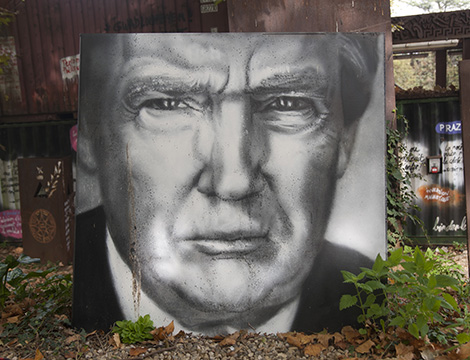
Donald Trump
Courtesy thierry ehrmann/Flickr

This article was originally published by the Pacific Forum CSIS on 9 November 2016.

Like most American Asia-watchers, I have no clue what the basic tenants of the incoming Trump administration’s Asia policy will be. I have learned from experience to discount at least half of what is said during presidential campaigns: Reagan was going to recognize Taiwan; Carter was going to withdraw US troops from the Korean Peninsula; etc., etc. The challenge is knowing which half not to believe.

While I don’t know what Trump’s Asia policy will be, I have a pretty good idea what it SHOULD be, so allow me to offer some unsolicited advice.

The pivot is dead, long live the pivot. The “pivot” or “rebalance” toward Asia is an Obama slogan which will leave with him – it likely would have even if Clinton was elected – but America’s focus on Asia as a national security priority has been a bipartisan constant since the end of the Cold War and the centrality of the US alliance system in Asia (with Australia, Japan, Korea, the Philippines, and Thailand) – as in Europe (NATO) – has likewise been a bipartisan constant since the 1950s. The going in assumption seems to be that a Trump administration is less committed to maintaining the alliance system as a vital component of America’s security (as well as the security of our allies). If he truly believes this, he needs to say so and address the alternatives and consequences. What he SHOULD do is to reaffirm the centrality of both Asia and the US alliance system to America’s continuing commitment to sustaining peace and security in Asia and beyond. George H.W. Bush and Bill Clinton did this by producing overarching East Asia Strategy Reports; a new one is sorely needed.


The Hidden Refugee Crisis in the Western Hemisphere

Starts and Stripes
Courtesy William Billard/Flickr

This article was originally published by the Council on Foreign Relations (CFR) on 1 November 2016.

While much attention is rightly focused on Syria and the Middle East, there are a growing number of refugees in the Western Hemisphere.

The largest group comes from Central America’s Northern Triangle—Guatemala, El Salvador, and Honduras. For each of the past three years between 300,000 and 450,000 Central Americans have fled north. Of these, between 45,000 and 75,000 are unaccompanied children; another 120,000 to 180,000 families (usually a mother with children); and between 130,000 to 200,000 single adults. These numbers peaked in May and June 2014 when more than 8,000 unaccompanied minors crossed the U.S. border each month. 2016 numbers are again rising, with August inflows higher than ever before.

These migrants are fleeing violence (El Salvador, Honduras, and Guatemala are some of the most dangerous nations in the world), poverty, and the economic devastation wrought after three years of record droughts. They are pulled to the United States through personal ties. One study of interviewed minors found 90 percent had a mother or father in the United States. Many of these U.S. residents from Honduras and El Salvador came on temporary protected status (TPS) visas, meaning they can live and work legally in the United States but may not sponsor other family members (including their children).

Warning Orders: Strategic Reasons for Publicizing Military Offensives

Can anyone hear me?
Courtesy DorkeyMum/Flickr

This article was originally published by War on the Rocks on 28 October 2016.

Does publicly announcing an impending military offensive expose assaulting troops to dangers that could be avoided if plans to invade were kept quiet? During all three presidential debates, Republican nominee Donald Trump has asserted that the Obama administration was “stupid” for publicly discussing the impeding joint U.S/Iraqi offensive against ISIL in Mosul, claiming that Hillary Clinton was “telling the enemy everything [she] want[s] to do” and asking “why not a sneak attack?” A week ago, he tweeted:

Can France Still Afford its Nuclear Deterrence?

Book Circulation
Courtesy Kenny Cole/Flickr

This article was originally published by the Australian Strategic Policy Institute’s The Strategist on 3 November 2016.

France has a deep and abiding relationship with nuclear technology. French policy-makers have based France’s energy and military independence around nuclear programs. However, as the French government attempts to justify its budget policies in the lead-up to the presidential election in April 2017, calls for a public debate on the cost of military nuclear deterrence are increasing.

This debate encompasses three main questions. Should France still base its global defence strategy on nuclear deterrence? If yes, how should nuclear deterrence be conducted? Finally, how should the state efficiently budget for this strategic investment?

Questions about the future of the nuclear program come from the growing cost of France’s nuclear deterrent. France’s nuclear arsenal is currently fully operational but will soon require a complete modernisation. Within the next 30 years, French forces will need new submarines, aircraft and missiles. To achieve this, France’s current military nuclear expenditure of €3.4 billion a year, which equals 10% of the French Ministry of Defence’s total budget, will need a significant increase. By 2025, nuclear deterrence will cost French taxpayers an estimated €6 billion a year or more. Where will future French governments find €120 billion over 20 years?

Categories
Terrorism

Preventing Violent Extremism: A New Paradigm or Evolving Approach?

stop
Courtesy by Thomas Hawk / Flickr

This article originally appeared in swisspeace’s à propos No. 148 which is published by swisspeace in November 2016.

In the wake of the 9/11 attack, members of the international community responded in a heavy handed and militarized way to terrorism and adopted a counter terrorism (CT) approach. Yet, terrorist attacks and fatalities have dramatically increased and more powerful terrorist groups have been created. With the emergence of the prevention of violent extremism (PVE) approach, a greater emphasis is now given to so-called “soft” alternatives. However, the question remains whether it is a change in content or just a semantic shift.

Multinational organizations and donor countries have been engaged in various counter terrorism (CT) initiatives particularly since the 9/11 terrorist attack as part of the Global War on Terror (GWOT). This simplistic approach viewed terrorism as a form of criminal and subversive activity that targeted the West and its values. However, CT practices increasingly showed a proclivity for grave violations of human rights and international law. Some countries have also manipulated CT measures to silence political opposition and criticism. The acts committed by US security personnel in Abu Ghraib prison in Iraq, the widespread practice of illegal detentions and renditions, decades of arrest without charge in Guantanamo are all manifestations of the failures of this approach. Terrorist attacks and fatalities have dramatically increased, more powerful terrorist groups have been created, the landmass controlled by terrorist groups has expanded, the number of foreign fighters crossing borders to join terrorist groups has surged, and terrorist attacks have reached new heights of cruelty and depravity in the last few years.