The State of the State

Flag of Islamic State of Iraq. Source: Wikimedia Commons

This article was originally published June 16, 2014 by War on the Rocks.

One of the most fundamental questions lurking beneath the surface of 21st century security discussions is the question of what constitutes a state. Does the prominence of powerful sub-state actors with state-like functions show that the state is declining?

Recent events in Iraq suggest that our confusion is a function of substantial definitional problems. Is the Islamic State in Iraq really a state? An armed movement that has a state? None of the above?

While I cannot improve on the analysis of ISIS offered by Middle East specialists Douglas Ollivant and Brian Fishman, I at least can offer a few general observations derived from the literature about the problem of analyzing ISIS as a state.

Categories
Regional Stability

Reflecting on the Baltics

Estonian and American troops during an exercise, Photo: Wikimedia

This article was originally published by Stratfor on 15 June 2014.

About two and a half years ago, while spending a few months in Ukraine, I left Kiev to take a trip through the Baltic states. On a cold winter day in the middle of October, I flew into Tallinn, the capital of Estonia. From there I would travel exclusively by bus from Tallinn on the Baltic Sea to Tartu in southern Estonia, then on to Riga, Latvia, and finally to Vilnius in southern Lithuania.

The Flawed German Debate on Armed Drone Acquisition: “What Does This Have to Do with Our Procurement Plans, for God’s Sake?”

Image: Flickr/UK Ministry of Defense

In Germany, defence and military policy is rarely a subject of great interest to the general public. The pacifist mainstream view and the “friendly disinterest” in the Bundeswehr means that military matters are seldom discussed in detail by the general media.

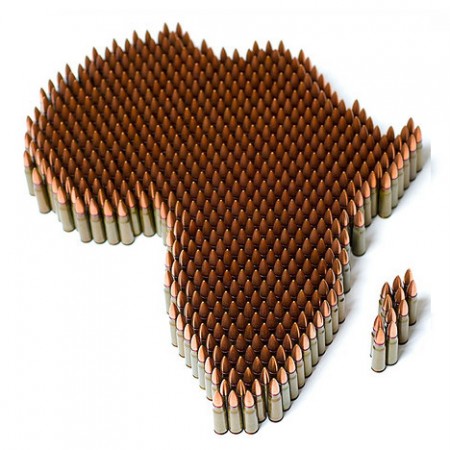
Africa Needs More than Just the Silencing of Guns

Africa Out of Bullets, courtesy of Control Arms /flickr

This article was originally published June 17 2014 by the Institute for Security Studies (ISS).

Over the past five decades, Africa has experienced significant change and positive transition. However, violent conflict continues to compromise prospects for sustained human development and economic progress. As part of its 50th Anniversary Declaration in May 2013, the African Union (AU) set itself the goal of ending all wars in Africa by 2020 and is now working on a roadmap towards a conflict-free continent (‘silencing guns in Africa’, as the slogan goes).

Is this goal in fact attainable? Ending wars is imperative, as violent conflict is the biggest impediment to a more prosperous Africa. But what would the concrete benefits look like over time; and would the absence of war by 2020 really boost Africa’s economic and human development and yield immediate dividends? By generating momentum for this kind of discussion in the context of the post-2015 development agenda, the AU’s aggressive target is noteworthy.

Friends Forever? The U.S. and the Future of Japanese Military Power

Photo: Flickr

This article was originally published by War on the Rocks on 5 June 2014

Ever since the conclusion of World War II and the drafting of the new Japanese constitution, Article IX has prohibited Japan from becoming a party to any conflict building a traditional military force. This has become the foundation for Japan’s outlook on regional engagement and its role in the international community.

However, ever since U.S. President George H.W. Bush requested Japanese foreign aid during Operation Desert Shield / Storm, the Japanese Self-Defense Force (JDSF) has cautiously expanded its expeditionary capabilities.