Categories
Regional Stability

Are Security and Energy Concerns Moving Turkey and Israel Toward Reconciliation?

German Patriot Missiles in Turkey, courtesy of Medien Bundeswehr/flickr

This article was originally published June 20, 2014 by IPI Global Observatory.

Earlier this month, about 3,000 people marched through the streets of Istanbul in memory of the eight Turkish citizens and one Turkish-American killed by Israeli Defense Forces when the Mavi Marmara ship, known as the Gaza Freedom Flotilla, tried to break through Israel’s naval blockade of the Gaza Strip in May 2010. The incident marked a nadir in Israel and Turkey’s strained relationship in recent years, and neither country’s ambassador has since returned to his former post.

Four years later, a possible reconciliation agreement between these former allies has fueled speculation of a normalization of relations between the two countries. The agreement would entail reparations for the Mavi Marmara victims’ families; a mechanism to rescind all legal claims against Israeli Defense Force officers implicated in the attack; and approval
to facilitate Turkish civilian aid to the Gaza Strip.


The Modi Moment for China and India?

Indian Prime Minister Modi gives a speech, courtesy of Narendra Modi/flickr

This article was originally published June 20, 2014 by Harvard International Review.

When former Indian National Congress (INC) Minister of State Jairam Ramesh coined the term ‘Chindia’ he envisaged a relationship between China and India that was driven by mutually beneficial trade rather than conflict. Today it seems China and India are tipped to become the leading superpowers of the twenty-first century, driving forward the international economy and maintaining peace and prosperity in the Asia-Pacific region.

Both among the fastest growing economies, China and India are the two most populous countries in the world with a great deal of untapped trade potential. Beijing and New Delhi recognize this and will harness it under under Xi Jinping and Narendra Modi’s leadership. Whether the Modi moment becomes the ‘Nixon moment’ for Sino-Indian relations rests heavily on the level of cultural engagement between the two countries.

The Tale of a ‘Realism’ in International Relations

Image: Flickr.

This article was originally published by E-International Relations on 13 June 2014.  

It is a widely held opinion in the discipline of International Relations (IR) that there is a tradition of political thought in Western history which could be labelled ‘realism’. ‘Realism’, as it were, is associated with an outlook on the behaviour of political leaders, political communities, and the ‘structures’ of the relations among political communities (be they modern states, antique poleis, or Renaissance city states). Selfishness, recklessness, mutual mistrust, and power-seeking and survival-securing strategies are thought to produce (and be reproduced by) structures of anarchy among political communities, ‘international’ self-help systems, security dilemmas, the permanent potentiality of war and violence, and unrestricted politics of ‘national interests’. This outlook is associated with several canonical figures of political thought, who are regarded as representatives and founders of these theorems and who have been subsequently heralded as ‘heroic figures’ of IR – namely Thucydides, Niccolo Machiavelli, Thomas Hobbes, and Hans J. Morgenthau.

Europe and China: A New Tack?

Photo: flickr/Friends of Europe

At a recent state dinner in London for visiting People’s Republic of China (PRC) Premier Li Keqiang, British Deputy Prime Minister Nick Clegg made a number of undiplomatic comments, saying that the people of China were “politically shackled” to a communist one-party state guilty of human rights abuses. Unsurprisingly, given this government’s economic drive, Downing Street distanced itself from the statement, with Michael Fallon, the business minister, saying that human rights should not “get in the way” of trade links. Instead, UK Inc. reported that BP and Shell were due to announce multi-billion dollar deals with PRC oil companies. Indeed, investment from the entire visit by the PRC delegation was said to be worth more than 18 billion pounds.  That, it seemed, was that.

LHD and STOVL – An Engineer’s View

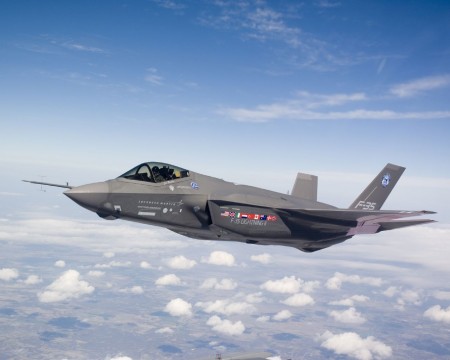
F-35 Lightning

This article was originally published on the Australian Strategic Policy Institute‘s blog, The Strategist, on June 20, 2014.

As a military aircraft engineer, I’ve been associated with STOVL aircraft operations for around 30 years, and have worked on the F-35 program. So I’ve followed the current discussions around potential use of F-35B from the Canberra-class LHDs with interest.

In my view, it’s remarkable how much the debate focuses on the problems that the aircraft would face in operating from those ships rather than the potential benefits to be gained. Assertions abound about the ‘limited’ nature of F-35B operations from an LHD, and the ‘severe challenges’ involved in generating a militarily ‘decisive impact’ from ‘small’ platforms. And yet for 30 years or more the UK and US (using AV-8Bs and Sea Harriers) have delivered
significant operational effect from similar platforms. Clearly, STOVL at sea can work. So I’d like to offer a few observations that might assist and inform the debate.