Keyword in Focus: Liberia

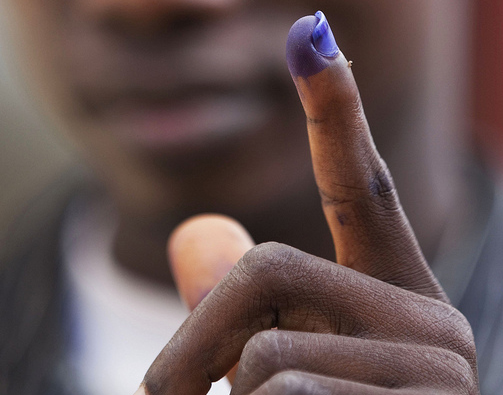
Elections in Liberia: pointing to the future. Photo: United Nations Photo/flickr

Some degree of controversy is almost inevitable at the annual announcement of perhaps the most prestigious prize in the world. The awarding of this year’s Nobel Peace Prize to three women’s rights activists is an undoubtedly appropriate recognition of the role of women in peace building. But opponents of Liberia’s incumbent president, joint-winner Ellen Johnson Sirleaf, claim that the prize is politically motivated and interferes with domestic politics. With the first round of presidential elections — in which Sirleaf is seeking re-election — taking place only days after the announcement, they fear the timing of the prize for Africa’s first elected female head of state could unfairly boost her prospects.

Whatever. As Liberians go to the polls today, the Nobel Peace Prize is hardly the main reason the international community is watching so closely, and apprehensively. With the images still fresh in our minds of the post-election violence in the Ivory Coast last year (in which Liberians were involved), these second elections since the end in 2003 of decades of civil war are an important test for Liberia’s fragile peace. If the presidential and legislative elections are conducted successfully, i.e. without major incident, then pressure will mount on the UN peacekeeping mission to withdraw. This will no doubt be a delicate undertaking in a country where the presence of international security forces has long been the main guarantor of peace.
Categories
Uncategorized

This Week at the ISN…

It's week 41 on the ISN's editorial calendar, Photo: Marc Thiele/flickr

We’ll highlight the following topics:

  • In ISN Insights on Monday, Dr John Daly of Johns Hopkins Central Asia-Caucasus Institute previews the trial of ‘Merchant of Death’ Victor Bout set to open this week
  • On Tuesday, we’ll feature our vast content holdings on Liberia
  • In Wednesday’s ISN Insight, Professor Plamen Pantev from Sofia University discusses an oft forgotten geostrategic realm: the states surrounding the Black Sea
  • On Thursday, we offer up a brief history of power
  • In Friday’s ISN podcast, Andreas Kleiser discusses the work of the International Commission of Missing Persons

And in case you missed any of last week’s coverage, you can catch up here on: a new Saudi security force funded by the US; an update on Northern Kosovo; Putin’s return to the Kremlin; a profile of Kenneth Waltz; and a discussion on the real and perceived threats of cyberwarfare

Beauty and Dehydration

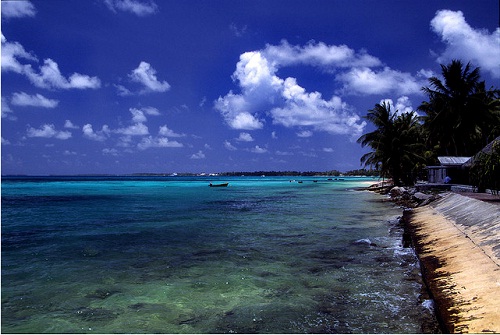
Beautiful - yes. Drinkable - no. Photo courtesy mrlins/flickr

While it is by no means on the same scale as the crisis affecting the Horn of Africa, drought is also leading to disaster on the tiny South Pacific atolls of Tokelau. Home to around 1,500 people, the New Zealand-administered territory is entirely reliant on rainwater; with less than a week’s supply of potable water left on the atolls, 136,000 more liters are being shipped in via the Royal New Zealand Air Force and the US Coastguard.

At the end of September, neighboring Tuvalu went as far as declaring a state of emergency due to drought. Imposing a strict system of rationing, families are receiving two to four buckets of water a day on the main island of Funafuti, according to Olioliga Iosua, Permanent Secretary in Tuvalu’s Ministry of Public Utilities. Desalination units are being airlifted in from Australia and New Zealand, but disease is already spreading among the population.

Is this a message that the end is near for the residents of Tuvalu and Tokelau – that they will soon have to depart for other Pacific islands? Perhaps. Could it be taken as a sign that these atolls were not suitable for inhabitation in the first place? Maybe.

Great IR Thinkers: Kenneth Waltz


Man, the State and War: an IR classic. Image: Bookworship.com

“Since war begins in the minds of men, it is in the minds of men that the defences of peace must be constructed.”

Introduction

In June of 2009, the journal International Relations devoted an entire issue (in two parts) to a man it described as “The King of Thought.” The occasion was the 30th anniversary of the publication of Theory of International Politics and the 50th anniversary of Man, the State and War. As Ken Booth wrote in the issue’s introductory essay: “…the justification for a project to celebrate and re-examine these classic books needs little elaboration.  Nor is the stature of their author in any doubt, as is testified by the following recent endorsements by leading figures in the field: ‘Kenneth Waltz is the most important international relations theorist of the past half century’ (John J Mearsheimer); ‘Kenneth Waltz is the pre-eminent international relations theorist of the post-World War II era’ (Stephen M Walt); and ‘Kenneth N Waltz is the pre-eminent theorist of international politics of his generation’ (Robert O Keohane).”  “Intellectually speaking,”  Booth continues, “we are all Waltz’s subjects, whether we be loyal disciples, friendly critics, or rebellious opponents: the discipline defines itself in relation to the authority of his work.”

The Return Of The King

Le Roi est Mort, Vive le Roi... photo: Firdaus Omar/flickr

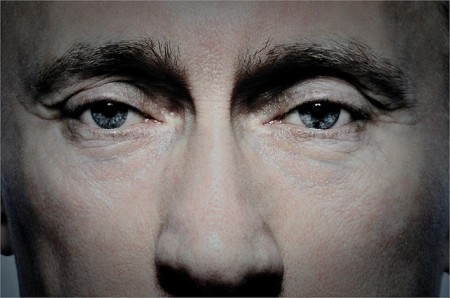
On 24 September, Russian Prime Minister Vladimir Vladimirovich Putin announced his decision to return to the presidency, a post he may now possibly occupy for a further two successive terms until 2024. Unfortunately, his election to the post seems to be a foregone conclusion. In previous polls, opposition candidates, anti-Kremlin parties, and other critics failed to even make it onto the ballot paper. And with Russian state TV having developed into a veritable Putin lovefest, he can expect blanket positive coverage ahead of a lofty coronation.

I am surely not the only one to feel reminded of the dark days of the Soviet period, when the General Secretary’s seat was passed from one frail, tottering character to the next, and political prognostication revolved solely around signs of imminent death – since death was the only thing that could open the door to real reform.

However, on closer examination, it hardly seems fair to compare Putin’s reign with the gerontocracy of the Soviet period, as the Soviets at least had a Politburo. Russia’s current transformation into what political scientists are calling a sultanistic or neo-patrimonial regime is a break from Russian history and the global trend toward democratization. The czars at least drew their legitimacy from their blood and their faith, and the General Secretaries owed their power to their party and their ideology, Putin’s rule, however, is based solely on the man himself.