The Belt, the Road, and Latin America

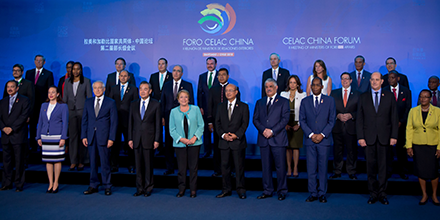
Image courtesy of Cancillería del Ecuador/Flickr. (CC BY-SA 2.0)

This article was originally published by the Foreign Policy Research Institute (FPRI) in January 2019. 

China’s One Belt One Road (OBOR) project was late in coming to Latin America and the Caribbean (LAC). First announced by President Xi Jinping in 2013, OBOR, later renamed the Belt and Road Initiative (BRI), did not arrive in the LAC until 2018, when, at a meeting of the China-CELAC (Community of Latin America and the Caribbean) Chinese Foreign Minister Wang Yi claimed that BRI would “inject new energy into the China-CELAC comprehensive cooperative partnership and open up new prospects.” Given the impressive rise of the People’s Republic of China to the world’s second largest economy—first, by some measures—and the difficulties that many LAC countries were experiencing, it is hardly surprising that Wang’s offer was greeted with enthusiasm. If brought to completion, the integration of the LAC region into BRI would comprise 65 percent of the world’s population and 40 percent of global GDP.
Categories
CSS Blog

Cold War versus Today

EmailFacebookTwitter

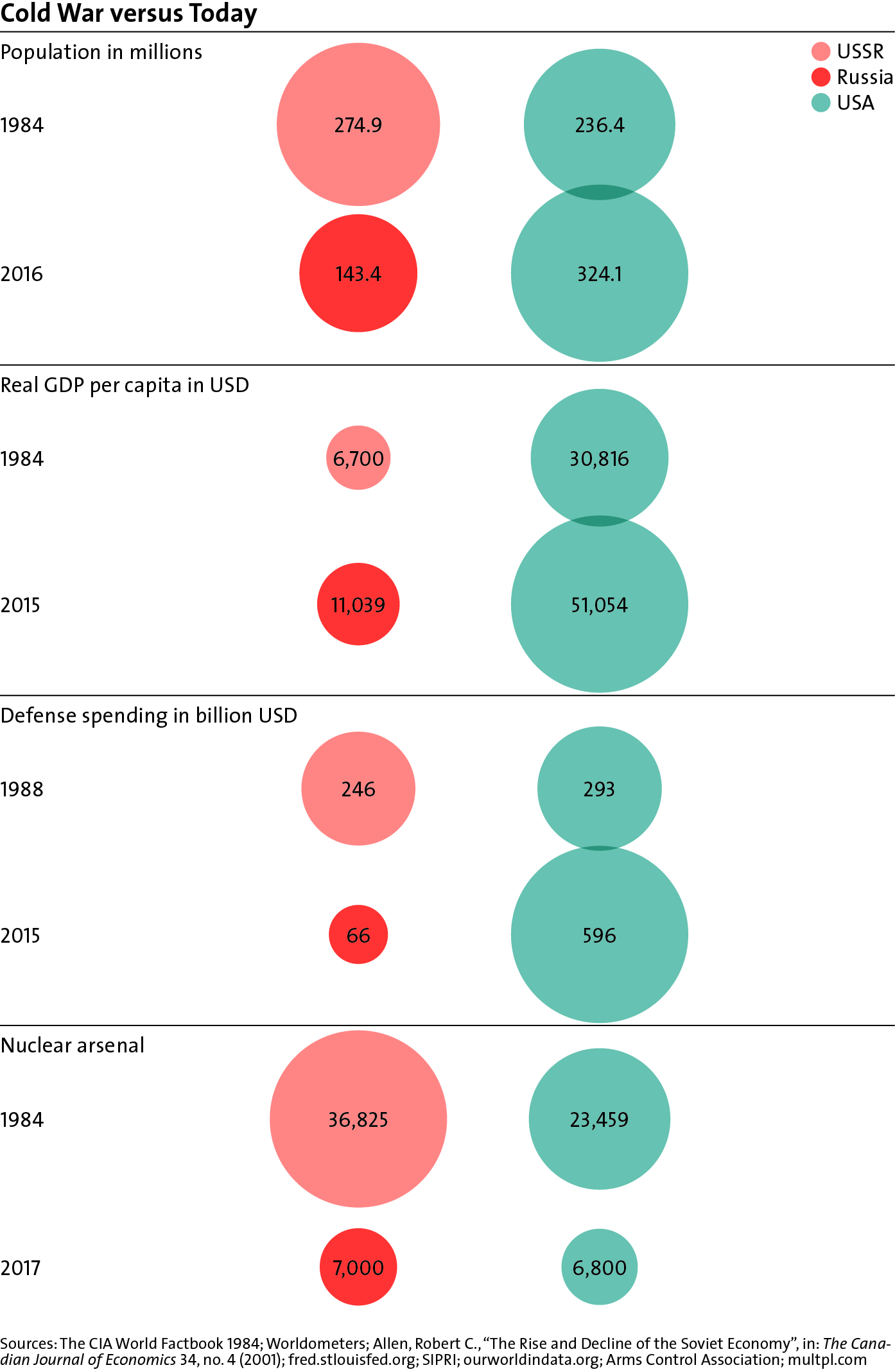
This graphic shows how the USSR compared to the US in terms of population, real GDP per capita (USD), defense spending (in billion USD) and nuclear weapons in the 1980s, as well as how the US compares to Russia in these key areas today. For an analysis of how different interpretations of the recent past still affect West-Russia relations and what is needed to rebuild trust, see Christian Nünlist’s chapter in Strategic Trends 2017 here. For more CSS charts and graphics, click here.

America’s Two Track Asia Policy

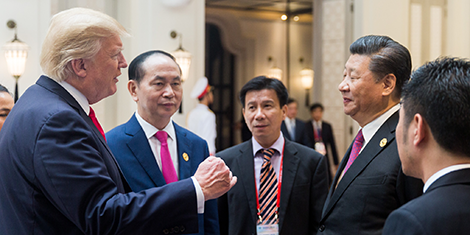
Image courtesy of The White House/Flickr

This article was originally published by Pacific Forum on 5 February 2019.

President Trump came into office with strong prior beliefs about the failure of US alliance policy and the need for allies to pay for US defense efforts on their behalf. Some feared that he presaged a rising isolationism among the American public that would support a president seeking to pull back from US commitments overseas. But Trump is failing to lay the groundwork for a new approach to the Indo-Pacific. Instead, the US is pursuing a two-track Asia policy, with Congress and the administration reading from different scripts. And the public is only on board with one of those approaches.

Three Lessons from the History of Foreign-Imposed Regime Change

Image courtesy of Beatrice Murch/Flickr. (CC BY 2.0)

This article was originally published by Political Violence @ a Glance on 1 February 2019.

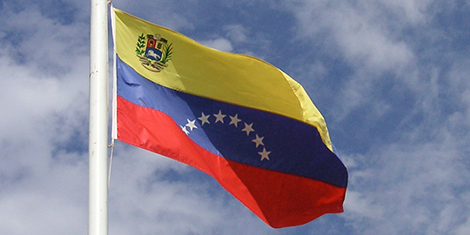
It took only minutes for the Trump Administration to support Venezuela’s opposition leader, Juan Guaidó, when he challenged the nation’s incumbent president, Nicolás Maduro, for power last week. Trump may have promised to “stop racing to topple foreign regimes,” but his choice to back Guaidó isn’t surprising. In fact, just about every American president since FDR has attempted foreign-imposed regime change, or FIRC, in one form or another. This history offers some lessons that shed light on the crisis unfolding in Venezuela.

Categories
CSS Blog

Mediation Perspectives: Peacebuilding Updated

Mediation Perspectives is a periodic blog entry that’s provided by the CSS’ Mediation Support Team and occasional guest authors. Each entry is designed to highlight the utility of mediation approaches in dealing with violent political conflicts. To keep up to date with the Mediation Support Team, you can sign up to their newsletter here.

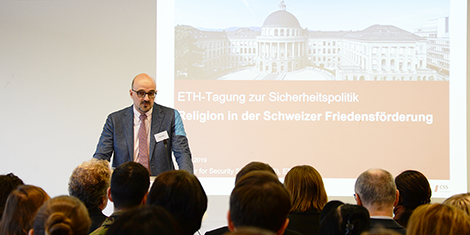
Summary of a presentation given by Shamil Idriss, CEO of Search for Common Ground, at the ETH Workshop on Religion in Swiss Peace Promotion, organized by Culture and Religion in Mediation (CARIM) at CSS ETH Zurich

What worked in the past will not automatically work in the future. We need to update and diversify our peacebuilding approaches. In our current context, this includes a greater emphasis on engaging with religious-political actors with constituencies, even if their worldview is very different to our own.