
The US Shouldn’t Go to War with China over Taiwan—and Nor Should Australia

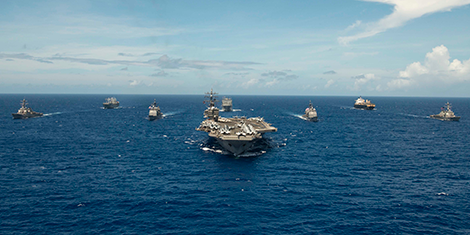
Image courtesy of Kaila Peters/DVIDS.

This article was originally published in The Strategist by the Australian Strategic Policy Institute on 13 February 2019.

Paul Dibb, in his recent Strategist post, writes that America’s strategic position in Asia would be fatally undermined if it didn’t go to war with China if China attacked Taiwan, and that Australia’s alliance with America would be fatally undermined if we didn’t then go to war with China too. The conclusion he draws is that, in the event of an unprovoked Chinese attack on Taiwan, America should go to war with China, and so should Australia.
Navigating Complexity: The EU’s Rationale in the 21st Century

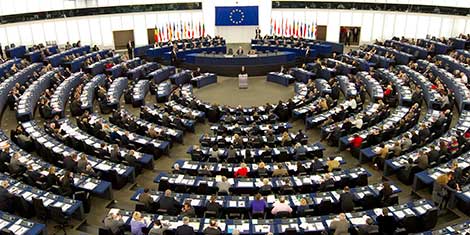
Image courtesy of United Nations Photo/Flickr. (CC BY-NC-ND 2.0)

This article was originally published by the Istituto Affari Internazionali (IAI) in January 2019.

For my parents, Europe was an ideal: it meant peace after the unspeakable death and destruction brought about by two World Wars. Europe was a dream, admittedly a minoritarian dream, whose power fostered the longest era of uninterrupted peace on the continent, first in Western Europe, then expanding eastwards after the end of the Cold War.

For me, Europe has been the opportunity of a lifetime: from the thrill of interrailing as a teenager, to my studies in the UK, my first job in Belgium, my wedding in Spain, up to the relief of not having to switch off data roaming every time my flight landed in the Union. For me, and for many, Europe has been a luxury.

Categories
CSS Blog

The European Army Alphabet Soup

Click to enlarge

EmailFacebookTwitter

This graphic provides the reader with a helpful guide to navigating the different institutions and initiatives involved in the debate surrounding the possibility of creating a European Army. For an in-depth analysis of how Brexit could affect European defense, see Dan Keohane’s chapter in Strategic Trends 2017 here. For more CSS charts and graphics, click here.

What is Europe’s Place in Sino-American Competition?

https://www.flickr.com/photos/gertcha/2067915187
Image courtesy of Stuart Chalmers/Flickr. (CC BY-NC 2.0)

This article was originally published by War on the Rocks on 14 February 2019.

In a recent speech in Hungary, U.S. Secretary of State Mike Pompeo warned Europeans that using technology from Chinese telecommunications manufacturer Huawei could hurt their relationship with the United States. This warning follows a series of high-profile arm wrestling involving the U.S. government, Huawei, and countries like Canada and Australia. The Huawei saga has come to encapsulate a broader concern: Current efforts by Chinese state-led companies to access — and eventually dominate — global markets in key technologies, such as 5G or artificial intelligence, raise a number of privacy and competition-related questions. China’s disinterest in Western standards, coupled with lack of reciprocity and other barriers to foreign companies operating in the Chinese market, makes these challenges even more acute. As argued by other U.S. officials, the lack of a level playing field ultimately means that China could leverage global supply chains and infrastructure nodes and “game” the current international order against American power. In order to forestall this risk, the United States will need to work with allies. And the advanced economies of Western Europe and East Asia are particularly critical.

Categories
Cyber

Military Offensive Cyber-Capabilities: Small-State Perspectives

Image courtesy of Markus Spiske/pexels

This article was originally published by the Norwegian institute of International Affairs (NUPI) on 29 January 2019.

Summary

This Policy Brief provides an overview of the military cyber-defence strategies and capabilities of Norway and of the Netherlands. Comparison of the two different approaches offers insights into their differing tactics and future policy directions. The Brief contributes with a small-state perspective on this malleable and constantly changing field, nuancing the hitherto US-centred debate on the utility and need for deterrence and defence in cyberspace.