As we’re focusing on Euro-Mediterranean relations this week, here’s your chance to test your knowledge about the region in the first edition of The ISN Quiz.
[QUIZZIN 5]
Categories
 CSS Blog Network
As we’re focusing on Euro-Mediterranean relations this week, here’s your chance to test your knowledge about the region in the first edition of The ISN Quiz.
[QUIZZIN 5]
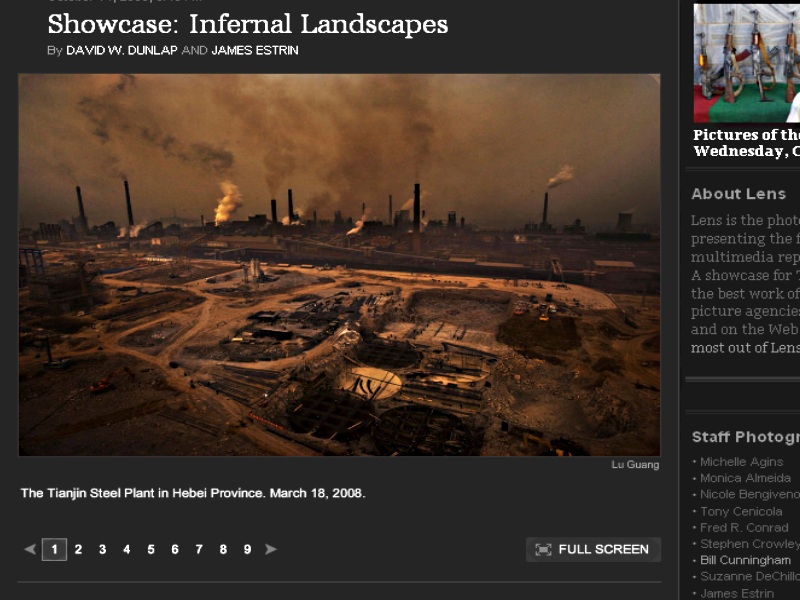
Words do little to convey the kind of destruction unfettered growth has caused in China. Stories of environmental degradation and displacement are common but fail to show the true, human impact of China’s rise.
Contrastingly, spectacular examples of China’s positive ambition are everywhere; in the mushrooming modern mega-cities as well as events such as the annual Harbin Ice and Snow Sculpture Festival; a whimsical Disney-like world made entirely of ice, snow and millions upon millions of Christmas lights. A tourist trap perhaps, but also a testament to the innovative and hopeful spirit of the country.
The following photo essays provide insights into the strange world of China’s yin and yang.
Could it be that sometimes historical truth and political gain really do go hand-in-hand? It appears so for Rwandan President Paul Kagame.
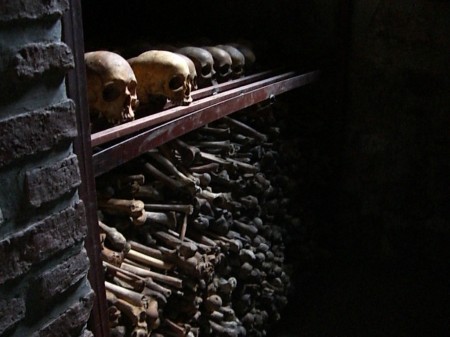
A Rwandan investigative committee has just issued a massive new report on the 1994 assassination of President Juvenal Habyarimana – a murder that sparked the genocide of nearly one million Tutsis and moderate Hutus in the hellish hundred days that followed.
Drawing on extensive research and nearly 600 interviews, the report concludes that Hutu extremists in Habyariman’s own government took him out to curtail the power-sharing peace agreement he was about to implement with Kagame’s Tutsi-led Rwandan Patriotic Front (RPF).
Habyarimana’s plane was shot down in his own backyard on the fateful night of 6 April 1994 by a pair of surface-to-air missiles. The role of the plane crash in launching the small central African country into a swift and shocking spiral of violence has been well documented. The question of ‘who done it?’, however, has remained in dispute.

The division of Cyprus embodies most of the challenges that the Mediterranean region is facing today.
In 1974, following the Greek coup attempt, the Turks invaded the island and now occupy the northern part – called the Turkish Republic of Northern Cyprus – which is recognized only by Turkey.
Since that time, the frozen conflict over Cyprus has been a sticking point for both the EU and Turkey: the EU for having one of its member states occupied by a foreign country; and Turkey for having its EU accession hopes slowed down.
Cyprus represents a divided region, divided between a Muslim and a Christian community; between an aging side looking for comfort and a youthful one looking for opportunities; between a peaceful Europe with a high GDP and a conflicting Arab world that struggles to adapt to globalization.
It is also divided by a physical wall, the Green Line, which until 2003, was not possible to cross.
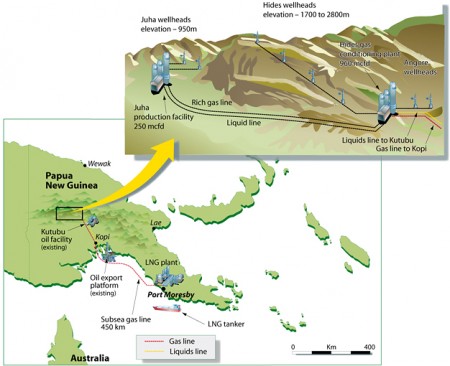
You may know that Papua New Guinea (PNG) is a tropical country located on the world’s second largest island in Oceania. You may also know that most of PNG’s 7 million inhabitants live in rural areas. You could call PNG a developing country: In the 2007 Human Development Index it is ranked 148 of 182, between Kenya and Haiti. You may know that PNG is rich of natural resources, including precious metals, timber and oil. What you would not expect, however, is PNG to be a major hydrocarbon producer.
Well, it’s time to revise your knowledge.
In a joint venture with firms from Japan, Australia and Papua, ExxonMobil plans “to develop gas fields in the Southern Highlands and Western Province of PNG and transport the gas via pipeline to an LNG (liquified natural gas) facility near Port Moresby (the capital) for shipment to markets overseas. The project will provide energy for the Asia-Pacific region, jobs and economic benefits for PNG.”
Economic benefits indeed; the question is for whom. According to a study, the project will double the country’s GDP and increase its exports of oil and gas four-fold. This gigantic endeavor – total capital investment is thought to amount to $10 billion, which is as much as the country’s annual GDP – raises two questions. First: Why is PNG’s oil and gas only now being exploited so intensively? Second: What is the project’s overall impact on PNG and its people?