This week’s Special Report Drones: War from Afar highlights the pros and cons of using the craft in warfare.
Test your drone knowlege in this week’s ISN Quiz!
[QUIZZIN 2]
 CSS Blog Network
This week’s Special Report Drones: War from Afar highlights the pros and cons of using the craft in warfare.
Test your drone knowlege in this week’s ISN Quiz!
[QUIZZIN 2]

This week the heads of Northern Ireland’s leading parties sat together with UK Prime Minister Gordon Brown and Irish President Mary McAleese for an emergency meeting to save the country’s executive branch.
Officially, the issue at stake was the planned shift of power over the control of the police and judicial institutions from British to Northern Irish authorities. However, the Democratic Unionist Party (DUP) and Sinn Féin (SF) could not come to terms. On the one hand, there is the apparent issue of power sharing (which we’re covering in an upcoming weekly theme by the way). On the other hand, a main reason for dispute is parading.

“On the internet 50 percent is porn material. Why should we refer to the internet?” This was Vladimir Putin’s answer to widespread claims on Russian internet websites that the October regional elections were rigged.
But while dismissing the internet as an irrelevant source of information, Putin does take the internet seriously when it comes to quieting his critics. Alexei Dymovsky, the police officer who spoke out publicly about widespread police corruption via YouTube, was duly arrested on Friday (and facing dubious charges).
At least on the surface, Putin’s younger successor Dmitry Medvedev seems to have a more positive approach to the internet as an information platform. Over a year ago, Medvedev proudly discovered the blog as a means of communication with the Russian public. Taking stock of his blogging experience on the occasion of his video blog‘s first anniversary, Medvedev draws the following, rather trite conclusion:

This week the ISN weighs in on the debate about drones, exploring both the risks and benefits associated with their use in modern warfare. The main challenge is to match the reality of the battlefield with theoretical, strategic and operational clarity and to catch up, both analytically and legally, with technological advances.
In our Special Report this week:
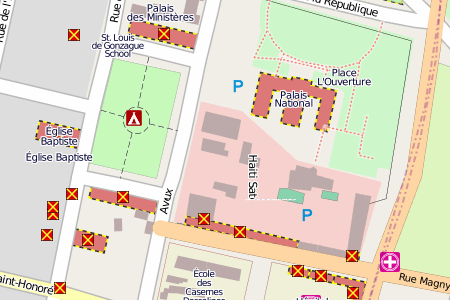
For all the criticism about open collaborative projects, these have one unquestionable asset: the speed and efficiency of updates.
In crisis situations such as the Haiti earthquake, this makes all the difference. I’ve been following the developments of OpenStreetMap (OSM) after the first earthquake hit and it’s fascinating. Just check this comparision with Google to convince yourself (play with the transparency in the top right corner).