How severe has the global economic downturn been and are we on the cusp of a recovery? Test your knowledge in this week’s quiz and read up on the topic in this week’s Special Report.
[QUIZZIN 36]
 CSS Blog Network
How severe has the global economic downturn been and are we on the cusp of a recovery? Test your knowledge in this week’s quiz and read up on the topic in this week’s Special Report.
[QUIZZIN 36]
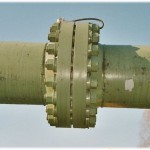
Some of Russia’s pipelines have names that reflect more than just technical realities – such as the Druzhba (Friendship) pipeline system that brings oil to Central Europe. Yet, others are of a more prosaic kind, including the recently opened Eastern Siberia-Pacific Ocean Pipeline (ESPO). ESPO will bring the black gold from Eastern Russia to China and Russia’s Pacific Coast. Whether this new pipeline is the beginning of a new Russian-Chinese energy-friendship remains to be seen.
China’s growing appetite for gas and oil will be hard to saturate in the next decades. According to projections of the International Energy Agency, China’s demand for primary energy will nearly double from 1,765 million tons of oil equivalent (Mtoe) in 2007 to 2,539 Mtoe in 2020 and 3,451 Mtoe in 2035. The country will account for 30 percent of the increase in global primary energy demand for that period. Oil demand is expected to more than double while the demand for natural gas will more than triple.
Before that backdrop one would expect Russia, home to 5 percent of the world’s proven oil reserves and 24 percent of all proven gas resources, to be eager to enter this growing market; even more so, since the focus of Russia’s oil and gas production is moving eastwards. There are untapped hydrocarbon resources in Eastern Siberia and Russia’s Far East that are expected to cover falling production elsewhere. Furthermore, hooking up with China holds major potential for developing an economically backward region and would add another trump to Russia’s hand when bargaining with its European energy customers.
But that’s not how Russia seems to view the situation.
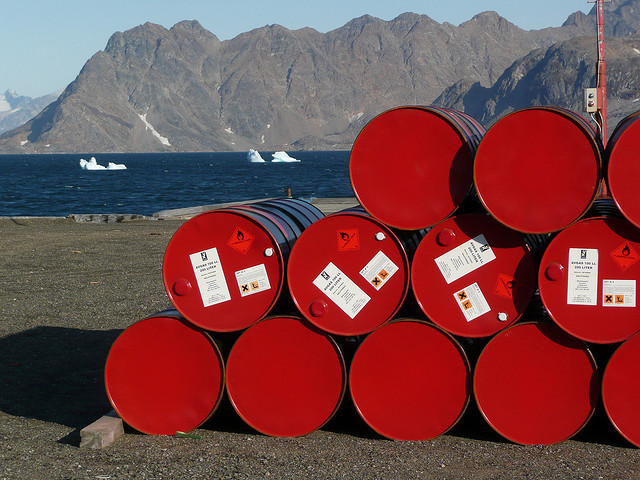
The oil fever has struck the Arctic sooner than expected. Several of the world’s biggest oil companies are vying for access to Greenland after a gas discovery last month raised expectations for offshore exploration around the inhospitable nation.
Greenland, the planet’s largest island with a population of just over 56,000, had been searching for the black gold for decades. In the past, however, Greenlanders have been destined to make a living from fishing and $600 million in annual subsidies from the Danish motherland (making up 55 precent of the island’s budget – or 0.75 percent of Denmark’s.) So, quite understandably, a majority of Greenlanders are now looking favorably upon the latest developments and are supporting oil exploration as a way to create jobs and wealth in a country troubled by high unemployment and social problems such as alcoholism and the world’s highest suicide rate.
Besides, the islanders are hopeful the oil might yield sufficient revenue to finally throw off the yoke of external rule and maybe even turn their icy island into an Arctic Kuwait.
These developments come soon after Greenland’s latest step towards independence. Already in 1979, Denmark granted home rule to Greenland, and in November 2008, voters in Greenland overwhelmingly approved a plan for expanding the island’s autonomy. The plan (which Denmark supported) allowed the small, mostly Inuit population to take control over the local police force, courts and coast guard and to make Greenlandic, an Inuit tongue, the official language.
It also set new rules on how to split future oil revenues between Greenland and Denmark, giving Greenland the first $13 million of annual revenues, while anything beyond that would be split equally between Greenland and Denmark. The new status quo then took effect on 21 June 2009, leaving the Danish royal government in charge only of foreign affairs, security and financial policy, while still providing the $600 million annual subsidy (or approx. $11,300 per Greenlander.)
This week the ISN asks whether a global economic recovery could soon be in sight despite mixed economic indicators and rumblings of a ‘double-dip’ recession.
This ISN Special Report contains the following content:
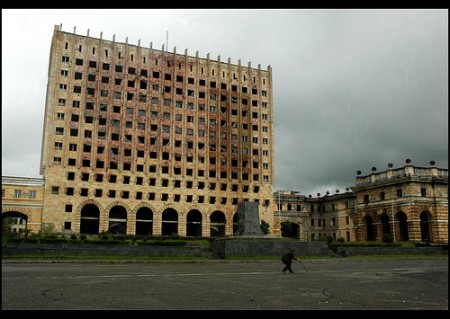
Many countries are not fully recognized by international organizations and other countries. Kosovo, Somaliland and Taiwan are good examples of states that are not recognized internationally. But these states have either de facto autonomy and can sustain themselves or are recognized by a comfortable number of “powerful” countries that allow them to survive on the international stage.
Some other countries, however, are recognized but are also heavily dependent on one country to survive. This is the case with Northern Cyprus, only recognized by Turkey, but also Abkhazia, supported by Russia and only recognized by a handful of states.
Abkhazia is located in the territory of Georgia and, together with South-Ossetia, declared their independence in the 1990s. The territory became the center of international attention during the South-Ossetian war in the summer of 2008. Currently only recognized by Nauru, Nicaragua, Venezuela and, of course, Russia, Abkhazia is also recognized by non-recognized territories such as South-Ossetia and Transnistria. Furthermore, Abkhazia is also part of a group called the UNPO (Unrepresented Nations and Peoples Organization.)
If we look deeper into the motivations for recognition of Abkhazia, however, we can see beyond the standard political arguments (about the right to self-determination, for example) and into a world where money matters more than political ideals.