Test your knowledge on Iraq, the topic of this week’s Special Report.
[QUIZZIN 37]
 CSS Blog Network
Test your knowledge on Iraq, the topic of this week’s Special Report.
[QUIZZIN 37]
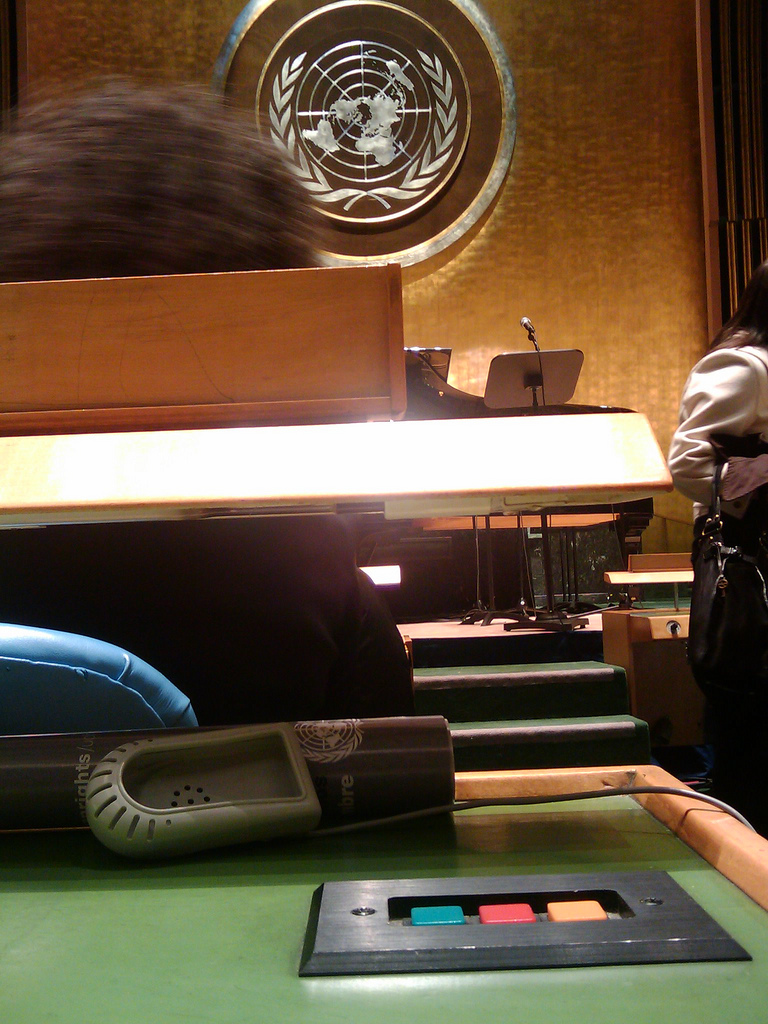
If you don’t read, watch or listen to Swiss media you probably haven’t noticed. On Tuesday, the new president of the UN General Assembly Joseph Deiss opened the 65th session of the UN’s house of representatives. As a Swiss I feel honored that only a decade after a majority of my co-citizens finally agreed to become a full member of the UN, our former federal councilor and foreign minister will be chairing the General Assembly (GA) for one year.
Joseph Deiss, a former economist, is realistic about his new position. Confronted with the criticism that the UN GA is only a talking shop and lacks any power, he says: So what? The GA is the only body representing all states in an equal manner and the only place where representatives of even the smallest and least important countries have a say. The UN GA is the principal place for international debate.
The GA also facilitates the human aspect of diplomacy. A colleague pointed out that Iran, Iraq and Israel are seated next to each other in the assembly hall. Imagine an Israeli diplomat bumping into the representative of Iran and apologizing: “Oh, I’m very sorry!” – “No problem at all”, the other says.
Addressing, perhaps implicitly, the big number of small states in the opening address, Deiss called for making the UN the center of global governance. Institutions such as the G8 or the G20 may be more efficient and be able to act swiftly. However, it is only the UN that has the legitimacy to make decisions for all states. In order for the UN to play a more active role in global governance, the organization needs to be reformed, which is one of the main points on Deiss’ agenda.
Let’s hope that the opening ceremony will not remain the last occasion we’ve read or heard about the 65th session of the UN General Assembly.
Yes, I was talking to you: fellow bloggers, journalists and news editors.
Listen to our podcast on the relevance of the UN and see our resources on UN reform.
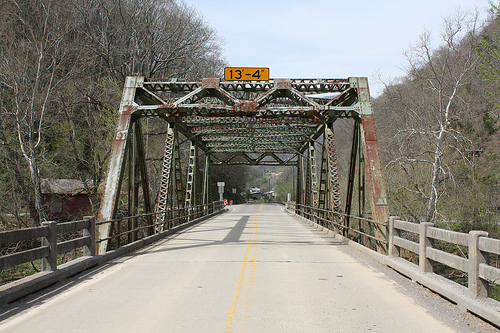
On September 6, President Obama announced an infrastructure renewal project in the US. According the White House press release, the plan aims to create a long-term framework for the renewal and expansion of a major part of America’s transportation infrastructure (roads, railways aviation and transit infrastructure.) Its broader objectives are to contribute to the economic stimulus of the Recovery Act with a front-end investment of $50 billion.
Specifically, the plan aims to do the following in the coming six years:
This contribution is a step in the right direction, but only a step. The plan addresses only four of the 15 issues outlined by the American Society of Civil Engineers, which produces an annual report card on the state of US infrastructure, assessing bridges, dams, drinking water, energy, hazardous waste, inland waterways, levees, public parks and recreation.
According to the most recent ASCE report, the US scored a dismal D (approx. 1.0 out of a possible maximum of 4.0.) This same report estimated a 5-year investment of $2.2 trillion would be needed to significantly improve these areas, including some 1,800 high hazard and over 4,000 structurally deficient dams, as well as 72,868 and 89,024 functionally obsolete bridges.
But, as the mid-term elections draw near, calls to reign in federal spending have grown. Republicans have vowed to oppose the plan and support among Democrats may be weak.
Ultimately, infrastructure renewal in the US will depend on murky congressional back-room deals, tough legislative cycles and the fickle political trends of the coming years.
Despite the Obama administration’s attempt to bring the issue to the forefront of domestic policy, quick action on a vital issue seems increasingly unlikely. And this is bad news for America.
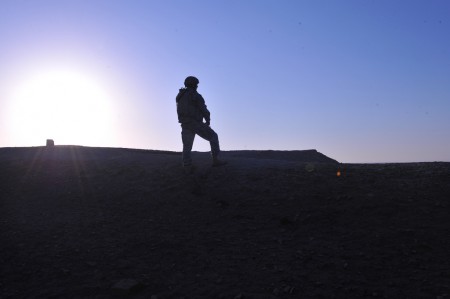
With US combat troop operations in Iraq at an end, less than 50,000 US service personnel remain in a country mired in political quagmire. This week the ISN looks toward Iraq’s future on its own in the wake of US occupation.
This ISN Special Report contains the following content:
It’s easy to retrieve information from the depths of the ISN Digital Library either by searching or by browsing our comprehensive keyword-tree (either by subject or by region.)
Two countries (and keywords!) that have recently been in the headlines are Haiti and Cuba – the former because it suffered a devastating earthquake earlier in the year and the latter because significant changes seem imminent in one of the world’s last communist bastions.
For both countries our Digital Library offers extensive resources for research ‘behind the headlines’ and for further insights into the historical challenges and future prospects of these two fragile Caribbean nations.
Head out to explore our holdings and let us know what you found particularly interesting and helpful. Some publications worth highlighting include: