This article was originally published by the Carnegie Moscow Center on 20 August 2019.

This article was originally published by the Carnegie Moscow Center on 20 August 2019.

This article was originally published by the Stockholm International Peace Research Institute (SIPRI) on 29 July 2019.
The states parties to the Biological and Toxin Weapons Convention (BWC) gathered in Geneva from 29 July to 8 August for a series of Meetings of Experts. Among other topics, states reviewed scientific and technological developments that impact the objectives of the treaty. Additive manufacturing (AM)—also referred to as 3D printing—is one of the technologies that is starting to receive attention, next to more well-known biotechnologies and genetic engineering techniques. Advances in AM have been met with concerns over its potential to facilitate the development, production, delivery and thus proliferation of biological weapons—and have highlighted the potential role of export controls in reducing these risks.


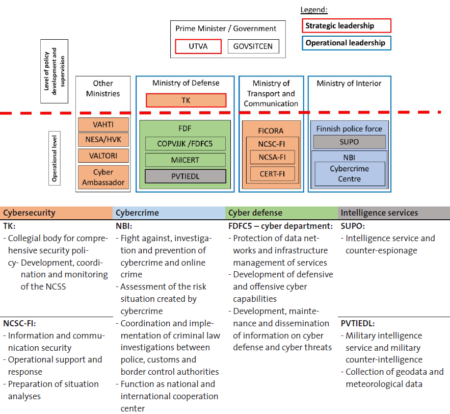
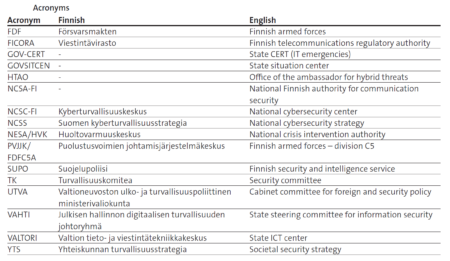
This week’s featured graphics outline how cybersecurity responsibilities are shared among governmental organizations in Finland. For more information on national cybersecurity strategies and cybersecurity challenges in Finland, as well as in France, Germany, Israel, Italy, the Netherlands and Switzerland, read Marie Baezner and Sean Cordey’s CSS cyber defense report here.

This article was originally published by IPI Global Observatory on 5 August 2019.
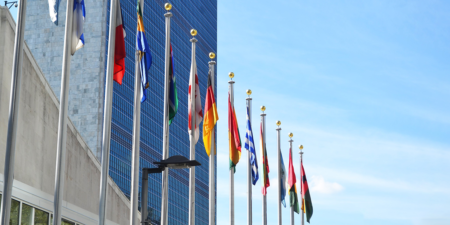
It has become common to observe that the international rule-based order is in crisis, and recent developments have reinforced the view that the United Nations-based multilateral system is “under siege.” In part, this is the result of unilateral actions taken by great powers like China, Russia, and the United States, but it is also the product of a larger phenomenon of rising nationalism in domestic politics across the globe.

This article was originally published by the Finnish Institute of International Affairs (FIIA) on 13 August 2019.
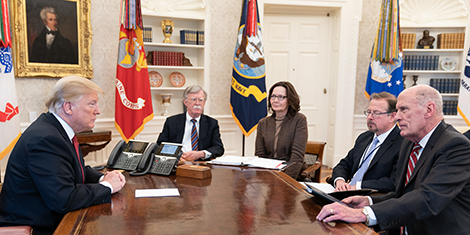
Headlines are rife with stories about political turmoil in transatlantic relations, and bitter disputes over trade and defence spending. Yet for the US Intelligence Community, ties with transatlantic partners have remained insulated against political differences. History shows that intelligence relationships follow their own logic.