History is the Key to Making Sense of Nuclear Weapons

“Distant Early Warning Line” for a Soviet attack. Image: wikimedia

This article was originally published by The Conversation on 21 July, 2015.

In the early days of his first term, US president Barack Obama gave a speech in Prague in which he called for a world without nuclear weapons. His argument was based on a risk assessment:

In a strange turn of history, the threat of global nuclear war has gone down, but the risk of nuclear attack has gone up. More nations have acquired these weapons. Testing has continued. Black market trade in nuclear secrets abound. The technology to build the bomb has spread. Terrorists are determined to buy, build or steal one.

Even leaving aside the recent historic deal with Iran, this is a problematic interpretation. It ignores the important historical context. As far as the risk of nuclear weapons is concerned, there is no fundamental difference between the Cold War and today’s world. Research has found that terrorist groups are not too keen to acquire nuclear devices. Most of the countries that Western societies would regard as especially risky today (such as Iran and North Korea, Pakistan and India) already began their nuclear programmes during the Cold War. Moreover, history has shown that what matters in terms of risk is not whether or not a country has nuclear weapons: it’s what it intends to do with them. And that we often don’t exactly know.

Categories
Regional Stability

A Non-Violent Conflict: The Venezuela-Guyana Dispute

The Venezuela/Guyana border area. Image: Unukalhai/Wikimedia

This article was originally published by E-International Relations on 21 July, 2015.

An old territorial dispute between Venezuela and Guyana has flared up once again as the Guyanese government contracted ExxonMobil to look for offshore oil in an area that Caracas claims as its own. While it is unlikely that this particular instance will escalate into an armed conflict, these tensions highlight how non-violent incidents over coveted resources will continue to occur. Moreover, should clashes over this disputed territory continue, Venezuela will, in this author’s opinion, come out as the loser as it will be inexorably regarded as the aggressor against a militarily weaker neighbor.

Moreover, while this dispute has thankfully been non-violent, it could affect U.S.-Venezuela relations as the two governments have been at odds for over a decade and a half. Washington could capitalize on Venezuela’s aggressive stance in order to strengthen relations with Guyana to better monitor developments in Caracas.

Law, Legitimacy and Morality of Warfare: A Conversation about ‘Legitimate Targets? Social Construction, International Law and US Bombing’

Air and Marine officers control and watch images taken by Unmanned Aerial Vehicles. Image: Gerald Nino/Wikimedia

This book review was originally published by Politics in Spires on 19 July, 2015.

In the following conversation concerning her recent publication, Dr. Janina Dill, Departmental Lecturer in International Relations at the University of Oxford, navigates a clear-cut path through concepts of International Law (IL), legitimacy and morality in warfare. From a theoretical perspective, she explains the relationship between constructivism, IL and international relations and highlights how our understanding of this relationship may be better informed through new concepts such as ”behavioural relevance” and “normative success”. From a practical perspective, she examines the historical shift in the conduct of warfare and the use of drone warfare by the United States. In response to Brett Rosenberg’s questions, Dr. Dill contemplates whether there are in fact legitimate targets in war.

Categories
Humanitarian Issues

The Seven Deadly Sins of the Human Terrain System: An Insider’s Perspective

A social scientist with the Human Terrain Analysis Team speaks with the displaced women of the Tagab District. Image: DVIDSHUB/Wikimedia

This article was originally published by the Foreign Policy Research Institute (FPRI) on 13 July, 2015.

The idea behind HTS was simple and promising: embed social scientists with military units and give them the resources to unearth operationally relevant socio-cultural data and findings. Its founders, Dr. Montgomery McFate, an anthropologist by training, and former Army officer Steve Fondacaro stood the program up and served as its leaders and missionaries for its first few years of existence. At the height of operations in Iraq and Afghanistan most ground-holding brigades and special operations units had Human Terrain Teams (HTTs) supported by Human Terrain Analysis Teams (HTATs) at the division level.

Values and Interests in EU Foreign Policy

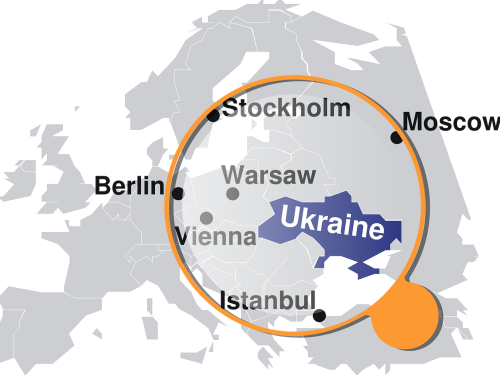
European map with Ukraine in focus. Image: ClkerFreeVectorImages/Pixabay

Anyone remotely familiar with EU foreign policy will be no stranger to invocations of European values underpinning, and, indeed, driving, European external action. From policies on climate change and agriculture to trade to defence and security, the rhetoric generated by various EU bodies typically elucidates a “set of common values” that the respective policies promote or embody. A crucial nuance is that ‘values,’ which have been incorporated into the primary law of the European Union through the Lisbon Treaty, are juxtaposed to ‘interests.’  This juxtaposition often means that if and when the EU fails to live up to its much-touted values, it is charged with ‘hypocrisy.’  The inconvenient truth, however, is that like all actors, Europe has interests as well as values, and these are frequently at odds with each other across virtually every policy area. More often than not, interests, far from being ‘inspired’ by values, have proven insular, short-sighted, and at times downright mercenary. At the same time, it is naïve to expect Europe’s policymakers to pay more attention to the plight of Syrian refugees than domestic populations’ preoccupation with keeping their own welfare and prosperity undisturbed by crises engulfing much of the world outside the Continent.  The solution, it would then seem, lies in doing away with the gratuitous narrative emanating from Brussels that continues to raise unjustified expectations by placing values at the rhetorical heart of European foreign policy.