On Tuesday 8 September, the United States (US) Diplomatic Mission to South Africa issued a rare security message entitled Terrorist Threat to US Interest in South Africa. The alert warns citizens about a potential attack on US interests and facilities, and advises US citizens in the country to be vigilant and take appropriate steps to enhance personal security.
The alert came as a surprise to many South Africans and was met with mixed reactions. Some questioned the credibility of the information and the feasibility of a potential attack on the continent’s most advanced liberal democracy, which has been relatively stable since 1994. Conspiracy theories have also emerged, describing the alert as part of a strategy to destabilise South Africa and weaken its economy by creating panic.
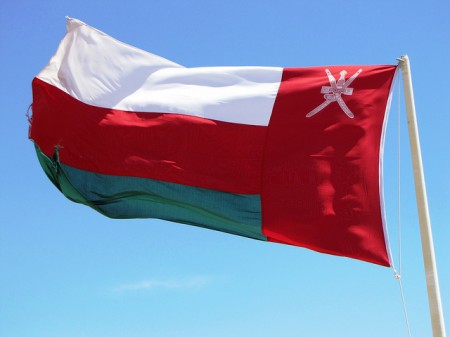
Recent reports suggest that officials in the Sultanate of Oman and the Islamic Republic of Iran have given the go-ahead for the rumored 173-mile underwater gas pipeline connecting the two nations. As of March 2013, only an “understanding” had been reached. The new reports raise clear implications for the wider Gulf region, particularly Saudi Arabia.
For decades, and especially since the “Arab Spring” uprisings several years ago, Saudi Arabia has attempted to bind its smaller Gulf neighbors in a tight bloc to counter perceived Iranian aggression. On numerous occasions, Riyadh has provided military and economic support for its fellow Gulf Cooperation Council (GCC) states. The Saudis have also pushed for the establishment of a Gulf union comprising the Council’s six member states. The kingdom’s objective has been to further bind the GCC together in a united political and economic front vis-à-vis Iran.
It wasn’t long ago that the peace process between the FARC and the Colombian government seemed stuck. Little if any progress was being made and the biggest barrier to a final accord – agreeing on how to achieve justice and accountability for past atrocities – was proving impossible to overcome. However, in the last few weeks all of the parties agreed to a plan to achieve transitional justice. It was undoubtedly a remarkable development. But did Colombia and the FARC strike the right balance between peace and justice?
When I was interviewing the FARC on the peace negotiations in Havana earlier this year, the atmosphere was tense. The FARC, the rebel faction fighting the Colombian government since the early 1960s, responded to renewed military offensive by suspending their unilateral ceasefire. At that moment, reaching an agreement seemed like a distant prospect, despite the fact that the parties had already been negotiating for three years. Energy and stamina were at their lowest point and those closely involved in the negotiations confided that discussions had been at an impasse for over a year on the issue of justice. After having reached substantive agreements on the three previous agenda points (land reform, political participation, and the illegal drug trade), the talks had stalled on the age-old dilemma of peace versus justice.
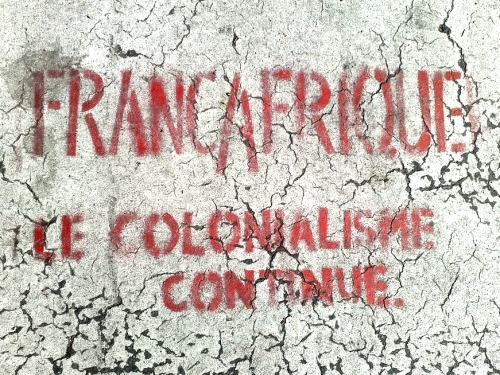
As most Francophone African countries celebrate their 55 years of independence this year, this may be a good time to reassess relations between them and France.
The picture that arises from this assessment is that France’s relationship with its 20 former colonies is an ambivalent one. Among them are Algeria, Chad, the Central African Republic, Côte d’Ivoire and Mali, as well as the greater Francophone African world that includes the Democratic Republic of Congo, a former Belgian colony. This ambivalence is best illustrated by two little reported events that took place recently.
There is no doubt that following the rise of Mustafa Akıncı to become the Turkish Cypriot leader this April, there have been high expectations for a resolution to the Cyprus problem. Nevertheless, it is important to be pragmatic and not underestimate the difficulties. For a real resolution, it is essential to achieve consensus on several major aspects of the problem.
First, there are serious constitutional disagreements between the two sides. The Greek Cypriot position is that the bi-zonal, bi-communal federation and the new partnership are an evolution of the Republic of Cyprus, which is recognised by all countries except Turkey. The Turkish Cypriot position is that the new partnership will involve a new state entity, to be created by two equal and sovereign constituent states. In terms of governance, the Greek Cypriots stress the importance of a unified state with a common society, economy and institutions. Turkish Cypriot positions revolve around entrenching a new situation based on ethno-communal lines. Bridging this gap will be difficult given that the positions reflect two fundamentally opposing philosophies. Furthermore, while the Turkish Cypriot positions are nearer to a confederation, or at best a very loose federation, the Greek Cypriots have in mind a federal arrangement with a rather strong government. It should be stressed that President Nicos Anastasiades himself may be willing to engage in a serious discussion about decentralisation provided he is satisfied on other issues such as territory and property.