The Emperor’s New Clothes: The Self-Delusions of American Naval Power

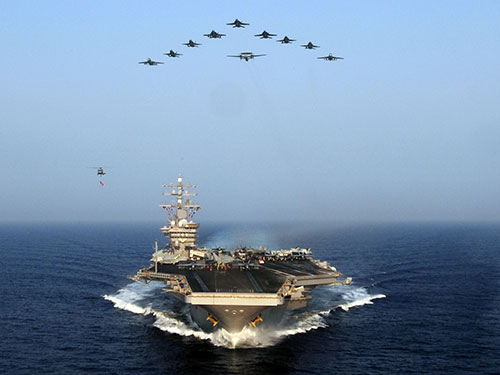
Aircraft from Carrier Air Wing 7 fly over USS Dwight D. Eisenhower. Image: Official U.S. Navy Page/Flickr

This article was originally published by War on the Rocks on 1 October, 2015.

Hans Christian Andersen crafted the parable of the emperor’s new clothes to teach children how pomposity and collective denial can produce stupidity and how childlike honesty can cut through it all. The tale centers on a credulous emperor and a circle of courtiers and subjects who were willing to play along with the delusion – a situation now mirrored not only in the Pentagon, but also in the White House and Congress. And the U.S. Navy is caught in in this web of pomposity and collective denial on two fronts. The first involves the Navy’s Fleet Response Program (FRP) and the second is the inconsistency between the Unified Command Plan (UCP) and the Navy’s operating environment – the world’s oceans. These issues might not sound sexy, but they are crucial to understand. Both are related and the net result is an over-extended Navy, bereft of a command-and-control apparatus congruent with its operating environment.
Has Liberalism Gone Missing in East Central Europe, or Has It Always Been Absent?

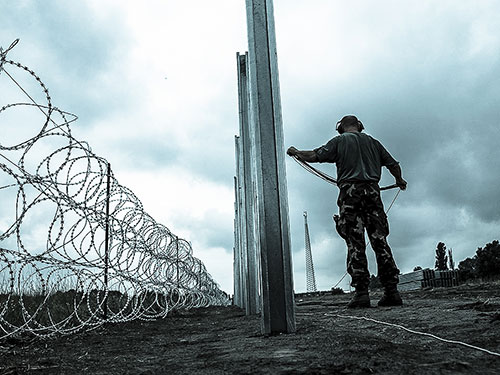
Members of the Hungarian Defence Force install barbed wire on the Hungarian-Serbian border. Image: Freedom House/Flickr

This article was originally published by OpenDemocracy on 5 October, 2015.

The government of Victor Orbán has systematically exploited the refugee crisis to ramp up a long-standing rhetoric of nationalist intolerance and consolidate its grip on power by passing a raft of emergency powers, further eroding Hungary’s once robust legal checks and balances. Such actions have drawn a storm of international opprobrium – including harsh criticism from the governments of Austria, Croatia and Serbia, all of which have taken a more humane and pragmatic approach to managing the influx of refugees.

Few criticisms of Hungary’s actions have come from neighbouring EU states in East Central Europe, still widely seen as front runners in liberal political and economic reform. Poland, Slovakia and the Czech Republic initially opted instead to close ranks with Orbán to head off the European Commission’s proposals for compulsory quotas.

Kim Jong Un’s Popularity, Explained

Sketched portrait of Kim Jong Un,leader of North Korea. Image: Monico Chavez/Wikimedia

This article was originally published by NK News on 27 September, 2015. Republished with permission.

A survey of North Korean refugees attracted some attention several weeks ago. According to the survey, a full 63 percent of recently arrived refugees believed that Kim Jong Un enjoys support amongst a majority of the North Korean public.

Such findings are not all that surprising for people who interact with North Koreans frequently enough. Indeed, while the protruding belly, plump cheeks and rather bizarre haircut present a somewhat comical picture to Western audiences, a significant number of North Koreans feel much hope about the third incarnation of Kimhood, finding the young leader attractive and somewhat charismatic.

Categories
Business and Finance

The Geo-Economic Potential of the China–Japan Relationship

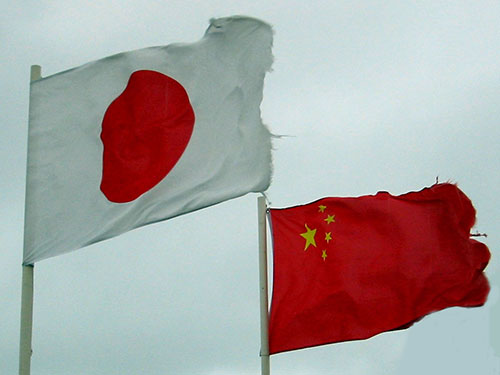
Japanese and Chinese Flags. Image: futureatlas.com/Flickr

This article was originally published by the East Asia Forum on 28 September, 2015.

China and Japan already together account for more than a fifth of global output, bigger than the share held by the United States or that of Europe. Over three-quarters of that, of course, is generated in mainland China but, contrary to widely held perceptions, the China–Japan economic partnership is one of the biggest in the world.

The bilateral trade relationship is the third-largest in the world, with a US$340 billion trade relationship in 2014. China is Japan’s largest trading partner, accounting for one-fifth of its trade, and Japan is China’s second-largest. Japan is the largest investor in China, with a stock of direct investment at more than US$100 billion in 2014 or US$30 billion more than the next largest source, the United States. But even those massive trade and investment figures understate just how intertwined are these two Asian giants.

Polio Wars: Conspiracy and Democracy in Pakistan

A doctor in Pakistan checking children for Polio vaccination. Image: CDC Global/Flickr

This article was originally published by OpenDemocracy on 18 September, 2015.

Between December 2012 and early 2015, 78 people were murdered and dozens of others injured because they tried to administer a polio vaccine to children.  They were killed because of a claim that the vaccines in their coolboxes were actually chemical devices in a western plot to sterilise Muslims.

These killings all took place in Pakistan, the archetypal ‘failed state’. What better evidence can there be that the country is a nest of terrorists than that it cannot stop the murder of medics trying to wipe out a deadly, crippling disease – all because of a conspiracy theory?