Saudi Arabia and Pakistan’s Evolving Alliance

The Saudi-financed Shah Faisal Masjid Mosque in Islamabad, Pakistan. Image: Imrankw/Wikimedia

This article was originally published by The National Interest on November 19, 2015.

In early November, Pakistan’s chief of army staff, General Raheel Sharif, made an important visit to Saudi Arabia. The general met with King Salman and other top officials in Riyadh, where he stressed Islamabad’s commitment to ensuring the safety and protection of Mecca and Medina, as well as Saudi Arabia’s territorial integrity. The Saudi officials, in turn, called for peace and stability in Pakistan and praised the Pakistani military’s efforts to fight terrorism in the ongoing Zarb-i-Azb campaign. Dignitaries from both sides issued a joint statement emphasizing their “responsibility towards Muslim ummah” and mutual fears stemming from the plethora of ongoing regional security crises.


The Upcoming OSCE Ministerial Council Meeting in Belgrade: No Reason to Celebrate

Organization for Security and Co-operation in Europe

This article was originally published by Security and Human Rights, formerly Helsinki Monitor, on 30 November 2015.

The 22nd OSCE Ministerial Council (MC) will meet on 3 and 4 December in Belgrade, Serbia. The MC meeting, which takes place once a year in the country holding the OSCE Chairmanship, is attended by foreign ministers or their representatives from the 57 OSCE participating States as well as from the 11 Partners for Co-operation.

The Belgrade MC meeting was originally supposed to be a significant meeting at which OSCE participating States had hoped to commemorate the 40th anniversary of the signing of the 1975 Helsinki Final Act with the successful conclusion of the so-called Helsinki+40 process and the adoption of a landmark OSCE document. OSCE states had planned to adopt a document that would provide strategic guidance for the Organization’s future role and for the setting up of a “common and indivisible Euro-Atlantic and Eurasian security community”, a vision that OSCE Heads of State had agreed to by consensus at the 2010 OSCE Astana Summit.

Reconcilable Differences? Rethinking NATO’s Strategy

NATO Secretary General Jens Stoltenberg. Image: Håkan Dahlström/Flickr

This article was originally published by the Centre for International Policy Studies on 16 November, 2015.

NATO has just announced that it will soon put forward proposals for a new “southern strategy,” in response to growing instability in the Middle East and Russia’s growing military presence south of the Bosphorus. According to the NATO Secretary General, Jens Stoltenberg, the strategy will include a range of measures, such as enhanced surveillance in the Mediterranean by allied forces, the use of NATO troops in advisory roles in crisis-affected countries across North Africa and the Middle East, and reinforced permanent NATO military deployments in the region.

Categories
CSS Blog

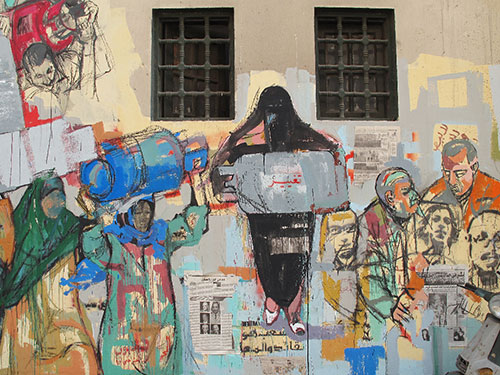
Mediation Perspectives: Dealing with the Problem of Patriarchy

Hanaa El Degham’s graffiti of women queuing for cooking-gas canisters instead of standing in the voting line on the day of the post revolution parliamentary elections. Image: Mia Gröndahl (© 2013).

This article is based on a collection of insights published in “Gender in Mediation: An Exercise Handbook for Trainers”, produced by the Center for Security Studies at ETH Zurich in November 2015.

How can conflicts be resolved without one side imposing their view of what is right and good on the other side? This is at the heart of mediation as a method to deal with conflict, and also at the heart of a transformative understanding of gender equality. Both approaches question paternalistic and patriarchic ways of resolving conflict, where a leader decides what is right for others without listening to their views. Rather than seeing gender equality as a question of political correctness and normative necessity, we should explore it as a fundamental shift in how we shape societies and deal with conflict: questioning patriarchy and fostering cooperative decision-making processes.

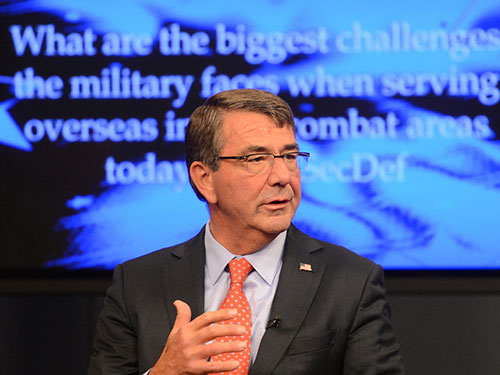
Ash Carter: The Interview

US Secretary of Defense Ashton Carter at the “World Wide Troop Talk” at Ford Meade. Image: DoD News Features/Flickr

This interview was originally published by War on the Rocks on 19 November, 2015.

How will the U.S. military stay competitive? This is about far more than platforms, bombs, and guns. It is fundamentally about people. And with archaic personnel systems plaguing the armed forces and the Department of Defense, our talented young men and women are being drawn away into the private sector in Silicon Valley and on Wall Street. Secretary of Defense Ash Carter sat down with WOTR’s Ryan Evans to talk about the Force of the Future initiative – a sweeping program of reforms that aims to bring the Department of Defense into the 21st Century in terms of how it manages its most important asset: human beings.