Categories
Regional Stability

The Death of Karimov: The Game for Uzbekistan

3004000196_73cf51f9e5_o
Courtesy Alexandra (Sasha) Lerman/flickr

This article was originally published by the Centre for Eastern Studies (OSW) on 9 September 2016.

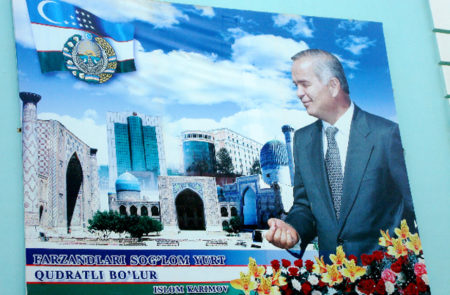
On 2 September (although unofficial reports cited 29 August as the date), the President of Uzbekistan, Islam Karimov died in Tashkent. Formally, the President’s duties are currently being carried out by the leader of the Senate, Nigmatilla Yuldashew (although he has not been sworn in as head of state), and elections to the post of president are to be held over the next three months. Due to the undemocratic nature of the system in Uzbekistan, the successor to Karimov will be decided by an informal fight for the leadership, and not the result of the election. Currently, the most likely successor seems to be the ruling Prime Minister, Shavgat Mirziyayev, who among other indications headed the funeral committee, received the foreign delegations who attended Karimov’s funeral on 3 September, as well as the President of Russia, Vladimir Putin, during his surprise visit to Samarkand on 6 September.
Categories
Humanitarian Issues

Lebanon on the Brink

7383405276_5c3b016cfb_h
Courtesy Nicolas Raymond/flickr

This article was originally published by the Norwegian Institute of International Affairs (NUPI) on 30 August 2016.

Summary

Gravely affected by the Syrian crisis, Lebanon has managed to remain relatively stable against all odds – despite the influx of some 1.5 million Syrian refugees and internal political crisis involving actors who support opposing Syrian factions. Lebanon’s resilience can be explained by the high opportunity cost of state breakdown for domestic, regional and international political actors. Moreover, international economic assistance, diaspora remittances and informal networks established by refugees help to prevent outright economic breakdown. Yet, stability remains extremely precarious. Important tipping points include (1) the IS strategy of spreading the conflict to Lebanon, and the consequent disintegration of the army along sectarian lines, (2) democratic decline and popular dissatisfaction, (3) Hizbullah’s domestic ambitions and Israeli fears over the group’s growing military power and (4) the potential for frustration between refugees and host communities turning into recurrent violence. However, (5) the slow economic decline and the worsening sanitary conditions stand out as the greatest challenges.

The UK Government’s Brexit Strategy: What We Know So Far

Brexit, the painting
Courtesy Shakespearesmonkey/Flickr

This article was originally published by the European Council on Foreign Relations (ECFR) on 6 September 2016.

Theresa May seems to be looking for a compromise around freedom of movement in order to retain access to the Single Market.

It has been a long summer for those of us wondering what exactly Brexit is going to mean in practice. Since the initial commotion over the appointments of Boris Johnson (Foreign Secretary) David Davis (Brexit negotiations) and Liam Fox (International Trade) subsided, there has been an eerie quiet over the summer break about what the UK’s strategy would be for the forthcoming negotiations.

Beyond Prime Minister Theresa May’s mantra that ‘Brexit means Brexit’, a drip feed of economic information showing that the anticipated post-Brexit crash in consumer confidence has not – for now – emerged, and speculation about whether May’s summer holidays in Switzerland were in part spent studying the EFTA model, there has been precious little actual information.

The past few days have felt like something of a watershed – a genuine start of term – with Theresa May’s visit to the G20 meeting in China, and the House of Commons debate on a petition for a second referendum forcing the government to unveil a little of what they are thinking. So what do we know now that we didn’t before?

Post-Sistani Iraq, Iran, and the Future of Shia Islam

Courtesy of Aslan Media/Flickr

This article was originally published by War on the Rocks on 8 September 2016.

During a recent trip to my hometown of Najaf in southern Iraq, I stumbled across a book titled My Leader Khamenei in the personal library of a cleric studying in the Islamic seminary known as the Hawza. He had picked it up at a bookstore near the shrine of Imam Ali, where the first Shia Imam is buried. It is a popular destination for Muslim pilgrims – especially Shia Muslims – from across the world.

Najaf, which lies 100 miles south of Baghdad, is the heartland of Shia Islam. Home to a seminary established in the early 11th century and the seat of the Marja’iyya – the influential religious establishment led by Ayatollahs.

´Social Cohesion´ in Deeply Divided Societies: Five Findings for Peacebuilding

Courtesy El Bingle/Flickr

This piece was originally published by Political Violence @ a Glance on 30 August 2016.

Majlinda Kelmendi of Kosovo’s Olympic Gold Medal won in judo was doubly significant for her young country. First, Rio was Kosovo’s first-ever Olympics – it became controversially independent in 2008 and its Olympic Committee was not recognized until 2014 (conveniently, after the now much-maligned Sochi Winter Games); Kelmendi, already a champion in judo, carried the Kosovo flag first into the Olympic stadium. Second, by default, her gold medal was the country’s first-ever Olympic medal of any kind.

Back home, Kosovo remains deeply divided along the essentially ethnic lines that emerged during its mostly successful secessionist bid from Serbia (Kosovo’s independence is still not fully recognized, and tensions remain with a small Serb minority along with important Orthodox sites). July, for example, saw tense but mostly peaceful marches by Kosovo’s minority Serbs to holy sites.