Categories
Terrorism

The Case for Revising India’s Counterinsurgency Strategy in Kashmir

5166230667_ee0778ed59_o
Courtesy Kashmir Global / Flickr

This article was originally published on War on the Rocks on 14 September 2016.

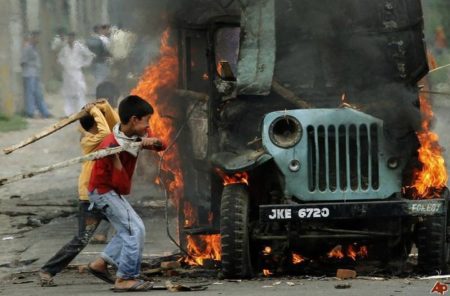
India’s Kashmir Valley has been the scene of a Pakistan-backed insurgency since the 1990s. The Indian army and its associated security forces have been engaged in fighting this insurgency and assisting the civil administration in maintaining law and order. On July 8, the Pakistani terrorist group Hizb-ul-Mujahideen’s commander in Kashmir, Burhan Wani, was killed in an encounter with security forces in Kashmir’s Anantnag district. Wani’s death plunged the state into deep turmoil, pitting Indian security forces against a large number of disenfranchised Kashmiri youth sympathetic to Wani’s anti-India resistance movement and calls for jihad. A full-blown confrontation between incensed youth and Indian security forces followed that resulted in 68 civilian deaths and over 2000 injured protestors, leaving an embarrassed Indian state facing a crisis of governance with no clear plan to prevent escalating violence. Exposing the fragility of the Indian state further, the Indian military publicly declared its frustration with political directives. In an unprecedented step, a strict curfew imposed in the Kashmir valley during Eid celebrations has renewed a fresh cycle of violence between protestors and security force, killing two protestors and injuring several more. New Delhi appears to be running out of options to de-escalate levels of violence.

EU Defense, Where Political Opportunity Meets Strategic Necessity

8158482258_98858e82bb_b
Courtesy Defense Images / Flickr

This article was originally published by Carnegie Europe on 15 September 2016.

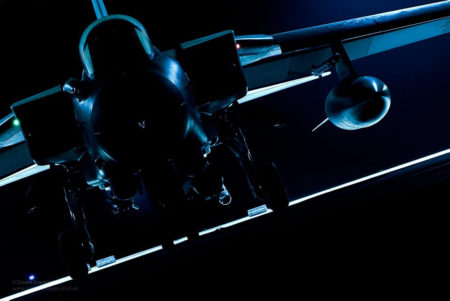
Since Britain voted on June 23 to leave the EU, it seems everyone has an idea for strengthening European defense. The cacophony of calls in the last month alone has included an Italian proposal for a “Schengen of defense,” a reference to the EU’s passport-free travel zone; a Visegrád Four appeal from the Czech Republic, Hungary, Poland, and Slovakia for a “European army”; and a Weimar triangle declaration from France, Germany, and Poland on the need for more effective EU security and defense policies.

Ahead of an informal summit of EU heads of state and government (minus the UK) in Bratislava on September 16, the French and German defense ministers have prepared a paper containing a number of concrete ideas for deeper military cooperation—building on an earlier post-Brexit initiative by their foreign ministers for a “European Security Compact.”

Not to be outdone, EU leaders in Brussels have also joined the chorus. Federica Mogherini, the EU foreign policy chief, has said that she will produce a security and defense plan by the end of 2016, a follow-on document to her broader global strategy for EU foreign and security policies, which was published in June.

Internet Shutdowns During Political Unrest Are Becoming Normal – And It Should Worry Us

5280585822_ed883a633a_b
Courtesy Michael Coghlan / Flickr

This article was originally published by the Political Violence at a Glance on 16 September 2016.

Last night, for the eleventh night in a row, Internet access was shut down in Gabon. Starting again at 7pm, network accessibility almost came to a halt. These “Internet curfews” come in the aftermath of highly contested and controversial national elections. Just over a week ago, Gabon’s incumbent president, Ali Bongo, declared himself winner of the elections by a narrow margin with 49.8 percent of all votes. His opponent, Jean Ping, who allegedly lost with 48.2 percent of votes has demanded a recount, and the international community has backed him up. Amidst the uncertainty surrounding the election results, protesters took to the streets and set fire to a parliamentary house, while the opposition reported attacks against their premises by incumbent forces. Throughout the post-election tensions, the government has resorted to extreme digital censorship. Prior to the nightly Internet curfews, connections were cut for more than five days across the country while protesters took to the streets across Libreville, and according to Reuters, thousands were arrested under the charges of rioting.

Key Questions for South Sudan’s New Protection Force

Generals of South Sudan's army
Courtesy Steve Evans / Flickr

This article was originally published by the IPI Global Observatory on 12 September 2016.

A regional protection force has been authorized to deploy as part of the United Nations Mission in the Republic of South Sudan (UNMISS) in order to provide a secure environment in and around the capital city, Juba, and protect civilians. But without a viable political strategy to resolve the underlying causes of the civil war, the force will struggle to do anything more than reduce some of the most negative symptoms of the conflict and could spark direct confrontation with the Sudan People’s Liberation Army (SPLA) or any rebel forces that might threaten Juba.

In July 2016, nearly a year after it had been signed, the Agreement on the Resolution of the Conflict in the Republic of South Sudan collapsed. This meant that the former Transitional Government of National Unity also collapsed and was replaced by a governing regime led by President Salva Kiir and those collaborators who he had coopted into service. The final straw was a period of intense fighting between government and rebel forces that had been deployed in Juba as part of the peace deal. The fighting and subsequent rampaging of soldiers saw hundreds killed, numerous crimes committed against the civilian population, and led the remaining rebel forces and their leader to flee the city. There followed a flurry of calls for an intervention force to protect civilians, especially in Juba.

Categories
Terrorism

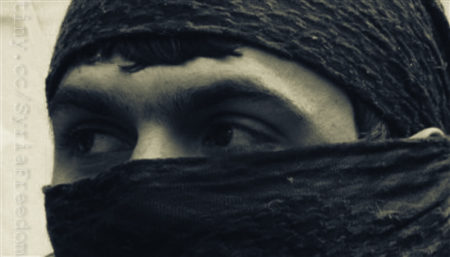
Breaking the Cycle of Terror: Democratic Alternative

6988639751_c8859bb4c7_z
Courtesy Syria Freedom / Flickr

This article was originally published by the Harvard International Review (HIR) on 25 August 2016.

In June of 1981, after serving for 16 months as the first president of Iran, I was in hiding. There had been a coup against me; a fatwa had been issued for my execution seven times over. I published an open letter to the Iranian people, quoting Madame Roland’s last words under the guillotine during the French Revolution:

“One day, a condemned woman under the guillotine said – ‘Oh Liberty, what crimes are committed in thy name!’ Today, and more so tomorrow, it will be said – ‘Oh Islam, such crimes are committed in your name!’ Islam will be so discredited that for a century no one will speak of rights in the name of religion.”

This prediction is truer today than it was then. The dynamics of power remain constant. Power needs an enemy, and violence is the sole means of its interaction. But power cannot exercise itself without legitimacy; it requires ideology, in which ideas are manipulated to serve the needs of power. Gradually, the ideas are divorced from their origins and the process of their alienation in power becomes complete. What is left of the ideas is nothing but an ideological shell filled with violence and power.