
The Natural Selection of Ideas: Prerequisites and Implications for Politics, Philosophy and History

Courtesy Rhoni Mcfarlane/Flickr

This article was originally published by Global Policy on 4 May 2016.

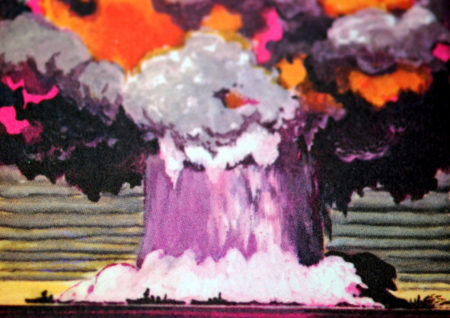
Why do certain ideas and political paradigms endure while others become obsolete or are rejected?

This question has preoccupied political and philosophical scholarship for millennia. This article puts forward four conditions for the survivability of ideas. It argues that modern tools for understanding human nature, such as those offered by neuroscience, provide us with unprecedented insights about human predilections and needs. Based on these findings, we can better conceptualize why some ideas thrive while others do not and their possible implications to international relations. The human need for dignity is central to this explanation: no ideas can thrive if they do not guarantee and safeguard human dignity.

In 1859, Darwin introduced the concept of natural selection in On the Origin of Species, and J.S. Mill explored the flourishing of ideas in On Liberty. In Darwinian natural selection, features that do not contribute to the function of the individual vanish over the course of generations, as bearers of such traits lack the reproductive fitness to pass those features on to their offspring. Mill applied a similar argument to ideas: good ideas would survive the rigors of critical debate, but there were no means of discovering which ideas would endure apart from testing them. In my attempt to continue this debate, I turn to neuroscience. Advances in neuroscience and brain-imaging inform us about underlying predilections in our nature, which indicate that we will be more likely to choose and validate certain ideas over others. My task here is to unpack this premise and to do so by looking at four prerequisites for the selection of ideas.

Is Globalisation Really Fuelling Populism?

One world / courtesy of Kai Schreiber/flickr

This article was originally published by the the Centre for European Policy Studies (CEPS) on 11 May 2016.

On both sides of the Atlantic, populism on the left and the right is on the rise. Its most visible standard-bearer in the United States is Donald Trump, the Republican Party’s presumptive presidential nominee. In Europe, there are many strands – from Spain’s leftist Podemos party to France’s right-wing National Front – but all share the same opposition to centrist parties and to the establishment in general. What accounts for voters’ growing revolt against the status quo?

The prevailing explanation is that rising populism amounts to a rebellion by ‘globalisation’s losers’. By pursuing successive rounds of trade liberalisation, the logic goes, leaders in the US and Europe ‘hollowed out’ the domestic manufacturing base, reducing the availability of high-paying jobs for low-skilled workers, who now have to choose between protracted unemployment and menial service-sector jobs. Fed up, those workers are now supposedly rejecting establishment parties for having spearheaded this ‘elite project’.

G20 Summit: Leaving West to Deal With Crises, China Focuses on Positives

Rules

This article was originally published by YaleGlobal Online on 30 August 2016.

G20 agenda hints at China’s vision for global order with focus on long-term rather than immediate concerns

With the approach of the Group of 20 summit in Hangzhou, there is expectation that China might clarify its position on the contested South China Sea. Contrary to expectations, those Asian neighbors and Western leaders who want to seize the occasion to press China on immediate issues will be disappointed. There will be little space to question publicly China’s drive into the South China and East China Seas, to seek confirmed implementation by China of UN sanctions targeting North Korea, to ask for more direct involvement by China in resolving the most urgent issue of our time – the Middle East in tatters and resulting refugee flows – or even to challenge China’s record-breaking attack on human rights and legal activists at home.

Instead, the summit offers China’s leader Xi Jinping a unique occasion to shine and for China to extoll its complementary – or alternative – vision of the global order.

As host country, China has engineered impeccable rhetoric and goals that are hard to disagree with, if somewhat distant and abstract, for the G20 leaders to focus on. US President Barack Obama is now a lame-duck president with much uncertainty over what follows him. European leaders are weakened by the continent’s inward turn, so powerfully shown by the Brexit. Western leaders are on the defensive much more than their Chinese counterparts. There may be isolated supporters in favor of focusing on issues of the day – Australia, Japan and even Korea spring to mind. Others like Brazil or Indonesia may not fully support China’s professed goals for the G20. Few will take the risk of disowning them. Too much of their economy is now tied to China’s fortune.

Categories
Humanitarian Issues

Will Colombians Embrace Their New Peace Deal?

9432786540_eebab0ac74_k
Courtesy antefixus21/flickr

This article was originally published by the IPI’s Global Observatory on 26 August 2016.

After 52 years of armed conflict, the Colombian government and FARC rebels announced a final agreement aimed at ending one of the world’s longest-lasting insurgencies. In talks that began in Havana in 2012, the two sides have reached understandings on peacebuilding measures that include transitional justice, accounting for the “disappeared,” and a plan for demobilization of the rebels’ estimated 7,000 fighters. The historic agreement opens the way for peace after an internal conflict that, in a nation of 50 million, has left 220,000 dead, 7.65 million recorded victims, and more than 6 million people displaced from their homes.

The accord marks the beginning of the end of the FARC as an armed group and of Colombia’s internal armed conflict. This is a tremendous achievement by not only the two negotiating teams and the international community that supported the talks, but also by Colombian civil society, which for decades pressed for a political solution.

Prometheus-Bound: An End to Nuclear Explosive Tests

5225031677_a16a295719_b
Courtesy Steve Snodgrass/flickr

This article was originally published by the Stockholm International Peace Research Institute (SIPRI) on 29 August 2016.

Myth has it that Prometheus stole fire from the Gods and brought it down from Mount Olympus to Earth for the betterment of humankind. Another, more deadly type of fire was brought to the world on 16 July 1945 when the first nuclear explosive device was detonated at the Alamogordo Test Range in the desert of New Mexico, USA. In the intervening seven decades, nine different States have carried out over 2000 nuclear explosions, polluting the world’s oceans, atmosphere and land with devastating health effects on many millions of people and the environment.

Suffering from the radiological effects on human health and the environment, Kazakhstan took the initiative in promoting the adoption of 29 August as the International Day Against Nuclear Tests by the United Nations General Assembly on 2 December 2009 through Resolution 64/35.

It marks the day on which President Nursultan Nazarbayev of Kazakhstan finally closed down the Semipalatinsk nuclear test site on 29 August 1991, signaling that nuclear explosions would never again resonate against the Degelen mountains and in the plains of Central Asia.