The Venezuelan Crisis and Fragmented Multilateralism in the Americas

Image courtesy of Nicole Resseguie-Snyder/Flickr. (CC BY-NC-ND 2.0)

This article was originally published by IPI Global Observatory on 23 August 2017.

In 2013, Venezuela was a defective democracy experiencing serious breaches of civil and political rights, but with more or less functioning electoral institutions, and accountability between the branches of the state. Today, the country is an authoritarian regime. President Nicolás Maduro’s government crossed into that territory on March 29 this year, when the Supreme Court, following instructions from the executive, stripped the country’s National Assembly of its competences, triggering the wave of demonstrations that continues today (42 a day on average) and that has cost the life of 126 Venezuelans. Another definitive step occurred on July 16, with the election, through massive electoral fraud, of a Constituent Assembly with total powers over the National Assembly and aimed at rewriting the national constitution.

There are two main victims of the Venezuelan crisis. The first are the Venezuelan people, who have not only witnessed a dramatic deterioration of their living conditions, but have also lost the ability to live together in harmony, for an undetermined amount of time. The second victim, on which I focus here, is multilateralism—the ability of states to bring collective solutions to conflicts and crises through institutions and other forms of cooperation.
Categories
Terrorism

The Siege of Marawi City: Some Lessons

Image courtesy of Wasfi Akab/Flickr. (CC BY-NC-ND 2.0)

This article was originally published by the S. Rajaratnam School of International Studies (RSIS) on 22 August 2017.

Synopsis

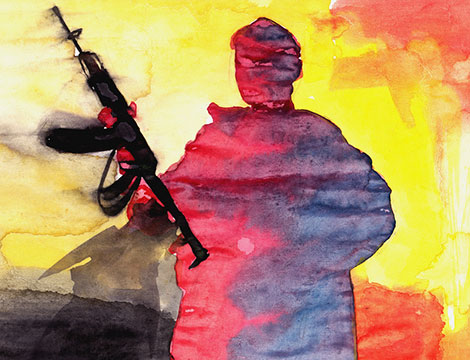
As the Western Mindanao Command (Westmincom) closes in on the dwindling number of IS militants in Marawi, various terrorist tactics learned from the wars in Iraq and Syria are being replicated to worsen the conflict in southern Philippines and spread IS influence in the region.

Commentary

The Armed Forces of the Philippines (AFP) has managed to recapture most of Marawi back from the Maute Group and its acolytes despite the military’s lack of familiarity with urban warfare and the terrain. Westmincom has made “great advances” addressing the “complicated” issues on the ground even though it missed the deadline for retaking Marawi fully or wiping out terrorism from Mindanao by June 2017.

However, for the Maute Group and other terrorist groups in Mindanao, the eventual loss of Marawi will not be so much of a setback as the beginning of bolder military moves to capture territory, even if briefly, to demonstrate their fighting capability and rally support for the so-called Islamic State (IS) in the region, especially in the wake of IS military defeats in Iraq and Syria.

Myanmar’s Military Holds Key to Further Reform

Image courtesy of brentolson/Flickr. (CC BY-NC 2.0)

This article was originally published by Pacific Forum CSIS on 23 August 2017.

What does Myanmar need to push through a successful democratic transition? It must build strong institutions, transform the economy, and end decades of conflict between ethnic armed groups and government forces, among numerous other challenges. Yet, these enormous tasks seem trivial when compared to what is probably the biggest obstacle to further democratic reform: the role of Myanmar’s armed forces, or Tatmadaw.

No other institution is more powerful than the Tatmadaw in Myanmar. Over five decades of military rule, the armed forces became entrenched in politics and business. Not only does it occupy 25 percent of total seats in Parliament, granting it an effective veto over constitutional change, but it also controls three key ministries: Defense, Home Affairs, and Border Affairs. The president is not the commander-in-chief, and hence, has no official control of the Tatmadaw. Moreover, the constitution grants the military power to take charge of the country in times of emergency.

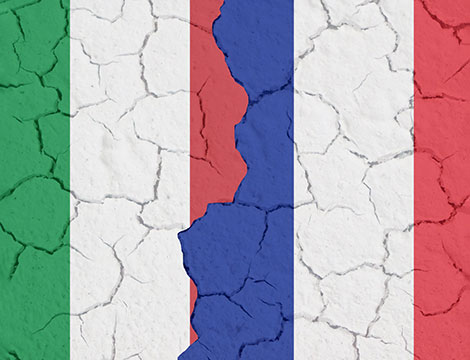
France, Italy and the Reawakening of Historical Rivalries

Image courtesy of M Woods.

This article was originally published by the Istituto Affari Internazionali (IAI) on 28 August 2017.

The leaders of France, Italy, Spain and Germany met in Paris on 28 August for a summit hosted by President Emmanuel Macron in the latest indication of France’s efforts to assume a key leadership role in the post-Brexit EU. Yet, the event is also an occasion for the French president to smooth ruffled feathers among EU partners, particularly in Rome, after a series of diplomatic spats led to a plummeting of relations and the resurrection of old grievances between the two countries. A second, and arguably more important bilateral summit between France and Italy is also scheduled for 27 September in Lyon, another indication of the need to patch up relations and promote an outward image of cooperation between the two EU neighbours.

Tensions between France and Italy soared in July following the French government’s decision to nationalise shipbuilder Stx/Chantier de l’Atlantique rather than give Italy’s Fincantieri a majority stake, thus reneging on an agreement between Italy and France’s previous government. Diplomatic relations had already been tested earlier that week when President Macron organised a peace conference on Libya without inviting the Italian government that considers itself a key player on the Libyan dossier. The two events, which are unrelated, created a perfect storm among Italians, resulting in some public spats and a queue of French ministers flying to Rome to patch up relations. Joint declarations and photo ops have not healed the wound, however, and tensions persist.

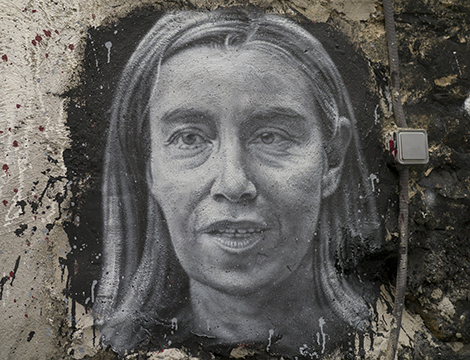
EU Defense Is Not Just for Diplomats

Image courtesy of thierry ehrmann/Flickr. (CC BY 2.0)

This article was originally published by Carnegie Europe on 24 August 2017.

Since the 2016 British vote to leave the EU, European governments have agreed on a number of new initiatives to improve their military cooperation. EU foreign policy chief Federica Mogherini said in June 2017 that the EU had “moved more in 10 months than in the last 10 years.” European Commission Vice President Jyrki Katainen went even further, claiming that Europeans had made more progress on defense issues in six months than in the previous sixty years.

These statements are exaggerations. But, Brussels bluster aside, the EU has recently agreed on some useful ideas to improve European military cooperation. They cover a range of activities, from funding for military research to better planning for EU operations, which could add real value to European military efforts.