
A New Strategy for Deterrence and Rollback with North Korea

Image courtesy of (stephan)/Flickr. (CC BY-SA 2.0)

This article was originally published by War on the Rocks on 19 October 2017.

On Tuesday, Deputy Secretary of State John Sullivan said of North Korea that the current U.S. “focus is on diplomacy to solve this problem that is presented by the DPRK. We must, however…be prepared for the worst, should diplomacy fail.” Not surprisingly, most recent commentary and analysis on the current North Korea crisis has focused on the prospects of either a near-term conflict or a diplomatic way out. That focus is understandable, but fixates on the two least likely outcomes. Rather than preparing for diplomatic or warfighting scenarios with a nuclear-armed North Korea, the United States should be preparing for a sustained period of deterrence, coercive diplomacy, and rollback. This is the best approach to achieve the international community’s long-stated goal of the eventual peaceful denuclearization and reunification of the Korean Peninsula at an acceptable cost.

What Russia’s Middle East Strategy Is Really About

Image courtesy of Sami Ben Gharbia/Flickr. (CC BY 2.0)

This article was originally published by Geopolitical Futures on 11 October 2017.

Moscow’s policy isn’t about becoming a leader in the region but accumulating influence to use closer to home.

A new balance of power is solidifying in Syria. Iran, Turkey and Russia have all played a role in the conflict there – jockeying for position and even agreeing in September to set up zones of control. But Russia in particular has deftly managed the game up to this point, and it is emerging from the Syrian civil war with a strong hand. Ultimately, Russia’s goal is to parlay its position in the Middle East into advantages in areas that matter more to Moscow. To some degree, it has achieved this, but it’s still unclear whether its strategy will be successful enough to score Russia an advantage in the area it cares about the most: Ukraine.

Two Sides of Europe’s Defense Coin

Image courtesy of DavidRockDesign/Pixabay

This article was originally published by Carnegie Europe on 2 November 2017.

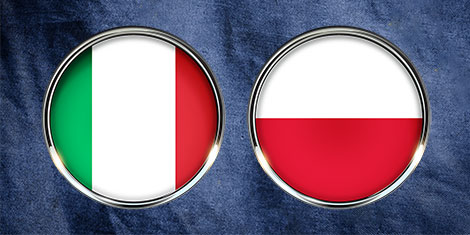
If Italy and Poland developed a strategic consensus and acted accordingly, it would be a revolution for European defense.

Toward the end of 2015, a few defense experts raised their eyebrows at a Credit Suisse report on the future of globalization. This wide-ranging assessment contained a short analysis of global military power, ranking the top 20 countries in the world. Weighing six elements of conventional warfare, the Credit Suisse analysts considered Poland a stronger military power than Germany, and Italy came ahead of the United Kingdom.

What Europe Can Do for the Western Balkans

Image courtesy of Kaufdex/Pixabay

This article was originally published by European Council on Foreign Relations on 13 October 2017.

It is high time for the EU to move beyond ‘stabilocracy’ and stand up to ethnic nationalist kleptocrat political leaders.

The Balkans are not as exciting as they once were. The large-scale violence that made the region a central concern of European policy in the 1990s is no longer a feature of Balkan politics.

That’s progress, of course. But the absence of violence does not mean an absence of problems. Persistent economic weakness, growing public frustration with leaders, and renewed ethnic tensions have created a volatile mix beneath the surface calm. As Europe’s attention to these issues wavered, outside actors – most notably Russia, but also Turkey and China, began to assert themselves. If the European Union wants to maintain stability and influence in its own troubled backyard, it will need to re-engage with the Balkans.

Turkey and the West: How Bad is It?

Image courtesy of Kaufdex/Pixabay

This article was originally published by the Central Asia-Caucasus Institute and Silk Road Studies Program Joint Center on 13 October 2017.

The U.S. suspension of visa services in Turkey is an indication of the depth of the fissures between the West and Turkey. While Turkish bureaucrats are trying to maintain functioning relations with the West, there are growing calls in Washington, Ankara and Berlin to redefine Turkey policy. Is Turkey headed for an incremental divorce with the West?