The Politics of Twitter

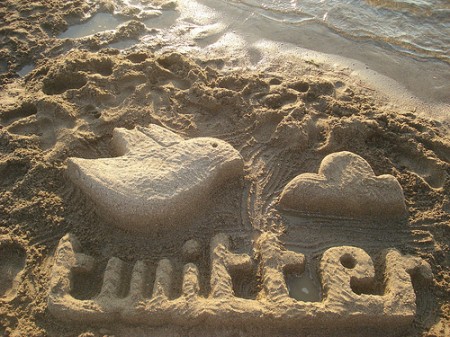
Shifting sands or a tool that is here to stay? Photo courtesy of Rosaura Ochoa/flickr

Barack Obama’s 2008 election campaign may still be the benchmark for the use of social media tools in politics, but some surprising new actors are embracing Twitter in particular in an effort to reach out to voters and citizens in a more personal and immediate way.

While leaders of ‘old Europe’ still seem quite reluctant to use the service (David Cameron, in his pre-prime minister days, once famously blurted out that “too many twits [it’s tweets, David] might make a twat”), politicians in South Asia are embracing the service as a means of reaching a very large number of citizens, very quickly.

Among them, Shashi Tharoor, the Indian Minister of State for External Affairs and member of parliament, who tweets several times a day, even using his stream to respond to constituent concerns. He has also run into trouble for his tweets. Although this may have given his follower numbers a boost, the ability to reach and interact with 825,000+ followers in such a dynamic and instant way is a feat in itself and a potentially powerful tool for governance in an unwieldy country like India.

Why have leaders in the West not embraced this new form of instant interaction? Do they fear that they may say something unwise, even controversial on a service that is anything but forgiving in its immediacy, or do they fear the barrage of responses they may get to an unpopular comment? While Silvio Berlusconi’s PR people might have made a wise choice in keeping him from the service, it could prove powerful in narrowing the divide between the ‘rulers’ and the ‘ruled’ and in making politics more relevant to millions of politically apathetic young people.

60 Years and Counting

Bombs over North Korea in 1950, courtesy of the US Department of Defense/Public Domain

Last week marked the 60th anniversary of the beginning of the Korean War; a war that gave rise to one of the most intractable conflicts in modern history. Technically still at war, North and South Korea were torn apart in the shadows of the early phase of the Cold War and in some ways represent one of the last remnants of it.

Yet the war itself, as well its veterans, are often overlooked; a mere footnote in the long, epic and tragic saga of the 20th century.

But to understand the current conflict, to see how deep the antipathy and fear go, it is important to look back at the war and to remember that the seeds of Kim Jong-Il’s madness, the source of China’s intransigence and the root of South Korea’s fear were sown in the conflict that a war-weary and exhausted world fought in 1950-53.

Here are some interesting resources on the topic:

  • The Boston Globe’s Alan Taylor takes us through some harrowing and haunting images of the war in a new picture series.
  • BBC provides an excellent overview of the war and its most important phases.
  • An Institut für Strategie- Politik- Sicherheits- und Wirtschaftsberatung (ISPSW) brief seeks to put together the North Korean puzzle.
  • The 1953 Armistice Agreement in our Primary Resources section shows how the war turned into the stalemate we know today.
  • A chapter from the Canadian Military Journal on the contribution and strategic effects of Canadian and Australian involvement in the war.

Justice in the North

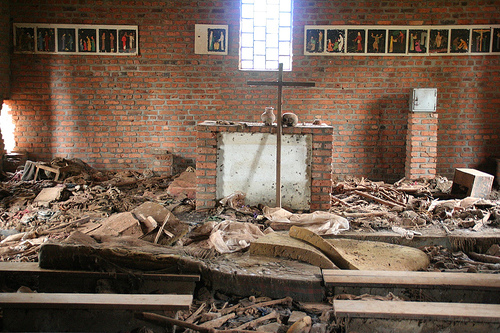
Justice, finally? Courtesy of Scott Chacon/flickr

A week ago, a landmark case in Finland against a 59-year-old Rwandan preacher concluded with a life sentence for mass murder (the Finnish legal term joukkotuhonta actually roughly translates as ‘mass/group destruction’). The man, Francois Bazaramba, had sought asylum in Finland in 2003 and was arrested in 2007 in Porvoo, Finland, accused by the Rwandan authorities of involvement in the Rwandan genocide in 1994.

Although not unprecedented, Finland’s exercise of the so-called universality principle in public international law, has revived the controversy surrounding the principle which, in theory and if codified in national law, allows national courts to prosecute individuals suspected of involvement in genocide or other grievous and systematic attacks against civilian populations, regardless of the location of the crime or the nationality of the suspect.

More importantly, however, it has marked another step in the torturous road toward justice and reconciliation in Rwanda.

Categories
Uncategorized

ISN Weekly Theme: The Rise of the Right

Europe turning right? Courtesy of: Rene De Paula Jr/flickr

One hallmark of Europe’s changing political landscape in the past decades has been the steady rise of parties on the extreme right. This week the ISN explores the ‘family’ of right-wing parties and the implications of their rising popularity and clout across the continent.

Our Special Report offers the following content:

  • An Analysis by Dr Michale Bruter on the concept and reach of the extreme right in Europe.
  • A Podcast with Dr Andrea Mammone of Kingston University London on the rise of the right in Italy and the political, economic and ethical crisis engulfing the country.
  • Security Watch articles on the popularity of right wing parties among foreigners in Switzerland and on the rise of right-wing extremism in the UK.
  • Publications housed in our Digital Library, including a Centre for Eastern Studies commentary on Germany’s integration and naturalization policies and a Danish Institute for International Studies paper on multiculturalism in Denmark and Sweden.
  • Primary Resources, among them Geert Wilders’ speech in the House of Lords and a report on violence against Roma in Naples, Italy.
  • Links to relevant websites, including an article on populism in Europe and a swissinfo page on Islam and Switzerland that details last year’s minaret debate and its aftermath.
Categories
Uncategorized

Call for Applications: Junior Associates Program

The ISN is proud to announce the launch of our Junior Associates Program. The program brings together young professionals from Swiss-based institutions, companies and international organizations , as well as promising young scholars from Swiss universities, in a cooperative project that builds bridges and networks across the Swiss IR community.

Each program cycle will focus on a theme; this year, the topic will be

Europe and Islamic Countries – New Frontiers, Fresh Perspectives

The broad range of issues that may be explored under this thematic umbrella include:

  • Swiss/European policy toward ‘marginal’ Muslim regions, such as North Africa, parts of sub-Saharan Africa and Southeast Asia
  • Economic cooperation between Europe and North Africa
  • Population growth in the Arab world and the migration of young Arabs to Europe
  • Muslim perspectives on identity and place in 21st century Europe

Through collaboration, Junior Associates are expected to draft two Junior Associates Special Reports, to be published by the ISN in late 2010 and early 2011.

Junior Associates will also have the opportunity to attend an exclusive ISN Junior Associates event in Zurich in early October of this year. The event will feature high caliber speakers on this year’s topic.

For more information and to request an application form, visit the program’s website. Questions can be addressed to the program manager, Kaisa Schreck, or the program assistant, Jonas Rey, by sending an email to ja[at]sipo.gess.ethz.ch.