No Escape from the Curse of Taxation

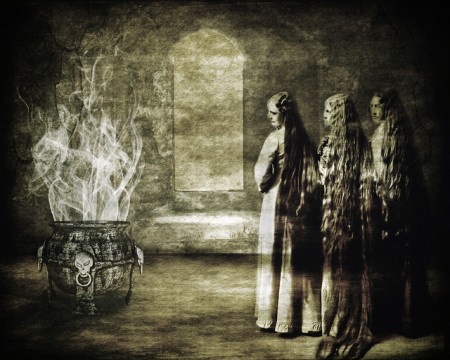
Bad News in the Cards for Romania's Witches, photo: Brenda Clarke/flickr

Politicians in Romania are currently debating a bill which will inescapably change the lives of the country’s witches, fortune tellers and soothsayers. Only one month after the Romanian Parliament changed the country’s labor laws to officially recognize the centuries-old practices as taxable professions, the nation’s witches & co. are cursing a new bill that threatens fines or even a prison sentence if their predictions do not come true. In addition, the law will make them carry permits and provide receipts, and forbid magic weavers from carrying out their work near churches or schools.

This move by the Romanian officials does come as a surprise (to some of us, at least). Witchcraft has been part of Romanian (sub-)culture for centuries. Nevertheless, the lives of witches, astrologers and other forms of spiritual mediums have always been tough, to say the least. Under the Communist regime of Nicolae Ceausescu, the supernatural industry was even banned and its adherers prosecuted. Only in the 1990s the witches re-emerged to carry on their craft in freedom.

Today, superstition is considered a serious matter in the land of Dracula, and officials regularly turn to occultists for help – not least to help the impoverished country collect more money and crack down on tax evasion. It is thus hardly surprising that the country’s sitting president, Traian Basescu, is known internally to wear purple on certain days in an attempt to ward off evil.

Race for the UN Security Council

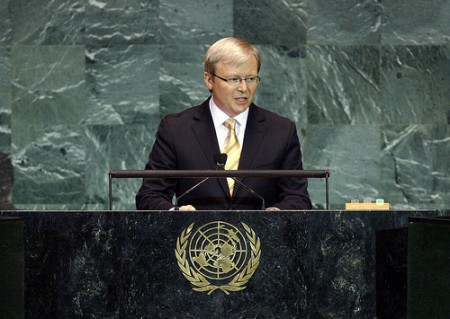
Kevin Rudd, Minister of Foreign Affairs of Australia addresses the UN GA, courtesy of UN Photos/Marco Castro

The race for the 2013/14 election for non-permanent seats on the UN Security Council is raging among a group of countries, including several EU countries, Australia, Switzerland, and Turkey.

Luxembourg and Finland are the official EU candidates and enjoy the support of the EU member states and have the advantage of not having been regular UN SC members. Luxembourg was never elected and Finland was elected twice, the last time in 1989-1990. In an attempt to win more votes for the election, the two countries have engaged in ‘cash-diplomacy‘ by increasing their aid money abroad, especially in Africa, amongst countries that form the most influential grouping in the UN General Assembly.

Recently, Australia also declared itself a candidate for the council. Some analyst says that Australia’s chances are low. It already lost against two EU members (Sweden and Portugal) in 1996, it does not have the EU’s support, it entered the race later than its opponents, and is less engaged in a cash-diplomacy than Luxembourg or Finland. According to the Lowy Institute, Luxembourg and Finland respectively gave $137 and $237 million in aid money to Africa while Australia only gave $80 million.

At first glance it seems that Luxembourg and Finland have a better chance to win the race to the UN SC. But if we look a bit more closely, the election might actually be much tighter.

Categories
Uncategorized

ISN Insights: Look Back, Week Ahead

The new ISN Insights week starts today, photo: Nicole North Rodriguez/flickr

Last week, we examined the following issues:

This week we’ll be looking at: the nexus between FIFA decisions and world politics, EU’s approach to illegal immigration, the ongoing Munich Security Conference, and oil politics in the wake of Egypt’s political crisis. Stay tuned.

As the Crisis in Egypt Unfolds….

More than a week later, Tahrir Square is still full of demonstrators, photo: Mashahed/flickr

With rumors abound that Mubarak will have to accept a US brokered deal to step down today (amid fresh waves of protests in Cairo), the situation in Egypt is developing so fast that accurate and constantly updated information is key to understanding the present and possible future of this Arab stalwart. What will this day bring to the streets of Cairo? More horrific violence or a sense of renewed resolve and purpose? Will Friday, 4 February 2011, mark the end of Mubarak’s three decade rule?

In addition to pointing you to resources we hold in the ISN Digital Library on Egypt in last week’s post (lots of interesting stuff analyzing the background to the current crisis), we’d like to give you a taster of what we’re monitoring here at the ISN for the newest information on the crisis as it unfolds, day by day, hour by hour.

The best way to stay up to date is to follow Twitter streams: Search for #Egypt or #Cairo to get a live stream of tweets relating to the protests or follow Al Jazeera’s twitter stream which is currently focused on this issue.

You can also follow News Blogs: we found the Guardian News Blog, the Reuters Live Blog and the Al Jazeera Live Blog to be the some of the best in providing up-to-date information and analysis on the situation on the ground.

In addition, Andrew Sullivan- a prominent blogger at the Atlantic magazine does a stellar job at scouring through the Net to find interesting information and quotes on the issue, in addition to providing biting and up-to-date original analysis.

And of course, let’s not forget @Sandmonkey, a prominent Egyptian blogger and activist who is tweeting from Tahrir square as we speak!

Let us know if you’ve found other sources to be equally, or even more helpful.

Mexico: The Absurd Theater of War

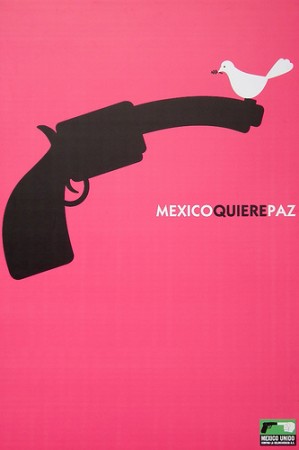
The Peace Gun
The Peace Gun, photo: Gary Denness/flickr

In warfare the term “theater” is used for the specific area where war is taking place. In Mexico “theater of the absurd” could be used for the strange and incongruous aspects that the drug war has introduced in people’s lives.

At the beginning of January 2011 the Heidelberg Institute for International Conflict Research published its yearly assessment and rated Mexico as one of the world’s six most violent nations. Judging by the conflict barometer’s criteria, Mexico is indeed a country at war. In 2010 the situation worsened considerably: There were more than 12,000 drug-related killings and Monterrey, Mexico’s wealthiest city, also succumbed to the drug war.

But does the conflict level in Mexico feel like the one reported in Afghanistan, Somalia, Iraq or Sudan? It actually does not. It is as if the war is a game of hide-and-seek with the country’s citizens. It is going on “behind” open eyes: Constantly present – in low-income neighborhoods, suburbs or on highways leading North – yet when one turns round, there are only traces to be seen. The effects of this latent violence are bitter and its psychological consequences profound.