
‘Cybersecurity’ and Why Definitions Are Risky

Computer screen. Image: hackNY.org/Flickr

On November 7, the Swiss Chairmanship of the Organization for Security and Co-operation in Europe (OSCE) held a conference in Vienna  on confidence-building measures for cybersecurity. The event built on several positive international developments last year, including a bilateral agreement between the U.S. and Russia and the member states of the OSCE to adopt “an initial set of OSCE Confidence-Building Measures (CBMs) to Reduce the Risks of Conflict Stemming from the Use of Information and Communication Technologies.” Last week’s conference sought to promote the implementation of the latter and further negotiations. This includes a recent study commissioned by the Swiss Government, and available at the Global Cyber Definitions Database, which offers a compilation of existing cybersecurity-related terms in order to shed light on these differences.

Categories
CSS Blog Humanitarian Issues Regional Stability

Mediation Perspectives: Time to Build Bridges between Tribes in South Sudan

Image: European Commission/flickr

When, a decade ago, the independence of South Sudan became a serious option, it was politically correct to foster great illusions about its future. However, as Sudan itself was considered to be a failed state, there was a risk that simply dividing the country might create two failed states. In addition, a glance at the modern history of Eritrea, Ethiopia, Uganda and Rwanda reveals a pattern from which South Sudan could hardly expect to escape.  In each of these countries, when victorious rebel armies took full political control, they established authoritarian regimes that remain in power decades later.

Categories
Global Voices

John Bruni on Security Jam 2014

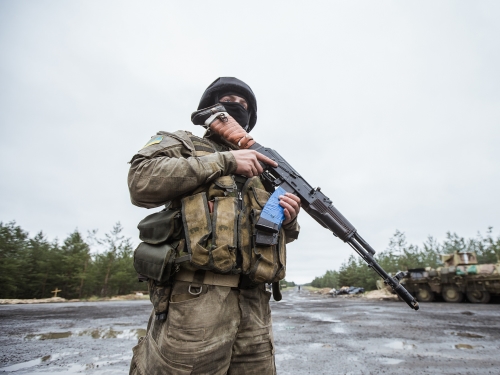
Ukrainian Soldier Blocking the Road to Sloviansk. Image: Sasha Maksymenko/Flickr

Did Security Jam 2014 strike the right balance in terms of issues discussed, topics, categories etc.?

I believe that Security Jam 2014 did strike the right balance. Essentially it sought to unpack how Europe (i.e. the EU/NATO) would be able to adapt to new global security challenges. The discussions had were not just about weaponry and streamlining the processes by which EU/NATO constituent states operate, it sought to uncover other interesting elements of the security equation such as civil-military relations and the organizational implications of undertaking security in the 21st Century. And by security, I am using its broadest interpretation i.e. using the military instrument in missions other than war fighting, such as peacekeeping, providing humanitarian assistance, disaster relief and cyber security. Furthermore, the forums on contemporary issues such as Ukraine and Syria, added a sense of urgency to the Jam.

The Bildt-Sikorski-Effect

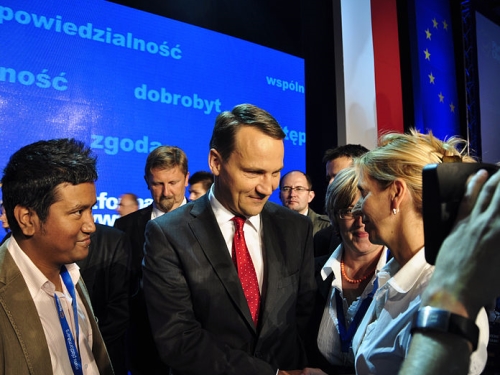
Polish Foreign Minister Radoslaw Sikorsi. Image: Platforma Obywatelska RP/Wikimedia

This article was originally published by European Geostrategy on 12 October 2014.

The departure of Carl Bildt and Radoslaw Sikorski as foreign ministers of Sweden and Poland respectively is an interesting development for European foreign policy. The timing is awful. At a moment when Europe is faced with crises in the east and the south, Europe can ill afford to lose either its most experienced statesmen or the vision they bring to the table. Both leaders simultaneously believe in the strategic necessity of the EU and they are as comfortable in Washington as they are at home in Warsaw or Stockholm. With Bildt and Sikorski gone, the EU is also lacking any obvious hardliners on Russia. This may satisfy some in the EU but surely Vladimir Putin must be pleased with their replacements.

Germany’s Islamic State Problem

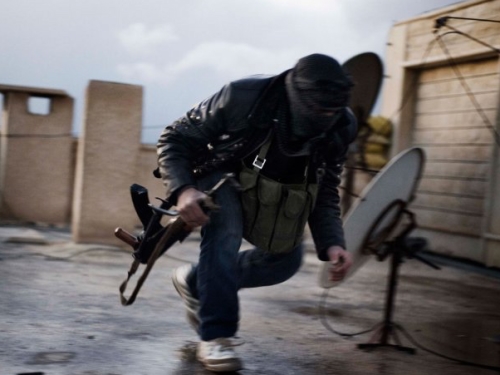
Fighter in Syria. Image: Freedomhouse/Flickr

This article was originally published by the Long War Journal on 13 October 2014.

Berlin: There is a growing sense among leading German politicians that the Federal Republic’s preoccupation with the NSA surveillance scandal should not overshadow the pressing need to confront the Islamic State.

“German worry over Islamist attack eclipses spy scandal,” Bloomberg News headlined its Oct. 8 report on the issue. A new reality appears to be sinking in. Roderich Kiesewetter, a Bundestag deputy from Chancellor Angela Merkel’s Christian Democratic Union and a former army colonel, was quoted as saying, “In the German public, there is more of an awareness that our intelligence services need information to confront these terror threats.”