
Inexorable Changes in US Foreign Policy?

Image courtesy of Luke Michael/Unsplash

This article was originally published by the Foreign Policy Research Institute (FPRI) on 14 August 2018.

It seems to be an article of faith among many members of the U.S. foreign policy community that, whenever Donald Trump—and his administration—leaves office, a subsequent president (whether a Democrat or a non-Trumpist Republican) will push a reset button that will return the United States to its position in world affairs that it occupied in 2008 or 2016. They take reassurance in the assumption, however, that Trump’s presidency can only represent a brief aberration and that, as Lawrence Freedman notes, “When Trump ceases to be President, things should return to normal.”
Managing Global Disorder: Prospects for Transatlantic Cooperation

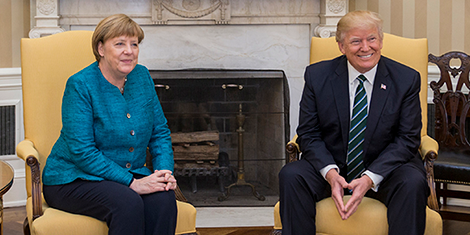
Image courtesy of Shealah Craighead/The While House/Flickr

This article was originally published by the Council on Foreign Relations (CFR) on 20 August 2018.

In July 2018, the Council on Foreign Relations’ Center for Preventive Action convened a workshop to examine areas of cooperation between the United States and the European Union. The workshop was made possible by the generous support of the Carnegie Corporation of New York. The views described here are those of the workshop participants only and are not CFR or Carnegie Corporation positions. The Council on Foreign Relations takes no institutional positions on policy issues and has no affiliation with the U.S. government.

Introduction

Categories
CSS Blog

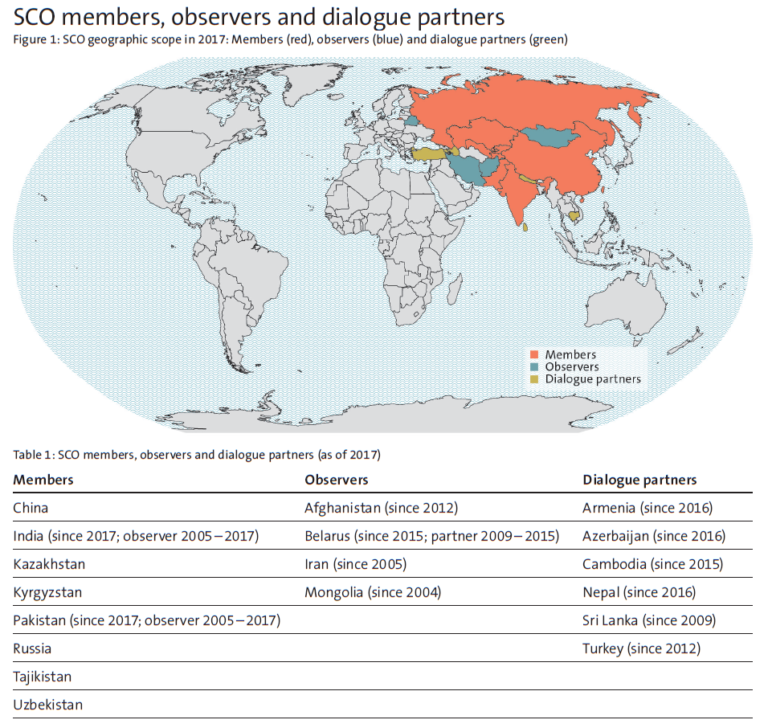
SCO Members, Observers and Dialogue Partners

EmailFacebookTwitter

This graphic provides an overview of the Shanghai Cooperation Organisation’s (SCO) members, observers and dialogue partners. For more on the SCO, including how Europe and Switzerland could engage with the organization, see Linda Maduz’s new comprehensive study Flexibility by Design. For more CSS charts, maps and graphics, click here. Click image to enlarge.

Can China Free Africa from Dependency on the Mighty Dollar?

Image courtesy of Vladimir Solomyani/Unsplash

This article was originally published by the Institute for Security Studies (ISS) on 13 August 2018.

By extending the influence of the yuan, China could become the new champion of globalisation.

Is China, aided and abetted by the other BRICS member countries – Brazil, Russia, India and South Africa – making a bid to dislodge the dollar from its global pedestal and replace it with the yuan? And if so, will it help African countries, in particular, to escape from the iron and often onerous grip of the greenback?

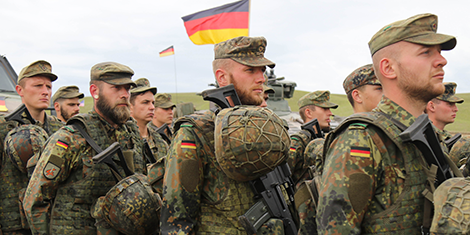
Burden-Sharing within NATO: Facts from Germany for the Current Debate

This article was originally published by Political Violence @ a Glance on 7 August 2018.

Professor Rachel Epstein’s interview with Professor Donald Abenheim of the Naval Postgraduate School and Lieutenant Colonel (General Staff) Marc-André Walther of the German Armed Forces Command and Staff College in Hamburg.

1. The President of the United States had some tough words for America’s NATO’s allies at the recent summit in Brussels. Is this sort of brinkmanship normal in the history of the Alliance?