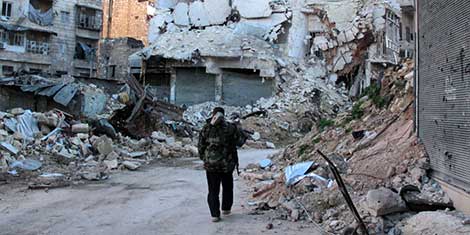
The EU’s Challenge with the End of the Syrian War

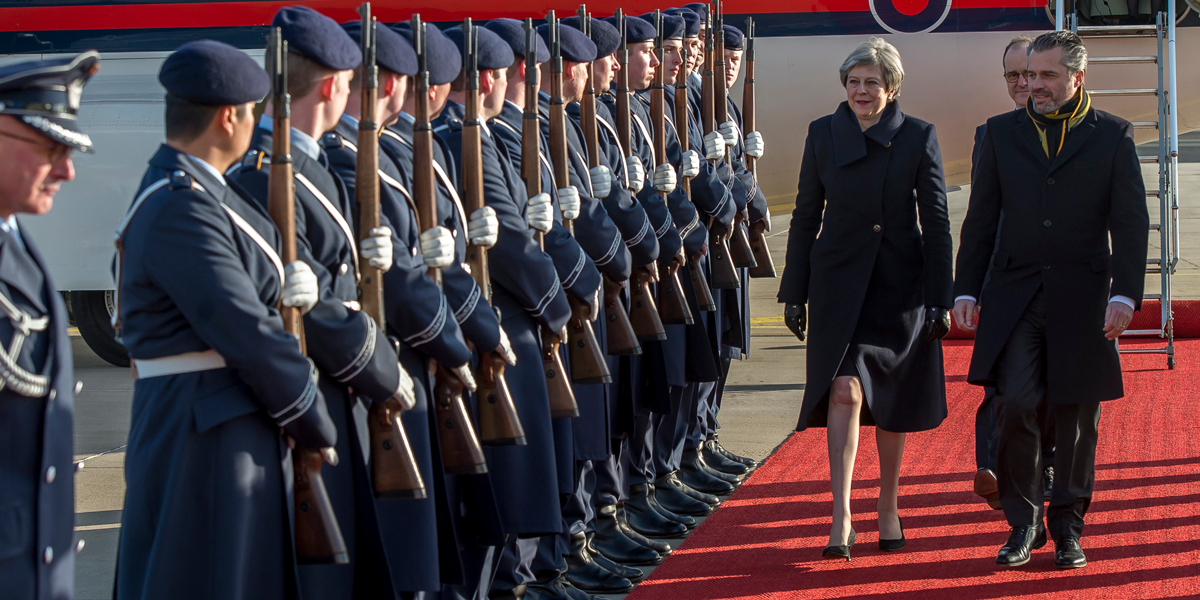
Image courtesy of Basma/the Foreign and Commonwealth Office/Flickr. (CC BY-ND 2.0)

This article was originally published by the Polish Institute of International Affairs (PISM) on 4 September 2018.

The war in Syria has entered its final stage, one in which diplomacy will dominate military action. The most likely scenario for the end to this conflict—the Syrian government’s victory—creates a set of political risks to the EU: legitimisation of the undemocratic regime in Syria, engagement in highly politicized reconstruction projects that do not contribute to the improvement in living standards of Syrians, and granting Russia political gains without it also accepting adequate responsibility for the fate of Syrian returnees.
Categories
CSS Blog

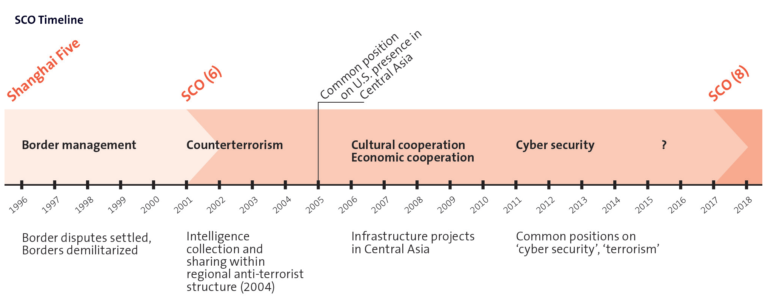
Shanghai Cooperation Organisation Timeline

Click to enlarge

EmailFacebookTwitter

This graphic provides a timeline on the development of the areas of focus for cooperation in the Shanghai Cooperation Organisation (SCO) since the 1990s. For more on the SCO, its current and future relevance, and whether Europe should engage with the organization, see Linda Maduz’s comprehensive study Flexibility by Design. For more CSS charts, maps and graphics, click here.

Brexit, Defence, and the EU’s Quest for ‘Strategic Autonomy’

Image courtesy of Number 10/Flickr. Crown Copyright/(CC BY-ND 2.0)

This article was originally published by the European Council on Foreign Relations (ECFR) on 25 June 2018.

EU members may not feel they can trust the Brits on defence. But the UK’s past reliability on this front suggests they should.

There is more joy in heaven (or so we are told, on the best available authority) over one sinner who repents than over ninety-nine already-righteous folk. On that basis, fatted calves in the vicinity of Brussels should have been keeping a very low profile as the British, after long years decrying and obstructing European defence integration, have rediscovered an unconditional commitment to Europe’s security, and pressed for the closest possible post-Brexit partnership.

China and Russia in Global Governance: Long-Term Obstacles to Cooperation

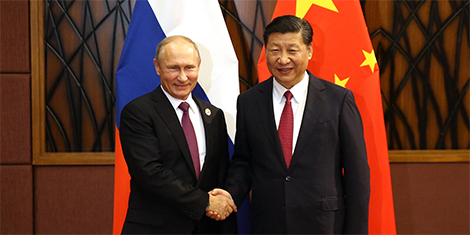
Image courtesy of Kremlin.ru. (CC BY 4.0)

This article was originally published by the Finnish Institute of International Affairs (FIIA) on 22 August 2018.

  • Russia and China play dissimilar roles in global governance and define their interests in this sphere in divergent ways. While the two states agree on certain international principles and norms, their engagement with global governance differs significantly. These differences pose the most serious long-term obstacle to closer cooperation between Moscow and Beijing.
  • China’s growing participation in global governance is tightly linked to the increasing scope of its interests. China supports economic globalization and market openness and is interested in political and economic stability on a global scale. Beijing also aspires to have a greater say in international institutions.
  • In comparison to China, Russia’s participation in global governance is significantly lower due to narrower interests on a global scale, fewer financial resources, and less advanced integration into the global economy. As a result, global political and economic stability is not crucially important for the current Russian leadership. On the contrary, uncertainty and volatility help Moscow broaden its influence.
Categories
CSS Blog

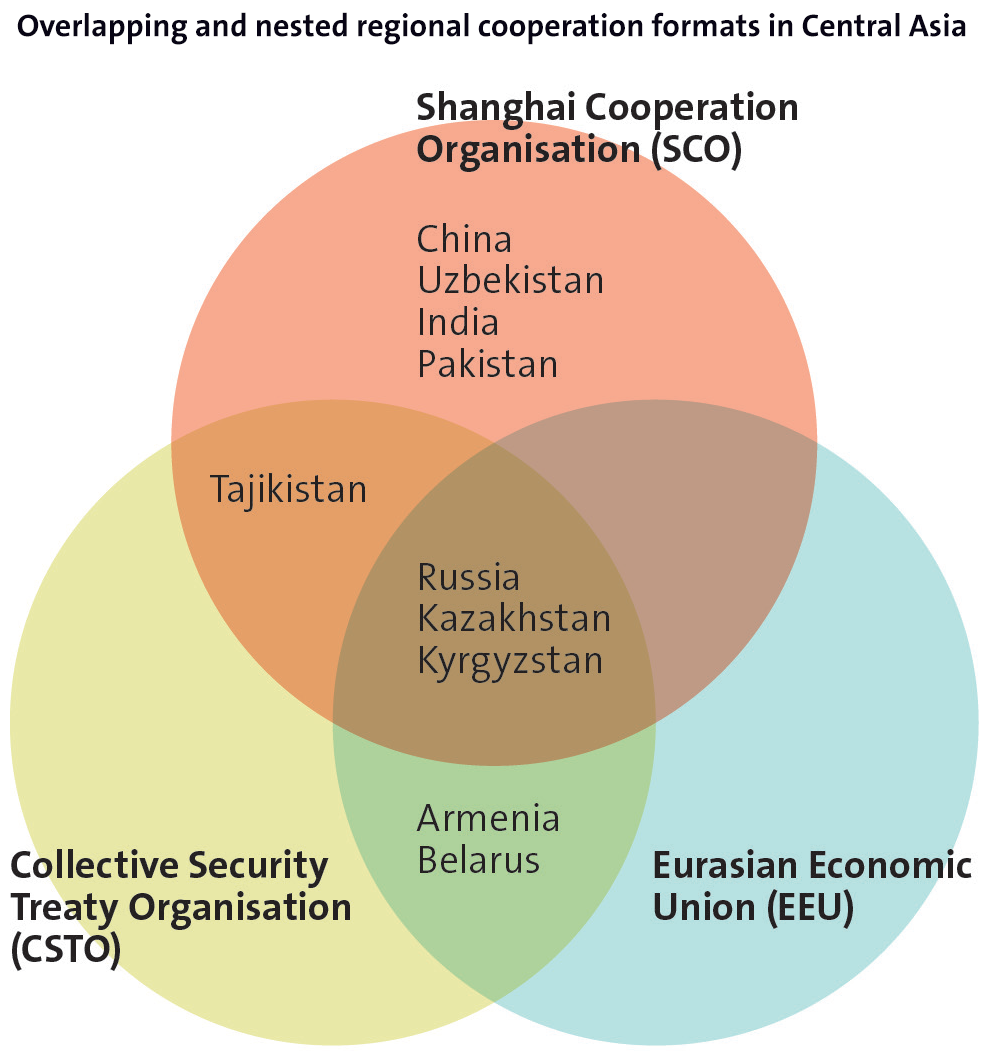
Overlapping and Nested Regional Cooperation Formats in Central Asia

EmailFacebookTwitter

This graphic charts how the Shanghai Cooperation Organisation (SCO) overlaps with other regional cooperation formats in Central Asia. For more on the SCO, its current and future relevance, and whether Europe should engage with the organization, see Linda Maduz’s comprehensive study Flexibility by Design. For more CSS charts, maps and graphics, click here. Click image to enlarge.