
Categories
Uncategorized

ISN Weekly Theme: The Saudi Touch

US Army chaplain prays toward Mecca, Saudi Arabia, photo: Lance Cheung/flickr

This week the ISN takes a closer look at the enormous challenges facing Saudi Arabia on both its domestic and foreign policy fronts. The world is watching to see how the Middle East’s largest country will address its internal discord, while jockeying for regional dominance in 2010 and beyond.

The ISN Special Report contains the following content:

  • An Analysis by Dr Amnon Aran examines the challenges and opportunities of Saudi foreign policy, arguing that its promotion of the Middle East peace process could improve not only its geopolitical standing but wider regional stability.
  • A Podcast interview with Toby Jones debunks some of the stereotypes about the country’s deep-seated political and religious conservatism to paint a more nuanced picture of a complex land.
  • Security Watch stories about Saudi internet jihad, the country’s foreign relations from Iran to Yemen and much more.
  • Publications housed in our Digital Library, including a recent US Congressional Research Service analysis of Saudi-US relations.
  • Primary Resources, like the Saudi government’s “Initiatives and Actions to Combat Terrorism.”
  • Links to relevant websites, among them the Saudi Woman’s Blog that deals with life and culture in the country from a woman’s perspective.
  • Our IR Directory with relevant organizations, including the Ministry of Saudi Foreign Affairs and the Center for Contemporary Middle Eastern Countries.
Italian Media Monopoly

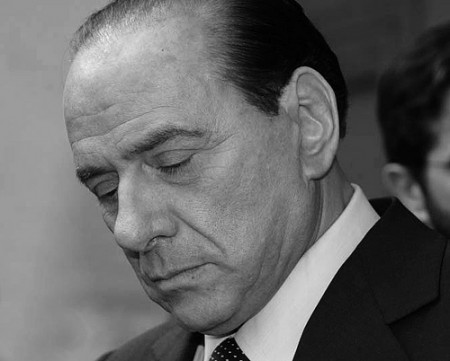
Silvio Berlusconi, photo: vas vas/flickr

When speaking of press freedom, Western European countries usually score highest in rankings from institutions like Freedom House or Reporters Without Borders. They are all declared as “free” with one notable exception: Italy.

In the 2009 report Freedom House downgraded Italy from “free” to “partly free”, highlighting worrisome trends that have been underlined by recent events.

In February of this year four managers from Google Italy’s YouTube branch had to stand trial because of accusations regarding privacy violations. This was only one month after Italian officials proposed a new law against online copyright infringement which holds responsible companies that host and broadcast copyright protected content illegally (i.e. YouTube). Meanwhile, Google is still engaged in a similar legal dispute with Mediaset, a private media corporation controlled by Prime Minister Silvio Berlusconi.

On 2 March 2010 the administrative council of Italy’s public television network RAI announced that two popular political talk shows will not be allowed to broadcast for one month until regional elections are over. State officials justified the decision by pointing to a law that guarantees equal opportunity of representation on public media channels to all parties. However, opponents argue that the decision is purely political as the two talk shows “Anno Zero” and “Balla-rò” have heavily criticized Berlusconi in the past.

Categories
Uncategorized

Serendipitous Beginnings…

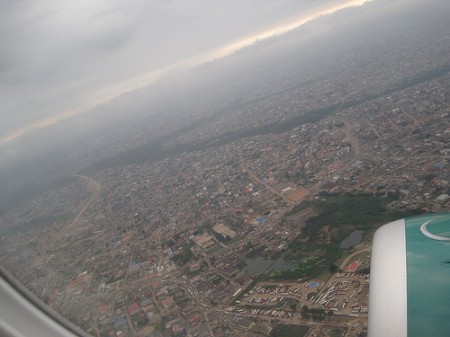
Lagos, Nigeria from the air, photo: Wayan Vota/flickr

This blog post is the first of a series of contributions documenting time spent in southern Nigeria to attend a conference and gather data for the targeting energy infrastructure (TEI) project.

“Was that Wole Soyinka?” I said to myself as I walked passed a man in the Charles de Gaulle airport that looked strikingly similar to renowned Nigerian author, activist, and Nobel laureate. After all, it was barely 2 weeks ago that I was watching a segment on CNN where Christiane Amanpour interviewed Dr. Soyinka on Nigeria’s political stability in light of President Yar A’dua’s deteriorated health and the subsequent stalled peace process in the volatile Niger Delta region where local militants have attacked the energy sector and fought government forces in a campaign for a greater share of oil revenues. In addition to his literary success, Mr. Soyinka is a respected figure in Nigeria where he has been a longtime critic of political corruption and advocate for electoral reform. More recently, he has played a key role in mediating the Niger Delta amnesty process. Needless to say, watching the interview reminded me that this was a person I hoped to meet one day…

Arriving at the gate to catch a flight to Lagos, Nigeria, the same man entered the area and took a seat. After seeing a few people approach and shake his hand, it was clear that this was Dr. Soyinka. Gathering my nerve (yes, I had butterflies), I crossed the room to say hello. As we began to talk (honestly, I don’t think he had a choice since I proceeded to move his bag to the side to make room for me to take a seat), I was thinking to myself how fortuitous it was to meet such an important figure from the very country that I would be spending the next three weeks performing research and attending a conference on security issues in the Niger Delta. Though he may had been wondering to himself “who is this woman and where is the ‘off’ button?”, he was entirely gracious and engaging.

Boarding the plane, energized this chance encountered, I couldn’t help but wonder about the other exchanges that lay ahead. In the coming days I will be interacting with all parts of Nigerian society – ranging from people working in restaurants, students, educators, members from the NGO community and government, to those that have engaged and/or been affected by the militancy and criminality in the Niger Delta. As someone who researches the security issues in this region and the role of the energy sector, I hope to get a flavor of the local perceptions and opinions. In doing so I will document those exchanges and share my observations here.

Next stop, Lagos.

Categories
Uncategorized

The ISN Quiz: The Geopolitics of Turkey

Its pipeline power has made it a country to watch. How well do you know Turkey, the subject of this week’s Special Report? Test your knowledge in this week’s ISN Quiz.

[QUIZZIN 8]

How Tolerant Should Democracies Be?

Limits to tolerance? photo: code poet/Jim/flickr

Since US President Obama was elected, the far right has embraced radical fringe movements that do little to hide their desire to expound revolution in the US. A recent article, Oath Keepers and the Age of Treason has brought attention to the activities of armed militia groups in the US.

Militias have always been part of the American landscape, well before the American Revolution, where they played a decisive role in the US gaining its independence. Contemporary militia movements like the Oath Keepers regularly draw on this association as a source of legitimacy (as the “true keepers of liberty”) and as a justification for their rejection of the federal government in general and the Obama administration in particular.

What is striking is that these armed militias are confident enough to publicly describe their recruitment, training and mobilization activities and to express their hostile intentions toward the US government. In fact, it is in the realm of public activities that the perception and tolerance of these groups is a change from the past. Oath Keepers receive local support from the Tea Party-movement, which, in turn, enjoys support at the national level from state governors, congressmen and senators, as well as regular coverage by the mainstream media.

This is a telling reflection of the political imbalance in the US. While ordinary citizens protesting the war in Iraq were allegedly investigated and harassed by the police and the CIA, right-wing armed militia groups (made up of former military and policemen) can verbally attack the president, the federal government, and call for rebellion; all with the implicit (and in some cases explicit) support of public figures and political leaders. Analysts who dismiss the contradiction as “just national politics” or as the far right’s “desperate” search for voter support in populist movements may be underestimating the depth of the political divide in America.