Categories
Uncategorized

“Okadas” – The Informal Nigerian Subway System


This blog post is part of a series of contributions documenting time spent in southern Nigeria to attend a conference and gather data for the targeting energy infrastructure (TEI) project.

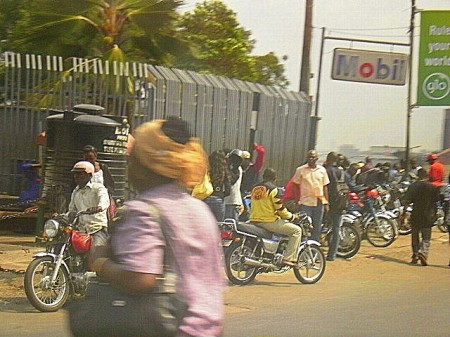
Prior to arriving in Nigeria, I heard about ‘Okadas‘ which are 2-wheel and 3-wheel commercial motorcycles found throughout cities in Nigeria. In reading up on domestic travel options I found that Okadas were commonly described in a negative light – often associated with the words “dangerous” and “reckless”. However, as I entered Lagos and saw the densely populated metropolis in action I saw the Okada system first-hand, and overall I couldn’t help but be impressed.

Rather than view this system through a negative prism I saw another expression of African, and in this case Nigerian, societal ingenuity at work despite living in challenging conditions. In a land where the development of strong state institutions is constantly being challenged by corruption, which hinders the reliable delivery of public goods  (decent roads and public transportation), civil society emerges as the engine of service; utilizing creative solutions harvested from below that circumvent the restraints that come from above.

After spending a few days in Lagos, the significant role that Okadas play not only to mass city transit but also as a form of employment to many, mainly young males who operate as drivers became clear to me. Bikes are more affordable and fuel efficient than cars, which is important given that gasoline shortages are an all to common feature in Nigeria. Granted, locals will quickly note how Okada drivers tend to aggressively push through traffic, ignore signs and motorists, and often take chances that can lead to fatal accidents. In fact, looking around one can quickly see that most bikes operate without helmets. Regardless, many admitted to using and benefiting from the service- some more often than others. In one particular conversation, a Nigerian friend told me that while she does not normally use Okadas she revealed that when running late for a meeting she has found herself on the back of a bike, cutting through traffic in the hopes of reaching her destination both quickly and in one piece. I also spoke with a few Okada drivers who shared with me the sense of pride they had in both having wheels to get around and being able to use it as a source of income.

On the Relevance of BRIC…

BRIC Leaders in 2008, courtesy of Kremlin Press and Information Office

On 16 April, the BRIC nations (Brazil, Russia, India and China) will meet in Brasilia. The group has managed to develop  a presence on the geopolitical stage in the past years and is increasingly able and willing to counter the influence of western power on various fronts. They share many characteristics and interest- primarily in the economic realm- and account for more than 40 percent of the world’s population and 25 percent of its land area.

The four are also pushing for a more multilateral world and use BRIC as a vehicle to pursue this end. The international community and media have enthusiastically embraced this concept and often view or treat the group as a coherent political actor, granting it clout and weight on the international stage.

But has the BRIC concept graduated from mere theory (and labeling) to real, actionable practice? Beyond the push for a more “multilateral world”, do the BRIC countries have much in common? Do they share anything beyond their inclusion in the 22  “emerging markets” index and perhaps most importantly, does the bloc have political relevance?

Preparing for Election Season in Colombia

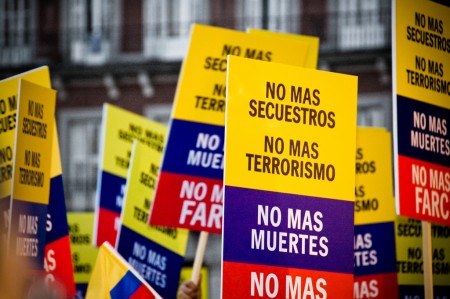
No FARC
Protests against FARC, photo: kozumel/flickr

After eight consecutive years in office, President Álvaro Uribe of Colombia has to step down and make way for potential change in Colombian politics. This post features a brief description of the main presidential candidates in the 2010 elections and looks at the potential impact of a changed political landscape on relations with the US, Venezuelan President Hugo Chavez and the guerrilla organization FARC.

This weekend’s parliamentary election will serve as an indicator of the direction Colombian politics will take in the post-Uribe era.

Categories
CSS News

Energy in Europe and Terrorism in Yemen

CSS Analysis no 69 and 70

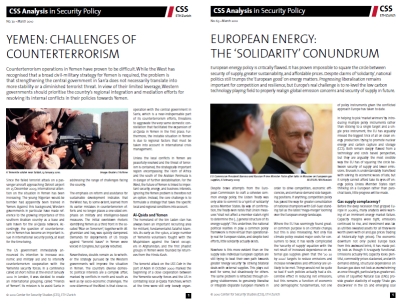
Our colleagues at the Center for Security Studies have recently published two new policy briefs.

Mathew Hulbert looks at European energy policy and the interconnected goals of availability, affordability, and sustainability. He argues that Europe needs to re-level the low carbon technology playing field to properly realign global emission concerns and security of supply in the future. Also check ISN resources on European energy policy.

Roland Popp examines Western governments’ counterterrorism strategy in Yemen. He emphasizes the need to take the resolution of Yemen’s economic and social problems as a starting point. The ISN Digital Library offers further resources on Yemen.

Gay Rights (and Wrongs) in Africa

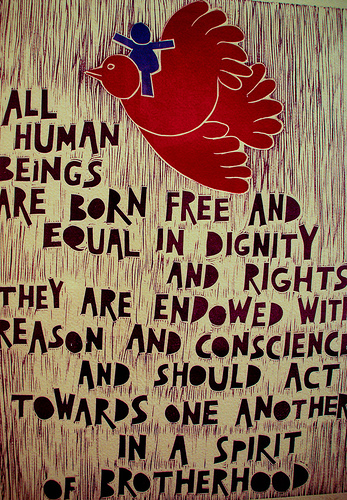
Universal Declaration of Human Rights, Article 1, photo: Riacale/flickr

The African continent has long been described as one of the most homophobic places on earth. And lately this appears more true than ever. From Uganda and Senegal to Malawi and The Gambia, gays are being attacked with alarming new vitriol.

While western media has been abuzz with shocking stories of gay-bashing across the continent, the reasons for this tragic turn have been less discussed. In fact, many western media outlets – not to mention human rights groups championing the gay-rights cause – have failed to provide proper context for this new wave of homophobia. And an informed view of the complex cultural and political factors that undergird anti-gay fervor is critical – especially if it is to be properly combated.

An ugly colonial legacy

Africa’s heated homophobia is fueled largely by anti-western sentiments. In colonialism’s wake, African strongmen solidified their newfound political power and cultivated nationalist fervor by stirring up anger against purported western influences – a real ‘us vs them’ construction of national identity. Among these so-called western values was homosexuality, an ‘evil’ to be expelled along with the colonial rulers who brought it.

The ironic truth, of course, is that homophobia – not homosexuality – is largely a product of the continent’s colonial past. By jumping on the homophobia bandwagon, some of these ‘Africa-first’ champions are actually perpetuating one of the ugly legacies of colonialism itself.