Electricity in Nigeria: (Sort of) Off and On

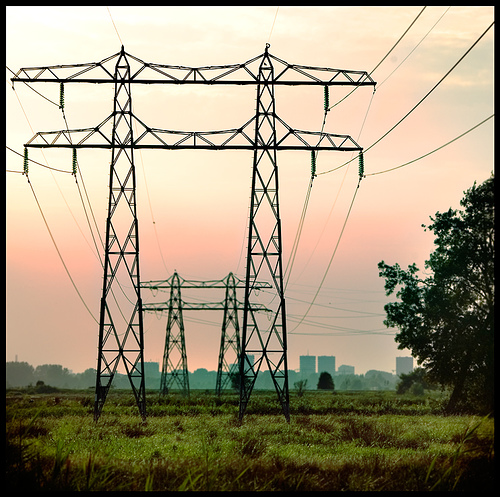
Power outages are a Nigerian norm, photo: Annemiek van der Kuil/flickr

This blog is part of a series of contributions documenting time spent in southern Nigeria to attend a conference and gather data for the targeting energy infrastructure (TEI) project.

In Nigeria, people celebrate when the lights come on. Admittedly, after barely a week in the country I too found myself joining in the collective, nationwide jubilee. The regular power outages throughout the country have created an emotional rollercoaster, whereby the mere act of sitting in a dark room that is at one moment illuminated by nothing more than a few flashlights (most of which are from mobile phones) and then at another buzzing with electricity. It’s nothing short of thrilling.

Yet the thrill soon dissipates in exchange for bewilderment. How can one of the top oil and gas producers in the world be short of energy to power its economy? Unfortunately, the irony doesn’t stop there. While millions of barrels of sweet, easily refined crude oil are shipped out of here daily to feed other economies, domestic fuel shortages have been a common feature in Nigeria. Years of militancy and criminal exploitation aimed at the oil and gas infrastructure in the energy-rich Niger Delta region mean there has been no development of new infrastructure, and overall mismanagement has limited the amount of supplies needed to feed domestic consumption. It wasn’t until last month that the Nigerian National Petroleum Corporation (NNPC) announced that fuel supplies exceeded national daily consumption rates for the first time in months. Accustomed to such scarcity, I found that most people frequently note when they see a station with short lines.

But the Nigerian civil society (and I would go further, to say African civil society) are extremely powerful, resourceful and innovative. What the state doesn’t provide, the community finds a way to supply. In the case of the energy shortages, Nigerians manage considerably well. For instance, the lively cyber café in Warri (which has become somewhat of a second home for me) is being powered by a generator as I scribble this blog. The actual power went off a long time ago. In fact, stepping outside one finds that the traffic noise is almost overwhelmed by the sounds of generators humming from most businesses.

A Rumble in Warri

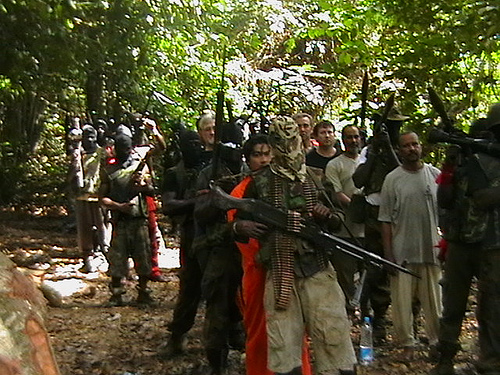
MEND rebels and hostages, Niger Delta, photo: Dulue Mbachu/ISN Security Watch

This blog is part of a series of contributions documenting time spent in southern Nigeria to attend a conference and gather data for the targeting energy infrastructure (TEI) project.

Monday morning, while sitting in my host office at the Institute for Dispute Resolution (IDR) – a NGO based in Ekpan, Nigeria (a community next to Warri) and headed by Innocent Adjenughure – a thunderous noise caught my attention. I paused as the word bomb came to mind. After all, I was sitting in the heart of the Niger Delta, where up until October 2009 when an amnesty deal was achieved, the resource rich region was wrought with militancy and criminality. The emergence of the Movement for the Emancipation of the Niger Delta (MEND), a militant umbrella group, in 2005/6 introduced an intensified campaign of violence aimed largely at the country’s oil and gas sector that crippled production by as much as 30 percent.

So I waited and listened. In the absence of emergency sirens or some type of notification, I shrugged, passing it off as an approaching storm.

What I didn’t realize was that nearby the post-amnesty dialogue “Restoring Hope in the Niger Delta”, initiated by the Vanguard Newspaper in Nigeria and sponsored by the federal government and the nine states in the Niger Delta region, was kicking off at the Delta State Government Annex building in Warri. In fact, Innocent and I were scheduled to attend this meeting but mistakenly thought that the program began the following day. So as prominent government officials and stakeholders began to gather just before 11:00, the first of 2 car bombs, planted by MEND and parked on the street outside of the compound, were remotely detonated. Shortly after, the second bomb went off. By noon, participants were fleeing the area in panic, numbers were injured and at least two civilians were reportedly killed.

Categories
Uncategorized

New ISN Partner: Centre for Security Economics and Technology (C SET)

Centre for Security Economics and Technology (C SET)

We are happy to announce that the Centre for Security Economics and Technology (C SET) has joined the ISN’s partner network.

C SET is based at the University of St. Gallen, Switzerland. It possesses considerable expertise regarding economic aspects of security and defence. At the interface of the state, the economy, and the military C SET provides a unique forum for interdisciplinary research, consulting, and education.

The Centre was founded in 2007 as a cooperative endeavor between the Federal Department of Defense Civil Protection and Sport (DDPS) and the University of St. Gallen’s Institute for Political Science (IPW-HSG) under the direction of Professor James W. Davis, Ph.D.. C SET works in close cooperation with other research institutes of the University of St. Gallen including the Institute for Public Services and Tourism (IDT-HSG) and the Institute of Technology Management (TECTEM).

Welcome to the ISN, C SET!

Darfur: The Genocide Question

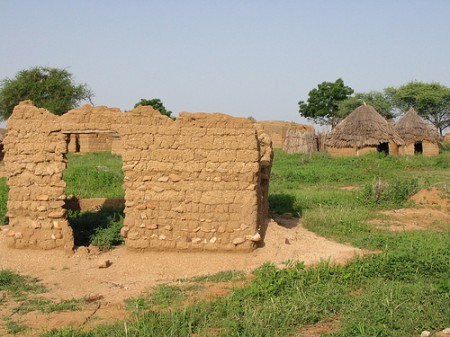
Burnt Huts in Darfur, Sudan, photo: Radio Nederland Wereldomroep/flickr

Back in November 2008, I wrote a commentary piece on the Darfur conflict for ISN Security Watch (Sudan: China is Key) with the phrase, “the incoming Obama administration can show its resolve to combat genocide.” I can no longer say with conviction that this loaded term is an appropriate description of what transpired in the region.

I have eschewed the label in my analytical reports ever since. All the same, the debate is an important one and warrants further scrutiny. It also highlights the intersection of politics and law in international criminal justice.

What transpired in Darfur, for the most part between 2003-2006, was certainly a grave humanitarian tragedy and an abhorrent counter-insurgency campaign, but did it amount to genocide?

ISN Weekly Theme: Challenging Education

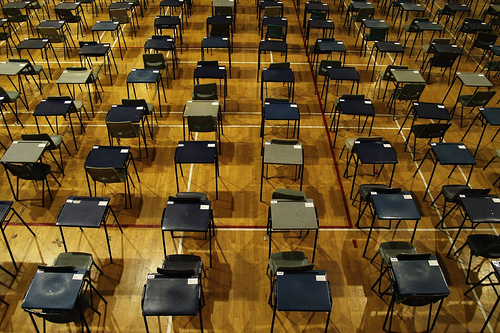
Empty examination desks in Singapore, photo: Richard Lee/flickr

This week the ISN takes a closer look at education, society’s great equalizer. In today’s knowledge economies, education is receiving increasing attention, but are educational policies meeting the needs of our rapidly changing and highly heterogeneous societies? What does an appropriate and effective education in the 21st century even look like?

Our Special Report contains the following content:

  • An Analysis by Jayne Brady examines the tendency for educational systems to put too much emphasis on English-language learning and on the universality of some educational standards. She calls for more focus on the local capacities and needs of developing countries in particular.
  • A Podcast with Dr Alison Wolf questions some of our core beliefs about education, including the link between education and economic success and the relative efficiency of private and public educational provision.
  • Security Watch stories on Brazil’s comprehensive national strategy that includes an educational focus, and the struggle for girl’s education in Afghanistan.
  • Publications covering the EU-Central Asia Education Initiative, India’s skills deficit, the status of religious coexistence and education in Bosnia and Herzegovina and many more.
  • Primary Resources, including President Barack Obama’s inaugural speech, which emphasized the need to transform education to meet the needs of a new age.
  • Links to relevant websites, including Liz Coleman’s TED talk on the need for radical reform in higher education.
  • Our IR Directory with relevant organizations, including the Civic Education Project and the EG West Centre.