
Categories
Uncategorized

Russian and Eurasian Security Network

Russian and Eurasian Security Network

We are happy to announce that the Russian and Eurasian Security Network (RES) has launched a Facebook fan page.

The RES is a global initiative of leading academic institutes, think-tanks, NGOs and media organizations. It offers a framework for studying security-related developments in Russia and the states of the Eurasian region. The RES hosts two original content publications which can be subscribed to via newsletter; the Russian Analytical Digest (RAD) and the Caucasus Analytical Digest (CAD).

The RES Facebook fan page is a place to discuss our publications and share your thoughts on developments in Russia and Eurasia. We aim to encourage greater dialog among analysts, policymakers and academics interested in the Russian and Eurasian region and invite you to join the discussion!

Categories
Uncategorized

New ISN Partner: Petrospot Limited

Petrospot - Transport, Energy & Maritime Intelligence

Petrospot Limited, a publishing, training and events organization focused on the maritime, energy and transport industries, has joined the International Relations and Security Network (ISN) as a partner.

Based in Oxfordshire, England, Petrospot was established in May 2003 by Llewellyn Bankes-Hughes (Managing Director). He is supported by Ian Taylor (Director – Publishing), Luci Llewellyn-Jones (Director – Events), Lesley Bankes-Hughes (Company Secretary – Associate Editor), Luke Hallam Evans (Sales Manager) and Alison Jane Cutler (Design & Marketing Manager).

Petrospot publishes two leading international magazines, Bunkerspot and Cargo Security International. Each is fully supported by 24/7 electronic news services. The company also organizes international conferences, conducts training courses and seminars and publishes books on marine fuels.

Welcome on board, Petrospot!

China’s Nuke Storage Site Revealed

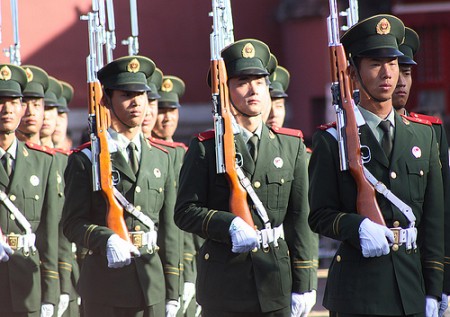
Chinese soldiers in Beijing / Photo: Luther Bailey, flickr
When it comes to the stockpiles of the world’s nuclear-armed states, China is among the most secretive of them all. This is what made the 12 March publication of a report on China’s Nuclear Warhead Storage and Handling System by Mark Stokes, executive director of the Washington-based Project 2049 Institute, an Asia-focused think-tank – all the more remarkable. Through “authoritative sources, correlation of reliable data, and analysis,” Stokes identifies not only where China keeps its nuclear weapons, but how (and how well) they are protected from accident and attack.

Stokes writes that the Chinese Communist Party’s Central Military Commission “maintains strict control over China’s operational nuclear warheads through a centralized storage and handling system managed by the People’s Liberation Army (PLA) Second Artillery.” In peacetime, warheads are managed through a system that is “separate and distinct” from PLA Second Artillery missile bases as well as apart from China’s system for keeping tabs on its civilian-use fissile materials. In addition, he says, the Second Artillery appears to control and manage nuclear warheads that could be used by the PLA’s air force and navy.

ISN Weekly Theme: Environmental (In)Security

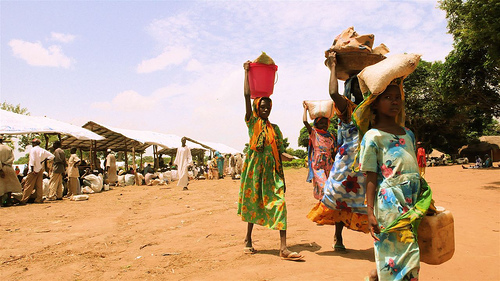
Environmental insecurity takes a human toll on this Darfuri refugee family, photo: HDPT CAR/flickr

This week the ISN examines the evolving concept of security in relation to the profound environmental challenges of the 21st century – concluding that international policymakers must address the complex interplay between resource scarcity and violent conflict with a clarity of vision and cultural sensitivity.

This ISN Special Report contains the following content:

  • An Analysis by UNDP advisor Dr Marwa Daoudy provides an overview of the international policy and academic communities’ reactions to the increasing securitization of natural resources in recent decades.
  • A Podcast interview with ISN founder Professor Kurt Spillmann examines the environmental factors that impact on conflict – concluding that cultural sensitivity and vision are needed for successful resolution.
  • Security Watch stories about the global grab for resources and the tensions that ensue – from the Tajik-Uzbek border to Bangladesh, India and beyond.
  • Publications housed in our Digital Library, including an East/West institute paper on ‘Improving Regional Cooperation on Water’ and case studies on the relationship between oil and conflict from Nigeria to Venezuela.
  • Primary Resources, like the recent European Commission’s paper, ‘Climate Change and International Security.’
  • Links to relevant websites, among them a Global Politics magazine article about the possibility of increased conflict due to climate change-induced resource scarcity and migration.
  • Our IR Directory with relevant organizations, including the Oakland-based Pacific Institute think tank that offers research and policy analysis on issues at the intersection of development, environment and security – with a special focus on water and climate.

Quiet Corruption: Not Just an African Problem

Corruption, quiet and invisible / Photo: xiaming, flickr

The World Bank is pouring old wine into new bottles in a publication on corruption in Africa. The insight that everyday corruption is detrimental to Africa’s development is old wine. The new bottle is “quiet corruption,” a term created “to indicate various types of malpractice of frontline providers (teachers, doctors, inspectors and other government representatives) that do not involve monetary exchange.”

To be fair, the World Bank’s communication strategy is to redirect the media focus from high-profile corruption involving politicians and business leaders to small corruption by civil servants. Such ‘quiet’ forms of corruption includes “absenteeism,” “lower level of effort than expected or the deliberate bending of rules.” However, the claim that “one of the main reasons Africa is lagging behind is the poor service delivery that is a consequence of quiet corruption” is hardly surprising.

Power and Moral Hypocrisy

When it comes to corruption, I find more insightful a recent research article entitled “Power Increases Hypocrisy.” Joris Lammers and Diedrik A Stapel (Tilburg University) along with Adam D Galinsky (Northwestern University) conducted a series of experiments in political psychology. They found that powerful people impose strict moral standards on others but practice less strict moral behavior themselves – a phenomena they call moral hypocrisy (note that the experiments were not conducted in Africa, but with students at a Dutch university).