Create an Unmanned Experimental Squadron and Learning System

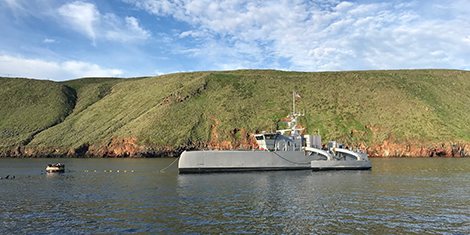
Image courtesy of Moraima Johnston/DVIDS

This article was originally published by the Center for International Maritime Security (CIMSEC) on 6 May 2019.

Introduction

The U.S. Navy faces a future where large portions of its fleet will be composed of non-traditional assets. Specifically, unmanned systems comprise a significant portion of the Chief of Naval Operations’s (CNO) “key platforms and payloads” which the Navy seeks to acquire.1 That direction from the top is further born out in the Navy’s most recent shipbuilding plan which includes 10 large unmanned surface vessels and 191 unmanned undersea vehicles of various sizes. These numbers contrast with the total of 55 “battle force ships” planned to be built over the same period.2 Tonnage obviously also plays a role in this type of comparison, but by sheer numbers the Navy is moving toward unmanned vice manned platforms. The Navy must think past the engineering hurdles and determine how to effectively employ these new assets. To do so, we propose that the Navy revisit history and revitalize the complex learning system it used to exploit an earlier set of new capabilities prior to World War II. Specifically, we call for the Navy to accelerating standing up a dedicated experimental squadron with the purpose of exploring advanced tactics for employing unmanned systems in a series of tactically challenging, objective-based exercises.
Categories
Coronavirus CSS Blog

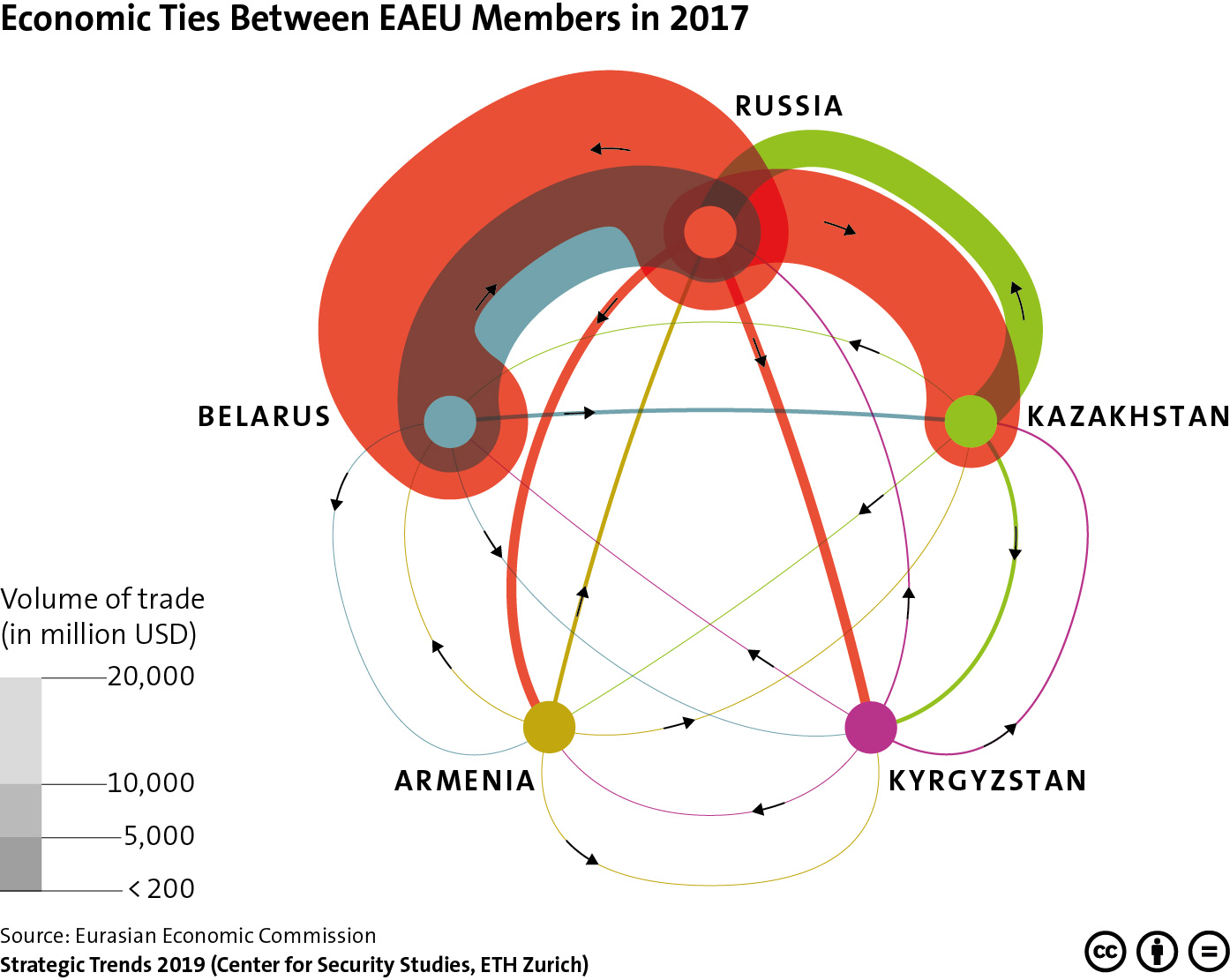
Economic Ties Between EAEU Members in 2017

EmailFacebookTwitter

This graphic maps the volume of trade between members of the Eurasian Economic Union (EAEU), including Russia, Kazakhstan, Kyrgyzstan, Armenia and Belarus. For an analysis of the role the EAEU plays in Russia’s Eurasian strategy, see Jeronim Perović’s chapter in Strategic Trends 2019 here. For more CSS charts and graphics, click here.

Categories
CSS Blog

A Politically Neutral Hub for AI Research

Image courtesy of Geralt/Pixabay

This article was originally published by the ETH Zukunftsblog on 24 May 2019. 

The growing politicisation of AI harbours risks. Sophie-Charlotte Fischer and Andreas Wenger propose a hub for AI research in Switzerland committed to the responsible development of the new technologies.

The surge of progress in Artificial Intelligence (AI) over the last few years has been driven primarily by economic market forces and the manifold commercial applications. Large global technology companies, particularly in the US and China, lead the field in AI. Yet this concentration of AI resources in a few private corporations is increasingly undercutting the competitiveness of public research institutions and smaller companies. Such oligopolistic market dynamics threaten to exacerbate existing economic and social inequalities.

Categories
Coronavirus CSS Blog

Sicherheit 2019: The Trend of Opinions on Foreign, Security, and Defense Policy

On Tuesday 28 May 2019, the Military Academy at ETH Zurich and the Center for Security Studies at ETH Zurich published the annual survey “Sicherheit 2019”. Since 1999, the study has evaluated long-term trends and tendencies in public opinion on foreign, security and defense policy issues in Switzerland.

“Sicherheit” is based on representative surveys conducted each year. As well as including a core set of questions that are always addressed or asked at irregular intervals, the survey also deals with current issues of security policy. In line with this, “Sicherheit 2019” focuses on the relations between the US and Switzerland, the global political situation, attitudes towards equal opportunities within the Swiss Armed Forces and communication efforts by the Swiss military. Here, we provide a summary of the findings of this year’s survey.

Categories
CSS Blog

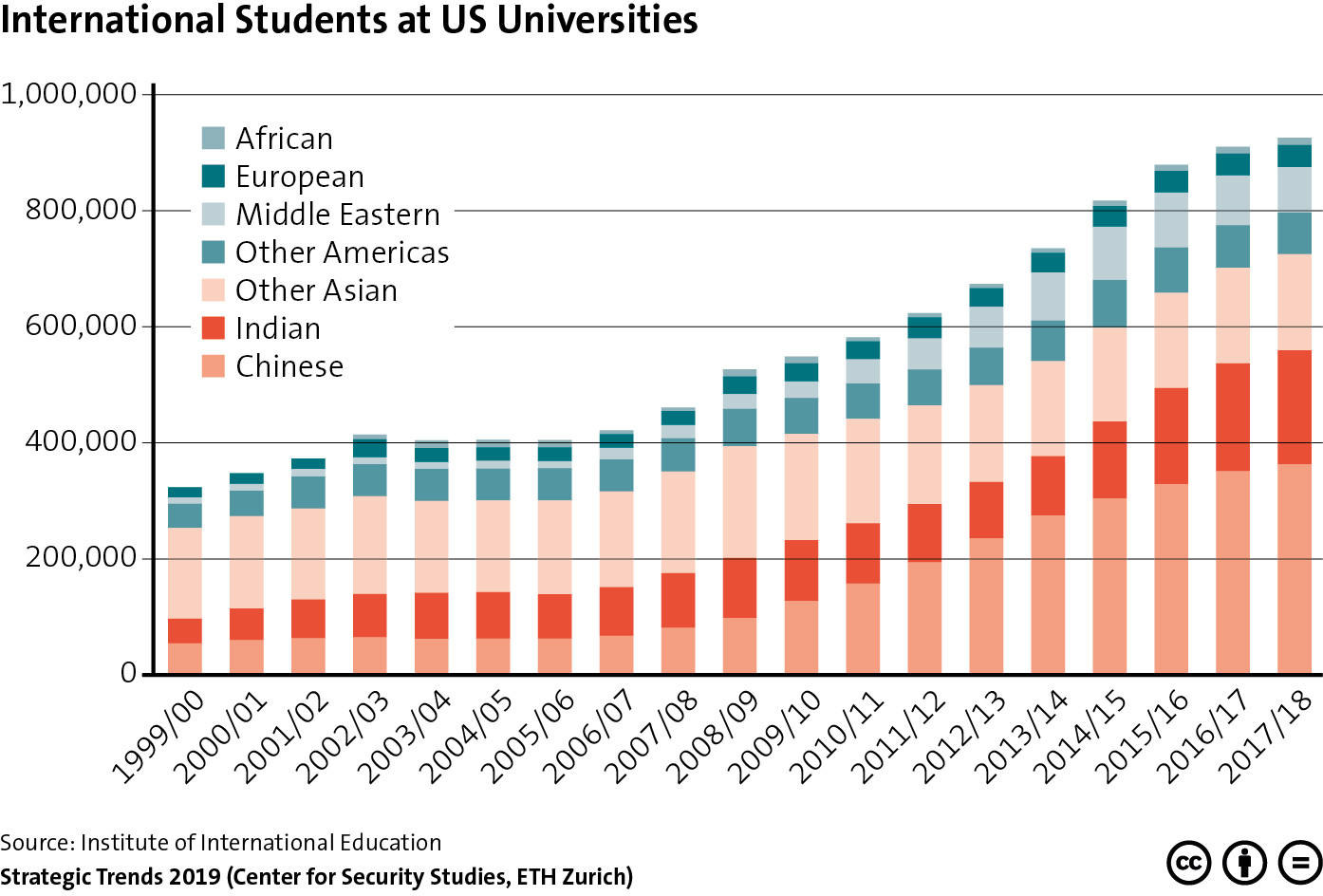
International Students at US Universities

EmailFacebookTwitter

This graphic outlines the rising number of international students enrolled at US universities since 1999. To find out what this trend could mean for the transfer of specialized knowledge from Western countries to emerging nations – particularly regarding the West’s military-technological superiority – see Michael Haas’ chapter in Strategic Trends 2019 here. For more CSS charts and graphics, click here.