
Categories
Uncategorized

Happy Birthday, Latin America

Latin American countries are celebrating 200 years of independence, photo: John K/flickr

While much of Latin America is focused on celebrating 200 years of independence from Spain and Portugal, numerous security challenges are begging for answers – and soon. This week the ISN examines the opportunities and obstacles Latin America must face if it is to succeed in its third century of Republican history.

This ISN Special Report contains the following content:

  • An Analysis by Dr Markus Schultze-Kraft, director of the Latin America and Caribbean program at the International Crisis Group, on the security challenges facing Latin America after 200 years of Republican rule.
  • A Podcast interview with Sam Logan on the drug-trafficking challenges that plague Mexico in the midst of its 200th anniversary celebration of independence from Spain.
  • Security Watch articles about organized crime rings from Mexico to Brazil and Paraguay, US-Mexico border tensions, and much more.
  • Publications housed in our Digital Library, including CrisisWatch updates on emerging and ongoing conflicts around the globe, including across Latin America.
  • Primary Resources, like the full-text of the Mercosur Free Trade Agreement between Argentina, Brazil, Paraguay and Uruguay.
  • Links to relevant websites, such as the Observatory on Latin America’s page on ‘Building Latin American Bicentennials in the Age of Globalization’.
  • Our IR Directory, featuring the Latin American Network Information Center, affiliated with the University of Texas at Austin, which boasts one of the largest guides for Latin American content on the internet.

The Politics of Twitter

Shifting sands or a tool that is here to stay? Photo courtesy of Rosaura Ochoa/flickr

Barack Obama’s 2008 election campaign may still be the benchmark for the use of social media tools in politics, but some surprising new actors are embracing Twitter in particular in an effort to reach out to voters and citizens in a more personal and immediate way.

While leaders of ‘old Europe’ still seem quite reluctant to use the service (David Cameron, in his pre-prime minister days, once famously blurted out that “too many twits [it’s tweets, David] might make a twat”), politicians in South Asia are embracing the service as a means of reaching a very large number of citizens, very quickly.

Among them, Shashi Tharoor, the Indian Minister of State for External Affairs and member of parliament, who tweets several times a day, even using his stream to respond to constituent concerns. He has also run into trouble for his tweets. Although this may have given his follower numbers a boost, the ability to reach and interact with 825,000+ followers in such a dynamic and instant way is a feat in itself and a potentially powerful tool for governance in an unwieldy country like India.

Why have leaders in the West not embraced this new form of instant interaction? Do they fear that they may say something unwise, even controversial on a service that is anything but forgiving in its immediacy, or do they fear the barrage of responses they may get to an unpopular comment? While Silvio Berlusconi’s PR people might have made a wise choice in keeping him from the service, it could prove powerful in narrowing the divide between the ‘rulers’ and the ‘ruled’ and in making politics more relevant to millions of politically apathetic young people.

Uganda’s Somali Dilemma – Learning from Ethiopia’s Mistake

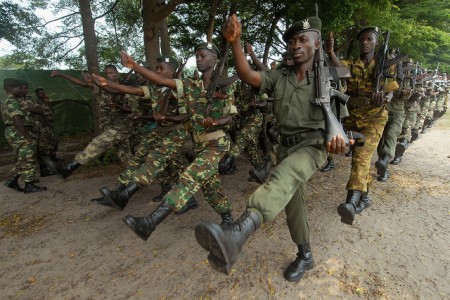
AMISOM’s Burundian Peacekeepers Prepare for Deployment, photo courtesy of US Army Africa/flickr

The West can afford to ignore Somalia, Africa cannot. On the evening of July 11th, three bombs went off in Uganda’s capital, Kampala, leaving at least 75 dead and many more injured. There was no need for investigations or inquiries; the perpetrators quickly and proudly claimed responsibility. Carrying out its first attack outside Somalia’s borders, the Islamic militia Al-Shabaab, announced that Uganda was paying the price for deploying troops to Somalia in support of the African Union peacekeeping mission (AMISOM) and the weak Transitional Federal Government (TFG).

The bombings warranted an immediate and stalwart response from Somalia’s neighbors—Ethiopia, Djibouti, Kenya, Uganda, and Sudan—who pledged to reinforce AMISOM with an extra 2,000 troops. It seems, however, that Uganda is also seeking to go beyond simply helping AMISOM.

Syrian Kurds – A Struggle in the Face of Government Repression

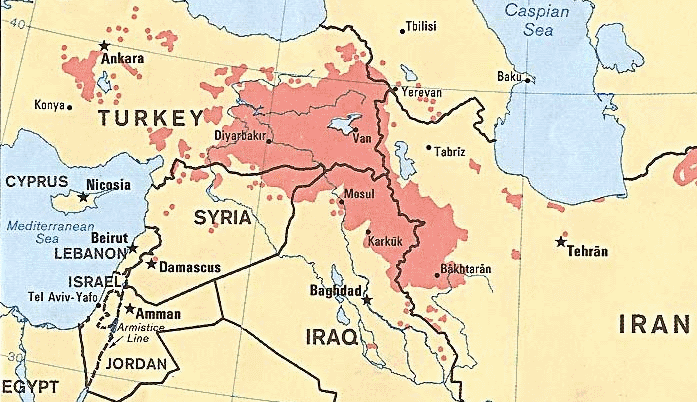
Kurdish area in the Middle East, CIA/University of Texas Libraries (1986)

On 21 March of this year, Syrian security forces opened fire on a crowd of over 5,000 in the northern town of Ar-Raqqah. The crowd had gathered to celebrate the Kurdish New Year as three people, including a 15-year-old girl, were killed. Over 50 were injured. Yet this incident was just the last in a long list of examples of the repression of the largest national minority in Syria – the Syrian Kurdish population.

Kurds in Syria occupy the lowest social rank among the country’s minorities. Estimated at approximately 1.7 million, the Syrian Kurds make up roughly 12 percent of the country’s population. Yet the Kurds living in Syria are not recognized as an ethnic group in their own right, and many not even as Syrian citizens. Their cultural and civil rights are withheld from them, while their political parties and organizations are forbidden.

Security Council or Secretary-General?

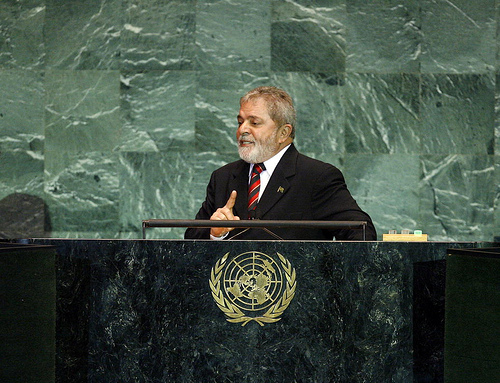
Lula da Silva at the UN, courtesy of United Nations Photo/flickr

Brazil, particularly President Lula da Silva, is pursuing an active UN and foreign policy. According to The Times, Lula recently joked that he was “infected by the virus of peace.” Such ‘viruses’, however, do not infect people without giving them greater ambition. In the case of Brazil, the country seems to alternate between seeking a permanent seat in the UN Security Council on the one hand and pushing for Lula to become the next UN secretary-general in 2011 or 2015 on the other.

To get a better sense of Brazil’s rising ambitions, let’s review the latest victories in Brazilian diplomacy and other political activities: