
The Usual Suspects: Abstaining the Water Vote

Clean public drinking water in the Democratic Republic of Congo, photo: Julien Harneis/flickr

The usual suspects never fail to disappoint. With 122 countries voting in favor and 41 abstaining, the UN General Assembly has recently declared clean water and sanitation as a fundamental human right, a move hailed by water rights activists as a “big step in the right direction.” Although passing with an overwhelming majority, the vote’s abstentions are disconcerting, although, considering the culprits, not surprising.

The usual suspects—United States, Canada, the United Kingdom, Australia, and Israel—attempted to justify their abstentions through unconvincing procedural language. Substantively, they argued that declaring water as a human right has no sufficient legal basis in customary international law. Isn’t that the exact purpose of this declaration, to move in that direction? Before the non-binding Universal Declaration of Human Rights (UDHR) in 1948, most human rights now enshrined in treaty law was also not part of international law. Like the UDHR, the current water rights declaration has the power to fuel the onset of a normative and legal shift focusing on codifying the right to clean water and basic sanitation in enforceable treaty laws. The second argument, of a procedural in character, proposes that the vote would disrupt ongoing water rights negotiations at the Human Rights Council (HRC) in Geneva. Why would the HRC—a 47-member body—be deemed more appropriate a forum than the more democratic and representative 192-member General Assembly? If anything, the current declaration can help guide and even compliment the negotiations in Geneva.

So why abstain from such a seemingly basic declaration?
The Welcome Demise of Cluster Munitions

How many legs lost? Photo: François Bouchet/flickr

Munitions that break apart and scatter over a wide territory have been used since World War II. But yesterday, 1 August 2010, the Convention on Cluster Munitions (CCM) has finally become part of international Humanitarian Law. Following in the footsteps of the Mine Ban Treaty, the CCM disallows the use, production, stockpiling, and transfer of cluster munitions.

The impetus for the treaty was widespread concern over the severe damage and risks to civilians from explosive weapons not only during, but also long after attacks. Cluster munitions (or cluster bombs) are indiscriminate weapons dropped from the air or deployed by ground-based delivery systems that often distribute hundreds of bomblets (or submunitions) that can cover an area the size of several football fields. On impact, many of the bomblets fail to explode – by design or flaw – and thereby remain a threat to lives and livelihoods many years after the conflict has ended. The most vulnerable, as usual, are the children, mistaking the deadly shrapnel for toys.

Categories
Uncategorized

ISN Quiz: Latin America

This week’s Special Report looks at Latin America. How much do you know about the region?

[QUIZZIN 31]

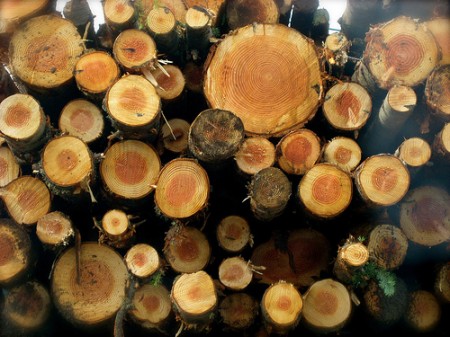
Illegal Loggers, Beware

Illegal logging is a complex problem, photo courtesy of Claire L. Evans/flickr

On July 7, the European Parliament voted 644 to 25 to ban the sale of illegally logged timber and timber products from the EU market from 2012 onwards when the rule takes effect.

The passage of this ban is a tremendous achievement, the culmination of more than a decade of environmental activism and lobbying on the issue. While the ban is an important step in the right direction, the general public should not be lulled into a comforting, but false belief that the problem is getting better. The legislation affects only 20 percent of the global market for illegal timber; a significant move, but there is much more to do.

Like many environmental issues, logging is tightly bound to other problems, many endemic to developing countries (such as corruption, organized crime, poverty, environmental destruction) that are difficult to address individually, but must still be tackled with approaches that can generate multiple beneficial outcomes, such as greater transparency, better information management, the implementation and strengthening of legislative, enforcement and monitoring frameworks. As well as the creation of collaboration and information exchanges, the importance of changing consumer perspectives and demand for cheap timber and timber products cannot be overstated.

Climate Change Debate is Losing Momentum

Polar bear on a diminishing ice floe cake, photo: douglemoine/flickr

For those (still) interested in climate change issues, two things are happening next week that are worth to ponder:

First, Global Warming is turning 35! As announced on the blog of the RealClimate website, the term “global warming” was used for the first time in an article by Wally Broecker in the journal Science on 8 August 1975. Happy Anniversary!

Second, a UN Climate Change Confererence will be held next week (2  – 6 August 2010) in Bonn, discussing  possible contributions by both industrialized and developing countries to reduce emissions. Further issues to be discussed include how to adapt to climate changes, slow down deforestation and develop new technologies – and how all these measures can be financed. The conference is intended as a further preparation for the sixth meeting of the Parties to the UN Framework Convention on Climate Change (UNFCCC), which will take place in Cancun, Mexico, in November and December 2010.

Yet the global optimism prior to last year’s Copenhagen Summit, when there was so much hope that a newly elected US president who promised change and truly seemed to care about the environment would finally lead the world into a new, environmentally more responsible era, has all but vanished.