Begging for Food

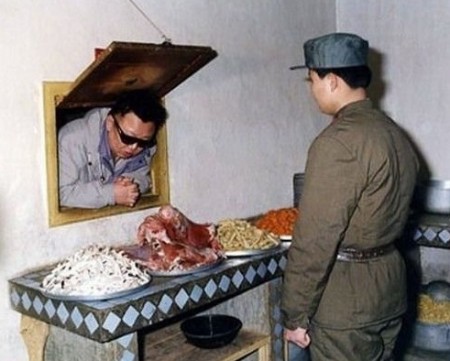
What’s for Dinner? photo: oceandesetoiles/flickr

Officials from five aid agencies who have just returned from a trip to the Democratic People’s Republic of Korea (DPRK, or North Korea) say they saw evidence of looming food shortages and alarming malnutrition, including people picking wild grasses to eat. The experts visited North Korea at the request of the DPRK government and were given unprecedented access to assess the country’s food situation. Their report now shows a nation on the verge of disaster. They are therefore appealing for quick assistance to feed the isolated country’s most vulnerable people. There are hurdles, however, to resuming aid to North Korea.

The charity workers – from Christian Friends of Korea, Global Resource Services, Mercy Corps, Samaritan’s Purse and World Vision – spent a week in North Korea earlier this month. In their report, they say they visited hospitals, orphanages and homes as well as farms and warehouses. And they paint a very bleak picture. Last summer, heavy rains and flooding reduced vegetable crops by more than 50 percent, and a bitter winter has now frozen up to 50 percent of wheat and barley. Both the NGOs and the North Korean authorities estimate that food stocks will be exhausted before June.

North Korea has been suffering from food shortages due to economic mismanagement and natural disasters intermittently for the past two decades, when China and the former Soviet Union implemented hard currency payment systems that sharply reduced North Korea’s ability to import goods. The years of mismanagement thus resulted in famines during the 1990s which, according to some estimates, killed over a million people. In past years, therefore, South Korea and the US have been the primary external sources of food, either through direct food assistance or deliveries of fertilizer. But this year, with rising impatience and anger toward the North Korean regime, these reinforcements are in doubt.


Categories
Uncategorized

ISN Insights: Look Back, Week Ahead

The new ISN Insights week starts today, stay tuned. Photo: Leo Reynolds/flickr

Last week we showcased BRIC countries in a special ISN Insights weekly theme, where we took a closer look at the emerging BRIC powerhouses – Brazil, Russia, India and China – plus one aspiring candidate, Indonesia:

  • On Monday we took a closer look at India’s economic growth contrasted against its political stagnation, thanks to commentary by Dr Harsh V Pant.
  • Tuesday we forecast what 2011 holds for Russia – politically, economically and diplomatically, in a broad-spectrum analysis by Simon Saradzhyan and Nabi Abdullaev.
  • We examined aspiring BRIC member Indonesia on Wednesday, with an analysis by Dr John Sidel on how hopes for membership will continue to drive the government’s ambitious policy agenda.
  • Thursday we shone a light on regional behemoth China, soon to overcome the US as the world’s largest economy, according the article from Dr Graham Ong- Webb.
  • We wrapped up the work week with Friday’s podcast on Brazil, in which Samuel Logan predicts that Dilma Rousseff will keep the country on a path of carefully managed growth.

This week we’ll be delving into: the growing strength of Indian-Indonesian ties; the implications of recent Tajik-Uzbek squabbles; the crushing costs and growing dangers of ISAF fuel imports; the United Arab Emirates as the region’s nuclear ‘gold standard’; and a status update on Syria. More to come…

The Great Recession: Sliding Out of Memory?

World economy cracked beyond repair? Photo: Jack Keene/flickr

As Asian economies keep posting positive growth numbers with the momentum for a full recovery shifting irreversibly to the East, and as banker’s bonuses and Wall Street profits return to pre-2007 days, the temptation to look away from the root causes of the global financial crisis is as great as ever. But has the chance to learn a valuable lesson really just been lost in the face of a fragile recovery?

Some resources from our Digital Library to help you answer this key question:

Papua New Guinea: No Thunder, No Rain

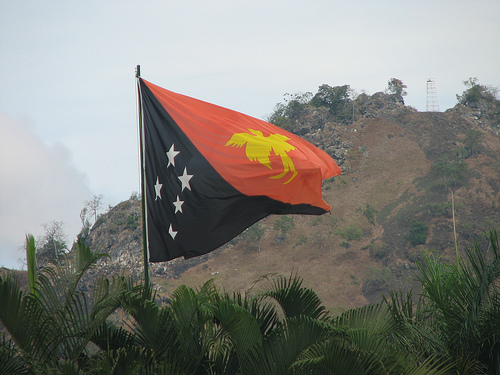
Where is Papua New Guinea headed? photo: Drew Douglas/flickr

Papua New Guinea (PNG) can be a little confusing. Although it shares half of the island of New Guinea with Papua – an Indonesian province – Papua New Guinea is distinctly different from its neighbor. Indeed PNG seems to exist in a world of its own – one plagued by political mismanagement, human rights abuses, corruption, and low levels of development.

Contrary to the outbursts of unrest in the Middle East, however, the peoples of PNG are highly unlikely to lead protests or a revolt against their government. PNG is a country of incredible linguistic and cultural diversity – though perhaps surprisingly, not in terms of religion (96 percent are Christian). It is also a relatively “young” country, having only gained independence in 1975. The current Prime Minister, Sir Michael Somare, has been in and out of power in PNG since 1972, and like certain other political heads of state, seems not to want to relinquish his position. Just over a month ago, the government successfully evaded another vote of no confidence by using its majority to adjourn parliament until May. Deputy opposition leader Bart Philemon notes that by the next election, there will have been 10 years of (relative) political stability – but hardly any improvement in the standard of living for the majority of the population.

Iran: Little Room for Maneuver

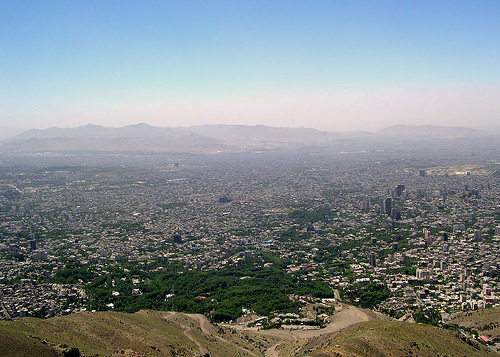
Tehran - back in the limelight? Photo: Mohammadali f./flickr

Although the rest of the Middle East is now rightly in the spotlight, Iran, with a simmering opposition movement and a highly controversial nuclear program (the focal point in regional diplomacy prior to the ‘Jasmine revolutions’) will no doubt return to the forefront of regional affairs very soon. However, the diplomatic equation in the conflict between Iran and the West may be changing, and contrary to the sometimes hysterical warnings of some commentators in the West and the bellicose rhetoric of Iran’s president, Tehran is in a corner. Below some points to keep in mind when analyzing the situation:

  • What country, more precisely what regime, currently faces an existential threat and finds itself surrounded by the world’s most powerful fighting force on three of four borders (principally Afghanistan and the Persian Gulf, but also Iraq): nuclear-armed Israel or Iran?
  • How much of this all is a securitization game? Prime Minister Netanyahu and especially Israel’s political right keep the focus on the country’s purported ‘insecurity’ and off the West Bank; President Ahmadinejad, in turn, exploits the external threat to consolidate support back home and divert attention from his lousy track record in actually governing Iran.
  • If Iran decides to weaponize, will it not first withdraw from the Nuclear Non-Proliferation Treaty (NPT)? The 1980 Vienna Convention on the Law of Treaties and the NPT, which the US and Iran have both signed and ratified, respectively, demand it. Although this instance could very well prove the exception to the rule, Iran is not North Korea. Iran maintains relations and accords with many other states in the international system, all of which count on it to uphold some modicum of predictability. It is likely to do so despite its belligerent rhetoric.