
A Saudi Perspective on Yemen

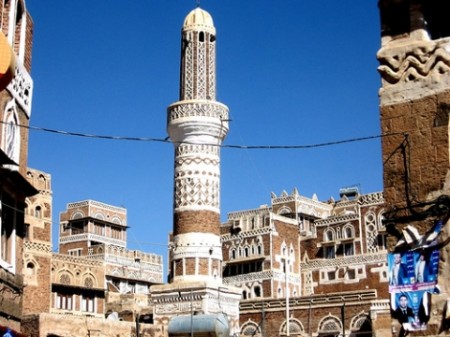
A minaret in Sana'a
A minaret in Sana'a Photo: Ai@ce/flickr

On 3 June – only days after he vowed not to step down or make further concessions – Yemen’s President Ali Abdullah Saleh was seriously wounded in an attack on the presidential palace and flown to Riyadh for medical treatment. If he does not return by early August, the constitution provides for fresh elections to be held. To a considerable extent, therefore, Yemen’s fate now lies in the hands of Saudi Arabia.

The Saudis, within the framework of the Gulf Cooperation Council, have tried to broker a transition plan in Yemen before – to no avail. With Saleh now under Saudi authority and no longer on the political scene, their room for maneuver behind the scenes has greatly increased. Sure — cutting a deal between an increasingly fragmented opposition and an embattled administration remains extremely difficult. But Saudi Arabia has every reason to throw its weight behind negotiations for a peaceful power transition.

Privatizing Conflict Mediation? Not Really

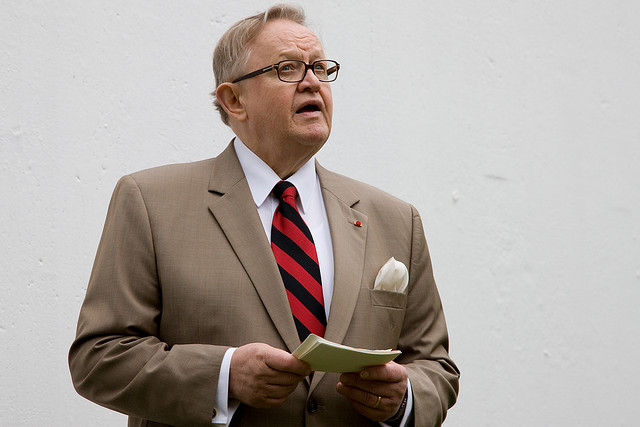
Nobel Peace Prize winner Martti Ahtisaari has been a mediator for them all: governments, the UN and NGOs. Image: Joi Ito/flickr

In a recent article, The Economist suggests that efforts to resolve international conflicts are increasingly being outsourced to NGOs such as the Centre for Humanitarian Dialogue (HD Centre) or the United States Institute for Peace (USIP).

While we at the ISN are proud to have our partners mentioned among the leading conflict mediators — and grateful, as ever, to USIP and HD Centre for sharing their expertise with us in the form of case studies, practical guides and research reports — the Economist raises a serious question.  Have governments really lost their taste for mediating conflicts? Is the UN really as paralyzed by competing political agendas as the article suggests?

Even as private organizations play a bigger role in peace processes today than they did in the past, governments and the UN are hardly less active in this area. Consider the following:

A Reading List on: Economics and Security

Books in perspective
Books in perspective.  Photo: Oldtasty/flickr

The intersection between economics and security is large and growing. Fighting wars and fulfilling security objectives has always had economic implications — in far more than just blood and treasure — and economic developments are having ever more rapid and dramatic consequences for traditional and emerging conceptions of security.  This syllabus will help keep you up to date.

Categories
Uncategorized

This Week at the ISN…

It's week 27 on our editorial calendar, Photo: Leo Reynolds/flickr

This week the ISN takes a closer look at the following topics:

  • On Monday, ISN Insights examines the potentially dark shadow of government overreach in its efforts to regulate the cyber sphere, courtesy of the University of Lucerne’s Jonas Rey.
  • We introduce a new information platform on Tuesday – the book syllabus – to point you in the direction of cutting-edge literature on the topic of energy and security.
  • On Wednesday, CEPR co-director Dean Baker opines about central banks and budget deficits in ISN Insights.
  • Read-up on Yemen in our country profile on Thursday.
  • And our Friday podcast with the Graduate Institute’s Thomas Biersteker tackles the topic of public-private partnerships.

And in case you missed any of last week’s coverage, you can catch up here on: US space policy; China’s consumption patterns; Turkey’s foreign policy; the perils of humanitarian aid; and cybersecurity.

The Politics of Time Zones

time
What time is it? Photo: ToniVC/flickr

Last weekend Fareed Zakaria devoted a short segment of his program, Global Public Square, to some startling news: in the Pacific island nation of Samoa, there will be no 30th of December this year. Samoans will go to sleep on Thursday the 29th and awake on Saturday the 31st. The country is set to hop the International Date Line, moving from 11 hours behind Greenwich to 13 hours ahead of it.

Samoa’s Prime Minister noted in May that the move would be good for tourism—as, since neighboring American Samoa will remain on the other side of the line, “people wanting two birthdays or two wedding anniversaries can travel to Samoa and have them.”

More significant benefits are associated with the underlying shift that the move reflects. As Zakaria tells us, while the east side of the date line was originally preferred for its closeness to the Americas, Samoa now conducts most of its trade with Australia and New Zealand, which at present are almost a full day ahead—an inconvenience indeed. Hopping the date-line is an attempt to adjust to this new economic reality.

But ever since the need for a Line was demonstrated on a Thursday afternoon in 1522 – when Magellan’s Victoria sailed into Cape Verde with a ship’s log showing Wednesday – many countries have seen the benefits of toying with the Line.